
Sixty applications, eleven interviews, zero offers — not because of a lack of competence, but because Pakistan’s formal job market runs narrow, competitive, and heavily dependent on connections that don’t exist for every capable graduate.
That was the outcome for one BA Commerce graduate from a government college in Multan, roughly two years after finishing his degree. Decent English, working knowledge of basic accounting, the kind of work ethic that comes from growing up in a household where money was always tight — none of it was the problem. The doors simply required connections he didn’t have.
The alternative was a small printing and stationery business near his neighborhood — location scoped, plan researched, startup cost estimated at Rs. 300,000-400,000. Savings on hand: Rs. 60,000.
The Punjab Rozgar Scheme came up through a relative working in a district government office, described simply as “for people exactly like you.”
What followed was a four-month process — application, verification, disbursement — with enough friction points along the way that most of it would have gone faster with the right information from the start.
What the Punjab Rozgar Scheme Is
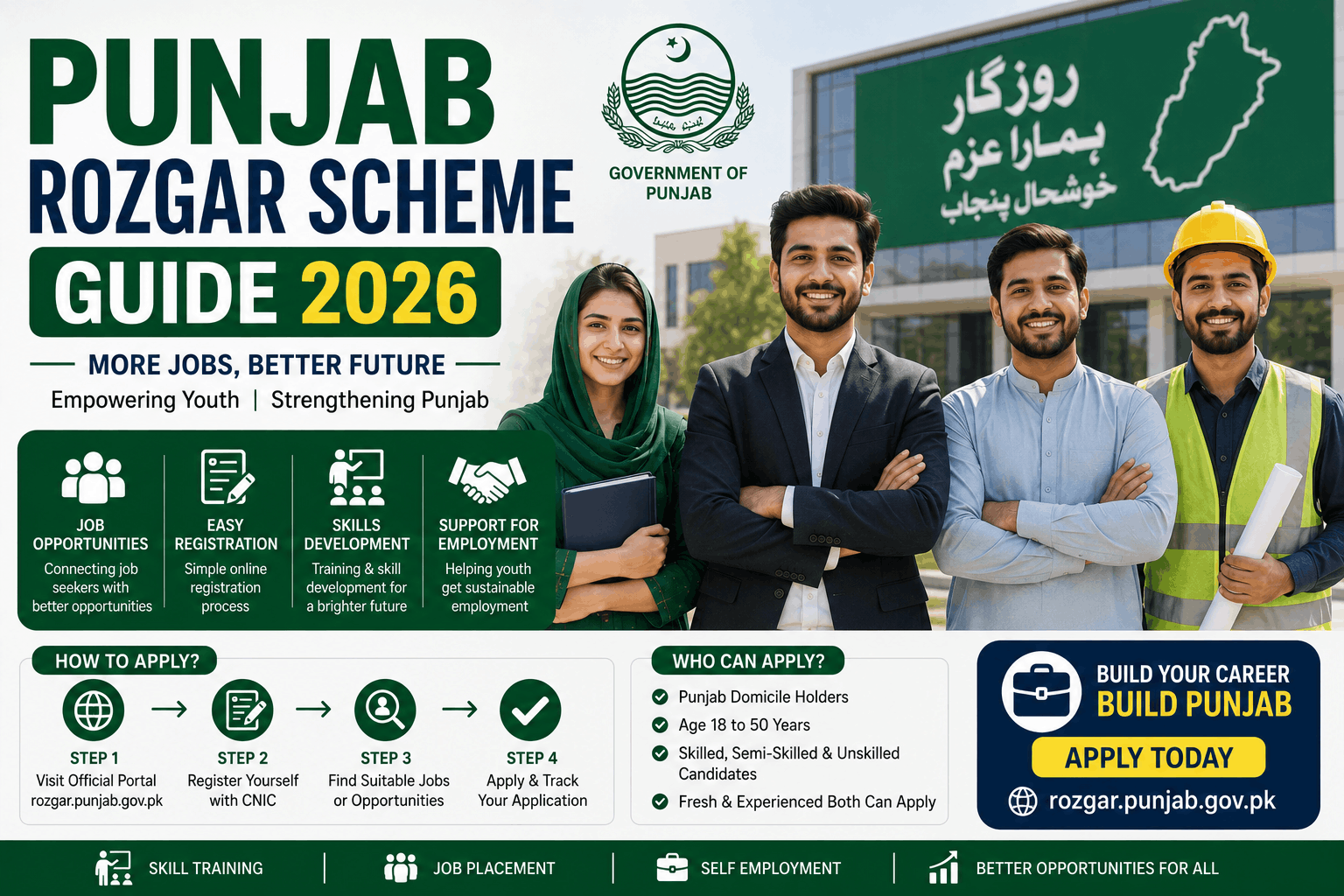
The Punjab Rozgar Scheme (also referred to as the Punjab Rozgar Program or CM Punjab Employment Scheme in various announcements) is a government initiative designed to reduce unemployment and support self-employment among young people and skilled workers in Punjab.
It operates on two tracks that often get conflated — which is one reason people end up confused:
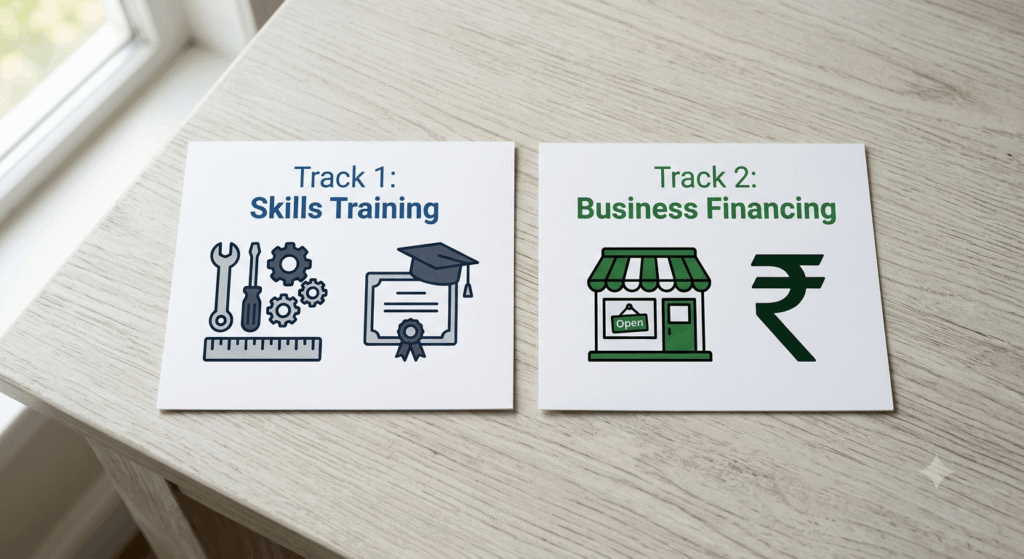
Track 1 — Skills Training and Job Placement: Free or subsidized vocational and technical training through government-registered institutions, followed by job placement assistance. This is for people who want to develop a marketable skill and enter employment — electricians, plumbers, welders, tailors, IT support technicians, beauticians, and dozens of other trades.
Track 2 — Business Startup Financing: Subsidized loans or grants for young people and skilled workers who want to start their own small businesses or expand existing micro-enterprises. This is what Hamza was after — capital to start something.
Some phases of the scheme have combined both tracks — offering training followed by a startup loan for those who complete the program. Other phases run them separately.
When you approach the scheme, the first thing to clarify is which track applies to you.
Who Is Eligible
Eligibility varies slightly between phases, but the general framework looks like this:
For skills training (Track 1):
- Punjab resident with valid CNIC
- Age between 15 and 40 years in most phases
- Minimum matriculation (Class 10) completed in some programs; others accept applicants with basic literacy
- Unemployed or underemployed status
- Priority given to youth from lower-income households
For business financing (Track 2):
- Punjab domicile with valid CNIC
- Age between 18 and 45 years
- Business idea with a viable plan — doesn’t need to be formal, but needs to be articulable
- Completed or currently enrolled in a Punjab government skills training program (in phases that link training to financing)
- No existing defaulted loans (ECIB check)
- Business or skill with some demonstrable basis — either prior experience, relevant education, or completion of scheme-linked training
Priority groups across both tracks:
- Youth from low-income families
- Women
- People with disabilities (dedicated quotas in some phases)
- Residents of smaller cities and rural areas
- Registered unemployed persons
The Skills Training Side — How It Actually Works
If you’re going the training route, the process is more straightforward than the financing side.
Step 1: Find the registered training institutes in your area.
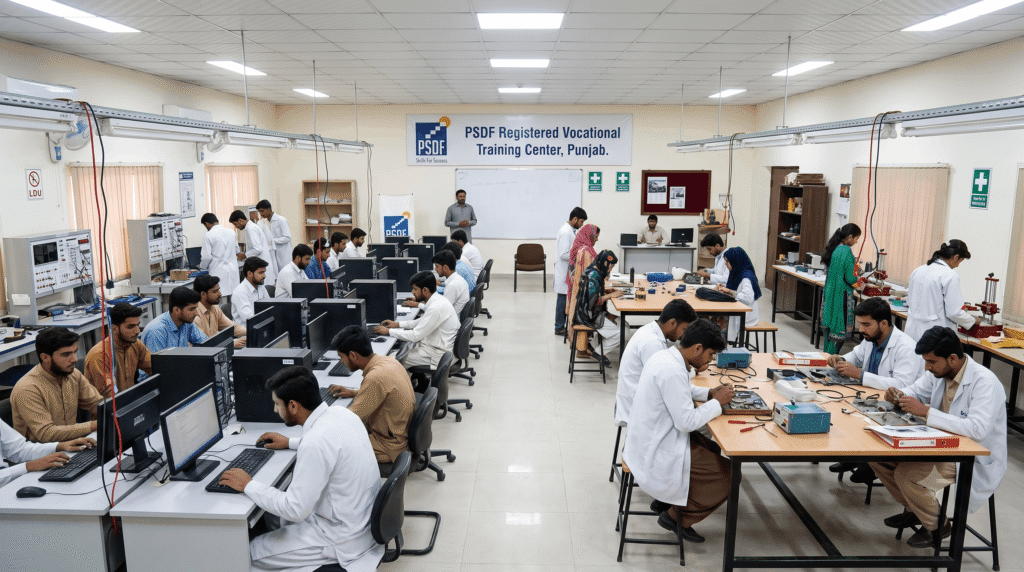
The Punjab Skills Development Fund (PSDF) — psdf.org.pk — is the main body that manages government-backed skills training programs in Punjab. Their website lists registered training providers, available courses, locations, and application status.
SMEDA (Small and Medium Enterprises Development Authority) also runs training programs relevant to the Rozgar Scheme — particularly for people interested in starting small businesses.
The TEVTA (Technical Education and Vocational Training Authority) runs training centers in most districts offering courses in trades, IT, and technical skills under various government schemes including Rozgar.
Step 2: Apply to the relevant program.
Application is typically done online through the PSDF portal or through the training institute directly. You’ll need your CNIC, education documents, and a recent photograph.
Some training programs have limited seats and admission is competitive. Apply as early as possible.
Step 3: Complete the training.
Training durations range from 1 to 6 months depending on the course. Attendance requirements are strict — dropping below the minimum attendance threshold can result in removal from the program and loss of any associated scheme benefits.
During training, students in government-sponsored programs often receive a stipend — a small monthly payment to cover transport and basic expenses. This varies by program and phase.
Step 4: Job placement or business launch.
After training, the scheme’s placement cell works with employers and industry to match graduates with jobs. This doesn’t guarantee employment — but it provides access to employer connections that individual job seekers often lack.
For those who want to start a business after training, completion of the program opens eligibility for startup financing under Track 2.
The Business Financing Side — Step by Step
This is the track Hamza took, and the more complex of the two.
Step 1: Prepare a Basic Business Plan
You don’t need a Harvard MBA-style business plan.

But you need to be able to answer four questions clearly:
- What is the business? (printing and stationery shop, in Hamza’s case)
- Where will it operate? (a rented space in a commercial area near a school)
- How much money do you need and what specifically will it be used for? (Rs. 350,000 — Rs. 150,000 for equipment, Rs. 120,000 for initial stock, Rs. 50,000 for shop fit-out, Rs. 30,000 for first month’s rent and utilities)
- How will the business generate income to repay the loan? (school supply orders, document printing, photocopy services)
Write this down. Clearly. One page is enough if the logic is there.
Step 2: Register Through the Official Scheme Portal
The Punjab Rozgar Scheme application is processed through the Punjab government’s official employment and scheme portal — the URL is announced when each application window opens. PSDF (psdf.org.pk) and SMEDA (smeda.org.pk) also process applications depending on the phase.
When registering:
- Use your CNIC number exactly as it appears
- Select the correct scheme track (business financing, not training)
- Describe your business idea accurately and concisely
- Enter your loan requirement — don’t inflate it, and don’t lowball it
- List any skills or experience relevant to the business
Step 3: Approach the Partner Bank
Disbursement happens through partner banks. Bank of Punjab, Khushhali Microfinance Bank, National Bank of Pakistan, and other institutions participate depending on the phase.
Go to the nearest branch of the participating bank and request the Punjab Rozgar Scheme loan form. Bring:
- Original CNIC
- Business plan
- Proof of skills or training (certificate if you completed a relevant government program)
- Proposed business location details
- Bank account (active, or open one at this branch)
- Two references
The bank officer will assess your application and schedule a field visit to your proposed business location.
Step 4: Field Visit and Verification
For existing businesses seeking expansion, the field visit verifies the business is real. For new startups, the verifier visits the proposed location and assesses its suitability.
Be present. Have your documents. Show the verifier the space, explain the plan concisely, and demonstrate that you understand the basics of what you’re starting.
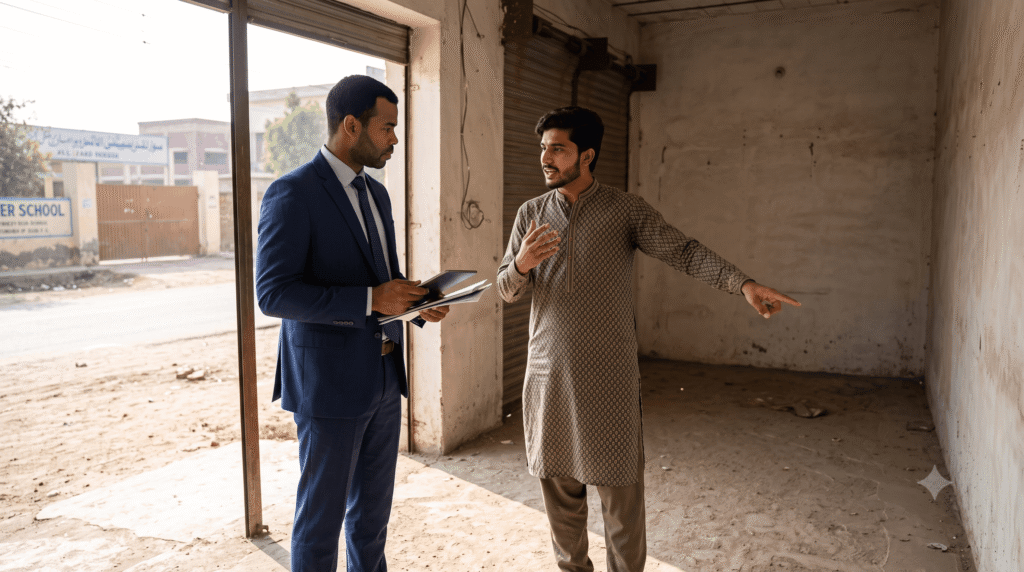
Hamza’s verifier spent about 30 minutes with him at the proposed shop location — a vacant space near a school that he’d already spoken to the landlord about. He showed the verifier the space, walked through the plan, and the verifier took photographs.
Step 5: Credit Assessment and Approval
The bank reviews the field report, your ECIB status, your income or business plan viability, and determines your approved loan amount and terms.
Approval timelines: 3 to 8 weeks from application submission.
If approved, you receive a sanction letter with:
- Approved loan amount
- Markup rate (subsidized — significantly lower than commercial rates)
- Repayment tenure (typically 3 to 5 years)
- Monthly installment
Review everything before signing. Ask about grace periods — some phases offer a 6-month grace period before repayments begin.
Step 6: Disbursement and Business Launch
After signing, funds are disbursed — either directly to suppliers or to your account. Some banks disburse in tranches rather than a lump sum.
Hamza received Rs. 280,000 (slightly below his Rs. 350,000 request — the bank’s assessment was conservative).
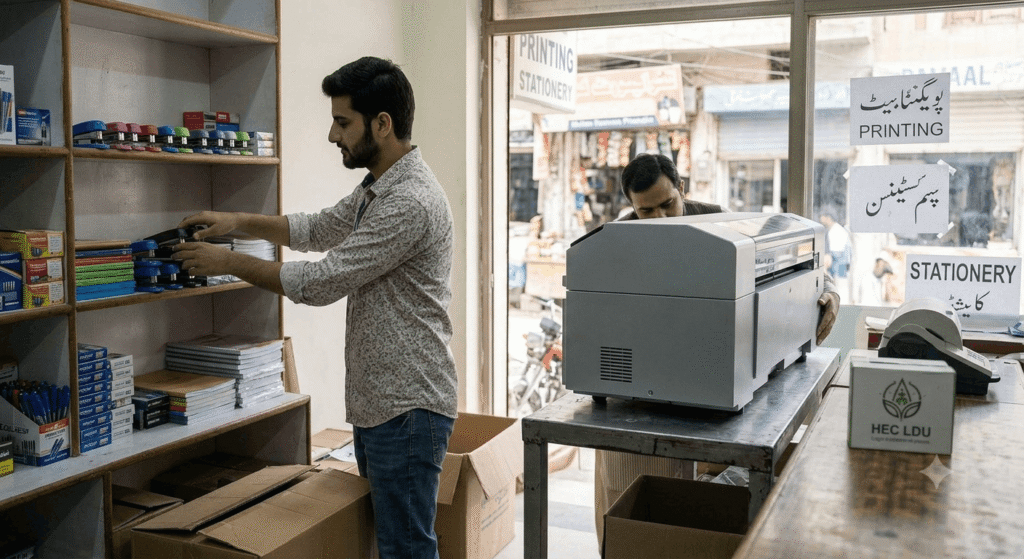
He used Rs. 130,000 for a second-hand digital printer and Rs. 100,000 for initial stationery stock. The remaining Rs. 50,000 he held for operating expenses.
He opened the shop in April 2026, two months after starting the application.
What Went Wrong — And What Fixed It
Hamza’s application had two hiccups:
Hiccup 1: No formal proof of printing skills.
The bank’s credit officer asked how Hamza had experience in the printing business. He’d learned from a friend who ran a print shop — informal apprenticeship, nothing documented. The officer flagged this as a gap.

Fix: Hamza got a letter from his friend (the print shop owner) on his shop’s letterhead confirming that Hamza had worked and trained with him for 8 months. Not formal, but documented. The bank accepted it.
Hiccup 2: ECIB record showed an old mobile phone installment plan.
Hamza had taken a mobile phone on installment from a telecom company three years earlier. He’d paid it off — but the account showed as “settled late” on the ECIB record.
Fix: He provided the telco’s clearance certificate showing the account was settled in full. This took about two weeks to obtain. The bank cleared his application after reviewing it.
Neither issue was fatal. Both required extra documentation and time — but both were solvable.
Mistakes That Trip Up Applicants
Not differentiating between the scheme tracks. Applying for “Rozgar” without specifying whether you want training or financing — and going to the wrong office or portal for the wrong track — wastes time. Be clear about which track you need before you start.
A business plan with no numbers. “I want to open a mobile repair shop” is not a business plan. “I want to open a mobile repair shop, I need Rs. 200,000 for equipment, I’ll charge Rs. 1,500 per repair, and at 3 repairs per day I’ll generate Rs. 135,000 per month before expenses” is a business plan. The numbers don’t need to be perfect — they need to exist and make basic sense.
Applying for a business with no skills match. If you want to open a tailoring shop but have never sewn a single stitch and have no training to show, the bank will question viability. Skills, experience, or relevant training are what makes a business plan credible.
Ignoring ECIB before applying. Check your ECIB status before applying so you can address issues proactively rather than getting rejected and then spending weeks gathering documents.
Expecting grant money. The Punjab Rozgar Scheme’s financing track provides loans — not grants. The money needs to be repaid with markup. People who apply thinking it’s free money create defaults that affect their credit record.
Not following up after submission. Applications sitting in bank queues don’t always move without nudging. Politely following up with the bank officer every 10–14 days keeps your file from sitting at the bottom of a pile.
Missing training attendance. For Track 1 applicants, attendance is non-negotiable. Missing the minimum threshold means losing the stipend and potentially losing the spot — which also affects linked financing eligibility.
Quick Reference: Track 1 vs. Track 2
| Skills Training (Track 1) | Business Financing (Track 2) | |
|---|---|---|
| Goal | Get employed | Start or expand a business |
| What you receive | Free/subsidized training + job placement | Subsidized loan |
| Key bodies | PSDF, TEVTA, SMEDA | Partner banks (BOP, NBP, etc.) |
| Time to benefit | 1–6 months training | 3–8 weeks processing + loan |
| Key requirement | Attendance + completion | Business plan + clean ECIB |
| Repayment | None (training is funded) | Monthly installments over 3–5 years |
Documents Checklist
| Document | Track 1 | Track 2 |
|---|---|---|
| Original CNIC | ✓ | ✓ |
| Education certificates | ✓ | If relevant |
| Skills/training certificate | — | ✓ (strengthens application) |
| Business plan | — | ✓ |
| Bank account | — | ✓ |
| Shop/business location proof | — | ✓ |
| Income/employment proof | — | If self-employed |
| Two references | — | ✓ |
| Passport photographs | ✓ | ✓ |
The Honest Assessment
Hamza’s printing shop has been running for two months as I write this.
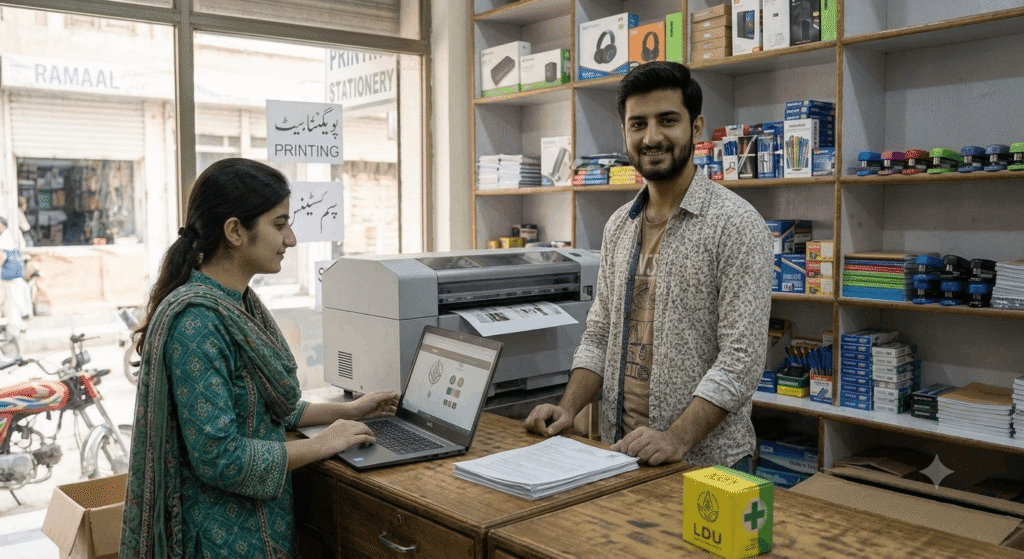
Revenue in month one was Rs. 42,000. In month two, Rs. 58,000. His monthly loan installment is Rs. 6,800.
Is he making a profit yet? Barely — most of the revenue is going back into stock and operating costs while the business gets established. But he’s building something. The shop has his name on it. He makes decisions. He’s not waiting for a job offer that doesn’t come.
That’s what the Punjab Rozgar Scheme’s financing track is designed to enable — not overnight success, but a real starting point for people who have the drive and the plan but not the capital.
If that’s your situation, the scheme is worth pursuing. Pursue it patiently, with the right documentation, through the official channels.
And if you’re on the training track — take the attendance seriously. The stipend and the placement help are real, but only for people who actually complete the program.
Thinking about launching a new business or expanding an existing one? The Punjab Rozgar Scheme offers subsidized financing for eligible entrepreneurs. Visit the official application portal below to review the requirements and apply online.
Apply for Punjab Rozgar Scheme OfficialHave a specific question about your business type, income documentation, or where to apply in your district? Leave a comment and we’ll try to help point you in the right direction.