
Losing a household’s only earner doesn’t just bring grief — it brings an immediate, practical crisis: who pays next month’s rent, and how.
That was the situation for one woman whose husband, the family’s sole earner, died of a heart attack two years ago. Three children, ages thirteen, ten, and seven. A rented house. A modest auto-repair income that had covered everything, barely — and covered nothing once it stopped.
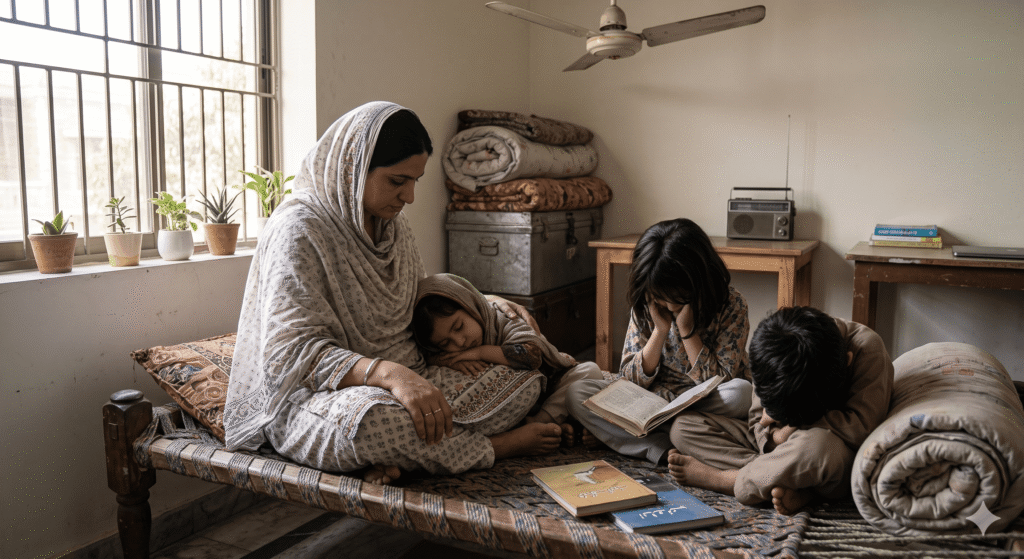
In-laws helped for the first two months. Then the arrangement strained, as these things often do. Her own family, in another city, had little to spare.
The question that eventually got asked — the one most families in this position eventually ask — was simple: is there any government program for a woman in this situation?
There turned out to be more than expected. Not one program, but several, most of which she qualified for without knowing they existed. Getting enrolled took four months of paperwork, office visits, and follow-up — but the result was support from three separate government sources. Not enough for comfort, but enough to keep the children in school and the rent paid.
This guide lays out that entire path — the programs, the eligibility, and the process — in the order it should have been explained from the start.
The Reality of Widow Support in Pakistan
There’s no single “widow support program” in Pakistan — no one office you visit, no single registration that enrolls you in everything. Support for widows is spread across multiple programs, multiple government bodies, and multiple eligibility tracks.
Some programs are specifically for widows. Others are general poverty programs where widows get priority or higher eligibility. Understanding both is important — because a widow who qualifies for BISP’s general program is eligible, and may additionally qualify for widow-specific add-ons.
The main support areas:
- Cash transfers (regular monthly or quarterly income support)
- Food support (subsidized or free rashan, Utility Store access)
- Housing assistance (for widows with housing instability)
- Education support (for widows’ children)
- Business and livelihood support (loans and training for economic independence)
- Emergency assistance (one-time crisis support)
Each area has different programs attached to it. We’ll go through all of them.
Cash Transfer Programs for Widows
BISP Kafaalat — The Foundation
BISP (Benazir Income Support Programme) is Pakistan’s largest cash transfer program, and widows from low-income households are a primary target population. If you’re a widow from a low-income household and you’re not receiving BISP Kafaalat, this should be the first thing to address.
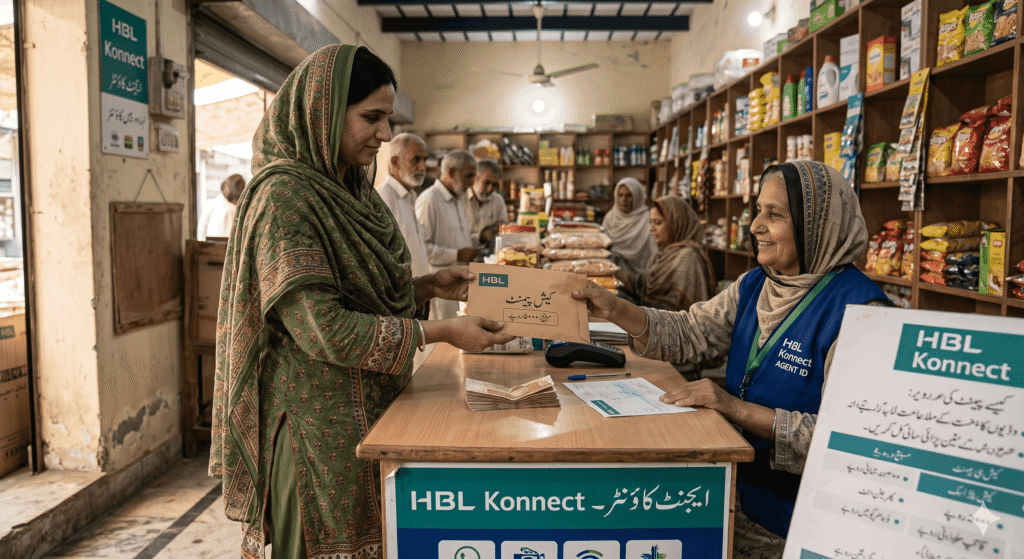
The BISP Kafaalat payment — currently Rs. 10,500 per quarter — is paid directly to the registered female beneficiary. For widows who are the head of household, this registers in their own name without needing a husband’s involvement.
Eligibility: Household PMT score below the poverty threshold (determined through NSER household survey). Widows with dependent children and no significant income or assets are typically among the lowest-scoring households, meaning the highest priority for BISP.
How to register:
- Check current status via 8171 SMS — send your CNIC number to 8171
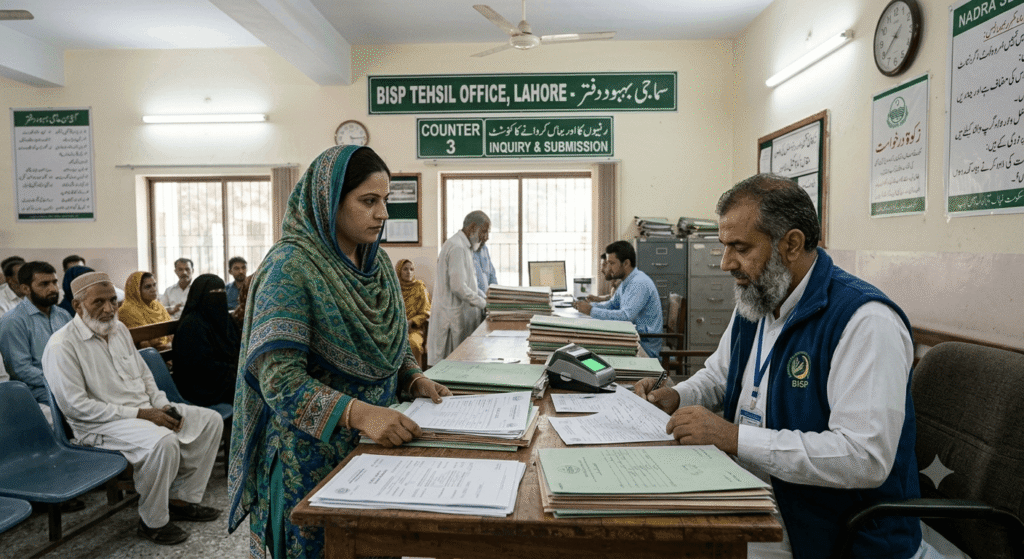
- If not registered, visit your BISP Tehsil Office
- Request a Dynamic Survey registration for your household
- A survey team will visit and assess your household
- If your PMT score qualifies, you’re added to the beneficiary list
Death certificate is an important document here — it formally establishes widowhood and changes the household composition in the NSER system. Bring it to every government office visit.
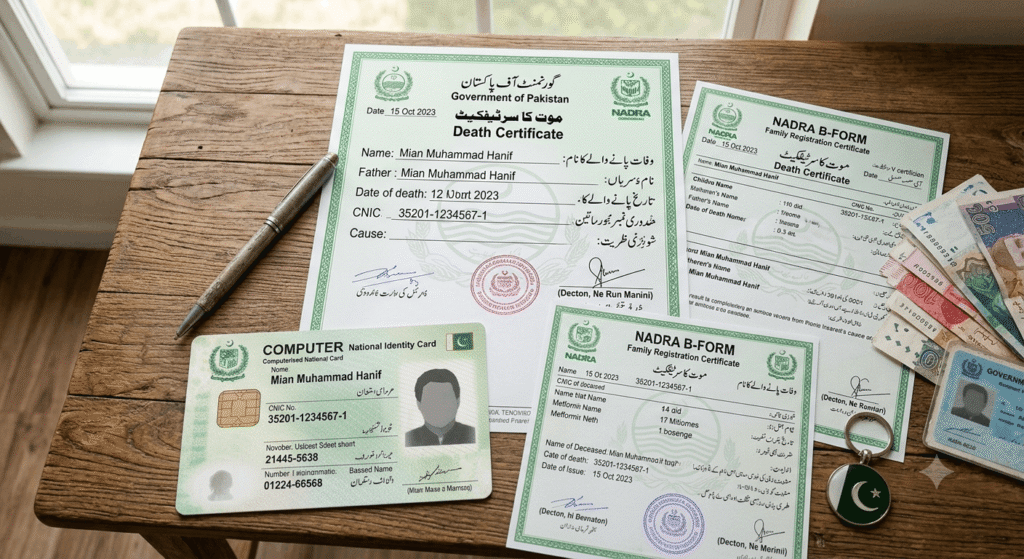
If you’re already registered under your husband’s name: After a husband’s death, the household needs to be updated in the BISP system. Visit the Tehsil Office with:
- Original CNIC (yours)
- Original death certificate of your husband
- Request to update household head status to yourself
This update is critical. Without it, you may face payment issues when the registered male head is no longer living.
Punjab Social Protection Authority — Widow Allowance
The Punjab Social Protection Authority (PSPA) administers the Muhtaj Shahri and Zakat-linked widow allowances in Punjab. Some widows who don’t qualify for BISP (perhaps because the household is borderline on the PMT score) may qualify for Punjab-level support.
The widow allowance varies by program phase but has typically provided Rs. 2,000 to Rs. 3,000 per month to registered deserving widows in Punjab.
How to access: Visit your District Social Welfare Office or District Zakat Committee office. Ask specifically about widow allowance programs currently running. These are administered at the district level and don’t always have prominent online registration portals.
Pakistan Bait ul Mal (PBM) — Individual Financial Assistance
Pakistan Bait ul Mal (pbm.gov.pk) provides non-repayable financial assistance to extremely poor and deserving citizens, with widows as one of the explicit priority categories.
PBM assistance is typically one-time or irregular — not a regular monthly payment like BISP. But in crisis moments (when rent is overdue, when a child needs medical care, when there’s a school fee deadline), PBM assistance can make a critical difference.
What PBM can provide for widows:
- Emergency cash assistance
- Support for medical treatment
- Educational support for children
- Food support in acute need situations
How to apply:
- Visit your District Bait ul Mal office (in every district headquarters)
- Fill in the application form
- Provide: CNIC, husband’s death certificate, children’s B-Forms, proof of need (utility bills, rent receipts, medical bills)
- The District Committee reviews and processes
PBM amounts are modest but the process is more accessible than many people realize. The offices exist, they accept applications, and they disburse assistance.
Zakat Department Widow Support
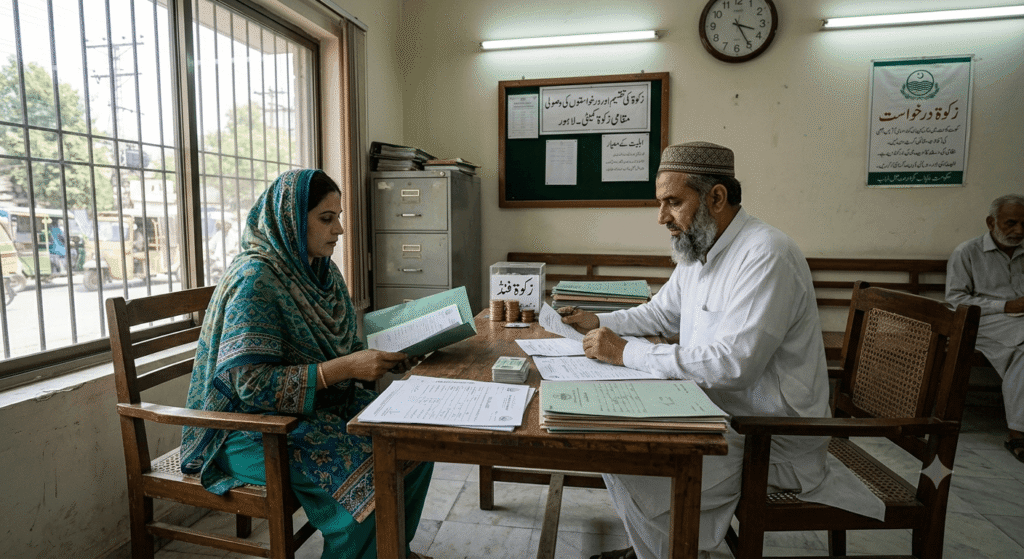
The formal government Zakat System allocates funds through district and local Zakat Committees to eligible Muslims below the nisab threshold. Widows are among the primary categories of recipients (asnaf) recognized in Islamic zakat law.
Zakat guzara allowance — a monthly stipend — is one of the most underutilized programs available to widows in Pakistan, simply because people don’t know the formal system exists and think zakat is only distributed informally through mosques.
How to access:
- Visit your District Zakat and Ushr Department office or your Local Zakat Committee (at Union Council level in most areas)
- Apply for mustahiq (deserving) status registration
- Provide: CNIC, husband’s death certificate, children’s B-Forms, evidence of financial need
- If registered as mustahiq, you receive a regular monthly zakat guzara allowance
Amount varies by district and current allocation — typically Rs. 1,500 to Rs. 3,000 per month — but it’s regular and it’s non-repayable.
Education Support for Widows’ Children
One of Nasreen’s biggest fears was keeping her children in school. She couldn’t afford private school fees but was worried even about government school-related costs — books, uniforms, transport.
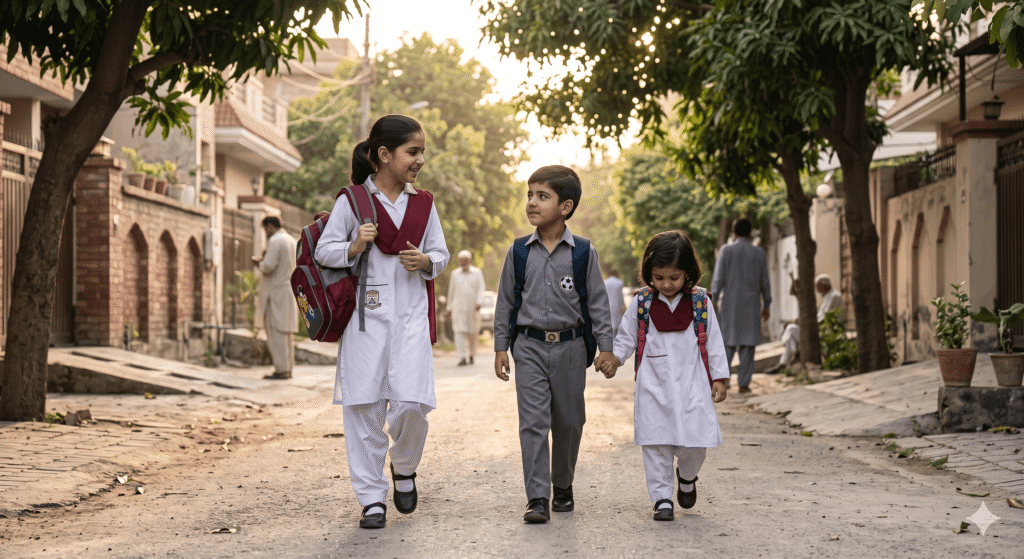
Several programs specifically support the children of widows:
BISP Taleemi Wazaif: If you’re registered in BISP Kafaalat, your children enrolled in government schools qualify for quarterly education stipends. Primary level: Rs. 750/quarter per child. Secondary: Rs. 1,500/quarter per child. Register each school-enrolled child separately at the BISP Tehsil Office.
Punjab Educational Endowment Fund (PEEF): PEEF has specific scholarships for orphaned children and children from widow-headed households. For university-level education, this is a significant source of support. Check peef.punjab.gov.pk for current programs.
Pakistan Bait ul Mal Education Support: PBM specifically runs education support programs — tuition fee support and stipends — for children from extremely poor families, with orphans and widow household children as priority.
HEC Need-Based Scholarship: For children at university level, the HEC NBS is available to students from low-income households regardless of whether the parent is a widow or not. Apply through your child’s university’s financial aid office. Widow-headed household income documentation is straightforward for the income assessment.
Livelihood Support — For Widows Who Want to Work
Cash transfers provide a floor. They’re not enough to build on. For widows who want to develop income-generating capacity, several programs offer training and financing.
Akhuwat Khuwateen Loan (Women’s Interest-Free Loan): Akhuwat’s women-specific program provides interest-free loans of Rs. 10,000 to Rs. 100,000 for small businesses. For a widow who wants to run a tailoring operation, a home bakery, embroidery work, or another home-based business — this is the most accessible route to startup capital at zero markup.
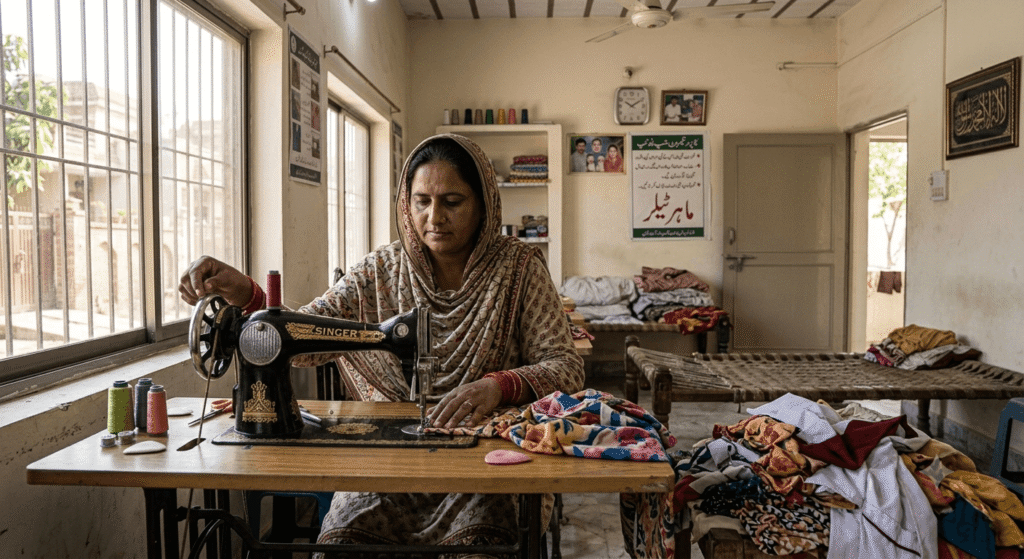
Application through your nearest Akhuwat branch (akhuwat.org.pk for branch locator). Community members serve as guarantors instead of collateral.
PM Youth Business Loan — Women’s Quota: The PM Youth Business Loan (pmkamyabjawan.gov.pk) has a 25% women’s quota. Widows who are age 21–45 and have a business idea can apply. Loan amounts from Rs. 100,000 to Rs. 7.5 million at subsidized markup rates.
First Women Bank: FWBL (fwbl.com.pk) is a government bank specifically serving women. They offer microfinance products and small business loans designed for women who don’t fit standard bank criteria — which is exactly where many widows fall.
NAVTTC Skills Training: For widows who want to develop a marketable skill before starting a business, NAVTTC offers free vocational training (navttc.gov.pk). Tailoring, embroidery, computer applications, and other courses relevant to home-based income generation are available.
Housing Assistance
Housing instability is one of the biggest immediate risks after a husband’s death — particularly for widows in rented accommodation with no independent income.
Apni Chhat Apna Ghar Scheme: The Punjab housing loan scheme (available through Bank of Punjab and other partners) gives priority consideration to widow-headed households for subsidized housing loans. If you want to transition from renting to ownership, this scheme deserves investigation. See our separate Apni Chhat Apna Ghar guide for details.
Social Welfare Department Emergency Assistance: Provincial Social Welfare Departments have emergency assistance provisions that sometimes include temporary rent support or relocation assistance for women in acute housing crisis. Visit your district’s Social Welfare office and explain your situation.
Step-by-Step: What Nasreen’s Registration Path Looked Like
Month 1:
- Gathered core documents: her CNIC, husband’s death certificate, children’s B-Forms, rental agreement, and utility bills.
- Visited BISP Tehsil Office. Submitted request for Dynamic Survey and updated household head status to her own name.
Month 2:
- Survey team visited the house. Nasreen was present with all documents.
- Filed application at District Bait ul Mal for emergency assistance.
- PBM granted Rs. 15,000 one-time assistance — covered rent for one month.
Month 3:
- BISP PMT score confirmed as eligible. Added to Kafaalat beneficiary list.
- First Kafaalat payment received.
- Visited Local Zakat Committee. Registered as mustahiq. Monthly zakat guzara allowance of Rs. 2,000 began.
- Registered children for Taleemi Wazaif at BISP office.
Month 4:
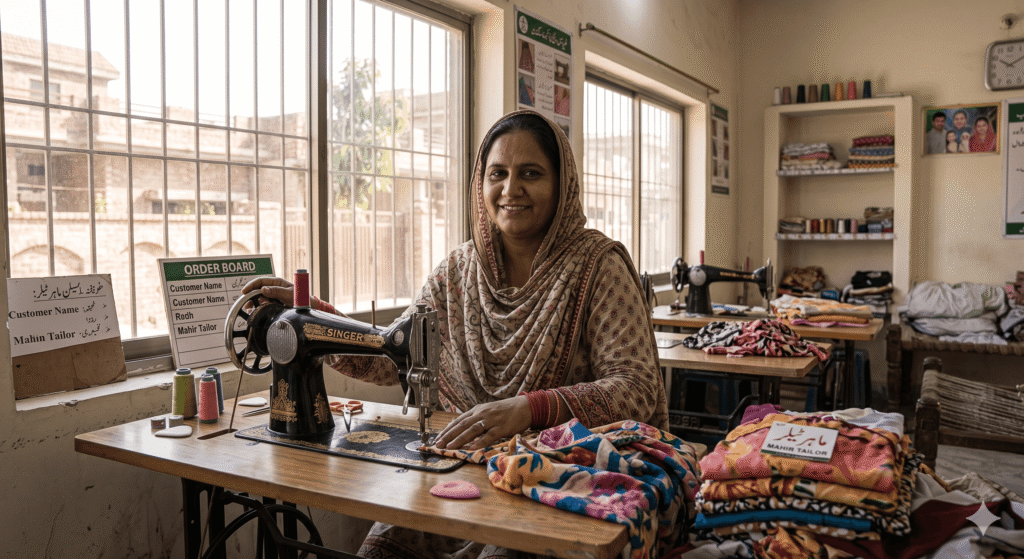
- Applied to Akhuwat Khuwateen program for a small loan to start a home tailoring business (she’d learned tailoring from her mother years before).
- Akhuwat loan of Rs. 60,000 approved. Purchased sewing machine and fabric stock.
Current situation:
- BISP Kafaalat: Rs. 10,500 per quarter
- Taleemi Wazaif for two school-age children: Rs. 750 per quarter each
- Zakat guzara: Rs. 2,000/month
- Tailoring income: Rs. 15,000–22,000/month (growing)
- Akhuwat loan: Rs. 3,500/month repayment
Not comfortable. But stable. And building.
Common Mistakes That Leave Widows Without Support
Not updating the BISP household record after the husband’s death. This is the single most critical administrative step and it’s the most often missed. If the household is registered in the husband’s name and he passes away, the payments eventually stop and the household status becomes uncertain. Update immediately at the BISP Tehsil Office with the death certificate.
Not having the death certificate processed promptly. The death certificate is the foundation document for nearly every widow support process. It needs to be issued from the relevant Union Council or hospital authority as soon as possible after the husband’s death. Many families delay this during grief — understandably — but it creates complications later.
Applying only to BISP and not pursuing other programs. BISP is the biggest program but it’s not the only one. Zakat guzara, PBM assistance, social welfare support, and livelihood programs are all separate and can run simultaneously. Apply for all that you qualify for.
Assuming you need a male family member to apply. You don’t. Every program described in this guide can be applied to by a widow in her own name, with her own CNIC. If any office tells you otherwise, ask to speak with a supervisor.
Not pursuing education and livelihood support alongside cash transfers. Cash transfers provide immediate relief. Skills training and small business financing build long-term capacity. Both tracks matter, and they’re not mutually exclusive.
Giving up after one rejection or one unhelpful office visit. Government offices vary in helpfulness. An unhelpful officer at one visit doesn’t mean the program doesn’t exist. Try again, try a different officer, or go to a higher-level office to escalate. Nasreen’s Tehsil Office visit was initially met with incomplete information — a follow-up visit a week later, with a different staff member, moved things forward.
Quick Reference: Programs for Widows
| Support Type | Program | Where to Apply |
|---|---|---|
| Quarterly cash transfer | BISP Kafaalat | BISP Tehsil Office / 8171 |
| Monthly widow allowance | Punjab Social Protection / Zakat | District Social Welfare / Zakat Office |
| One-time emergency assistance | Pakistan Bait ul Mal | District PBM office |
| Monthly zakat stipend | Zakat Guzara Allowance | Local Zakat Committee |
| Children’s education stipend | Taleemi Wazaif | BISP Tehsil Office |
| University scholarship (children) | PEEF, HEC NBS | peef.punjab.gov.pk / University |
| Interest-free business loan | Akhuwat Khuwateen | akhuwat.org.pk |
| Subsidized business loan | PM Youth Loan (Women’s Quota) | pmkamyabjawan.gov.pk |
| Housing loan | Apni Chhat Apna Ghar | Bank of Punjab |
| Free skills training | NAVTTC | navttc.gov.pk |
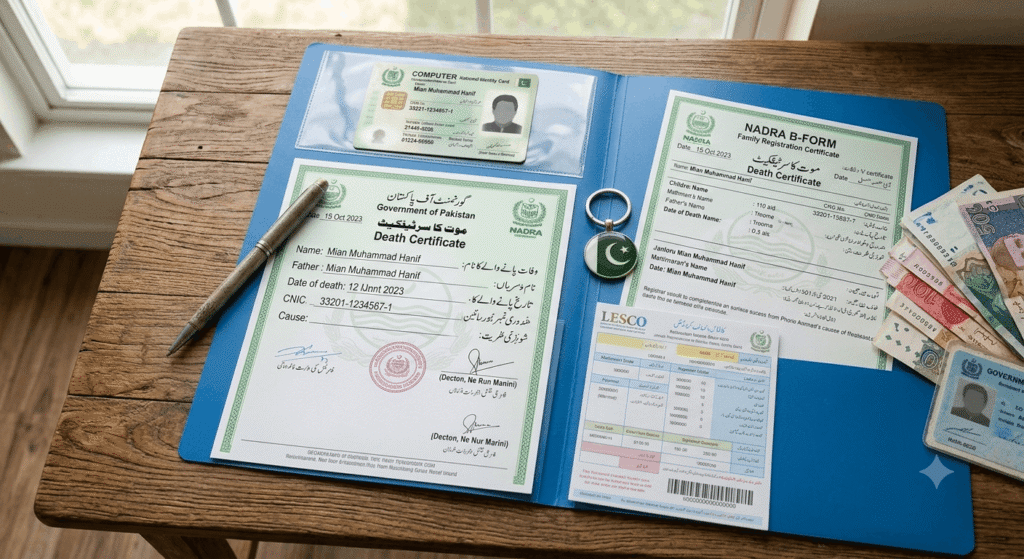
Documents to collect and maintain:
Keep these in one file. Every office visit requires some combination of these. Having them ready saves the delay of going home to collect documents between appointments.
Nasreen is a capable woman in a difficult situation she didn’t choose. The programs described in this guide exist because Pakistan’s welfare system recognizes that widows — particularly those with young children and no independent income — face a specific and severe form of financial vulnerability.
The programs aren’t enough on their own. But they’re real. They work. And they’re available to women who know how to access them.
Know how to access them.
Looking for financial assistance, loans, or welfare programs for widows? Visit the official government portal below to check eligibility, submit your application, and access the latest support programs available for widows in Punjab.
Apply for Widow Support Program Official
If you’re a widow or supporting someone who is, and you have a specific question about which program applies to your situation or what documents are needed — leave a comment. We’ll try to help you figure out the next step.