
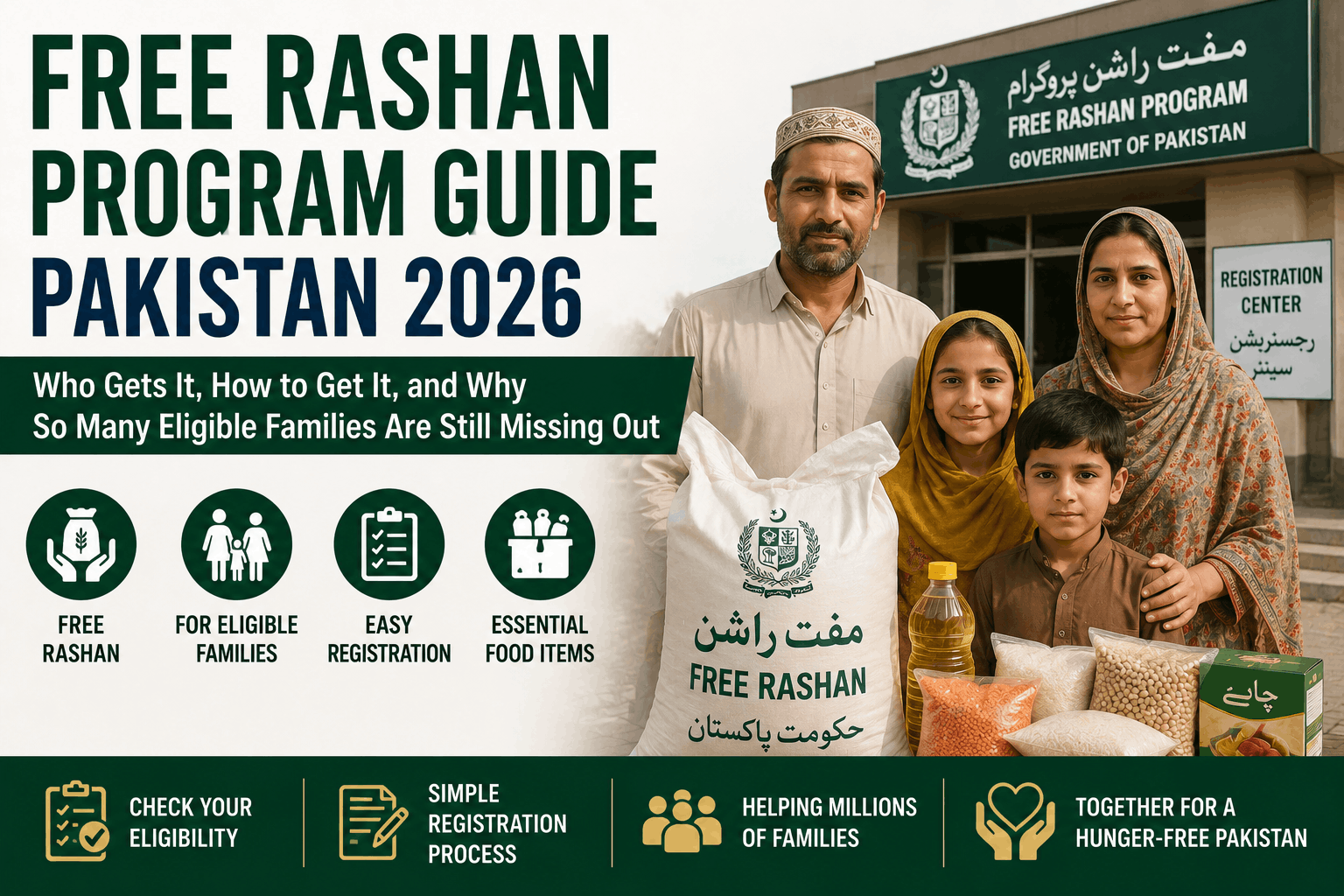
Free rashan distributions tied to BISP and Ehsaas-registered households open every Ramzan, and often at other points during the year — flour, sugar, ghee, and dal, distributed at designated points to reduce food costs for eligible families. The catch is timing: these windows are short, and notification isn’t always reliable.
One BISP Kafaalat beneficiary — receiving Rs. 10,500 quarterly, stretched carefully across three months — found this out the hard way. Standing in a queue at an HBL Konnect agent to collect her payment, she overheard another woman mention a free rashan bag picked up the week before, from a distribution point near the BISP center, open to Ehsaas-registered families.
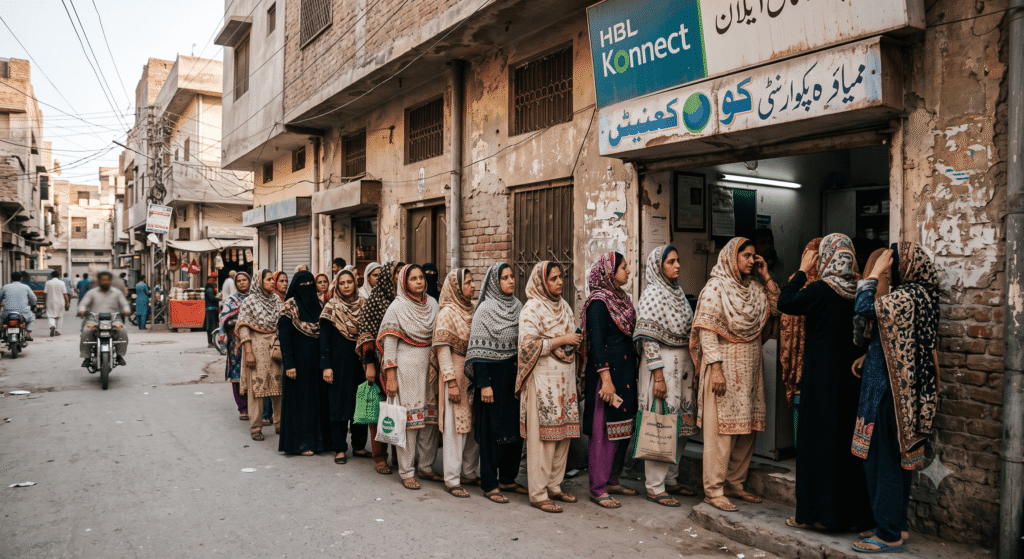
She was an Ehsaas-registered family too. She’d received no notification. A call to the BISP helpline confirmed it: the distribution in her area had already happened, and had already closed.
Not ineligibility — just a gap between “program running” and “eligible family finds out in time.” That gap is the actual obstacle for most families, more than eligibility itself.
This guide is built to close that gap: how the current rashan distribution works, who qualifies, and how to actually get notified before a window closes rather than after.
Understanding the Landscape: “Free Rashan” Isn’t One Program
This is the first confusion worth clearing up. When people ask about the “free rashan program,” they’re usually referring to several different programs that distribute food to low-income households. They overlap in target population, but they’re separate initiatives with separate eligibility, separate distribution timelines, and separate ways to access them.
The main programs currently operating or recurring annually:
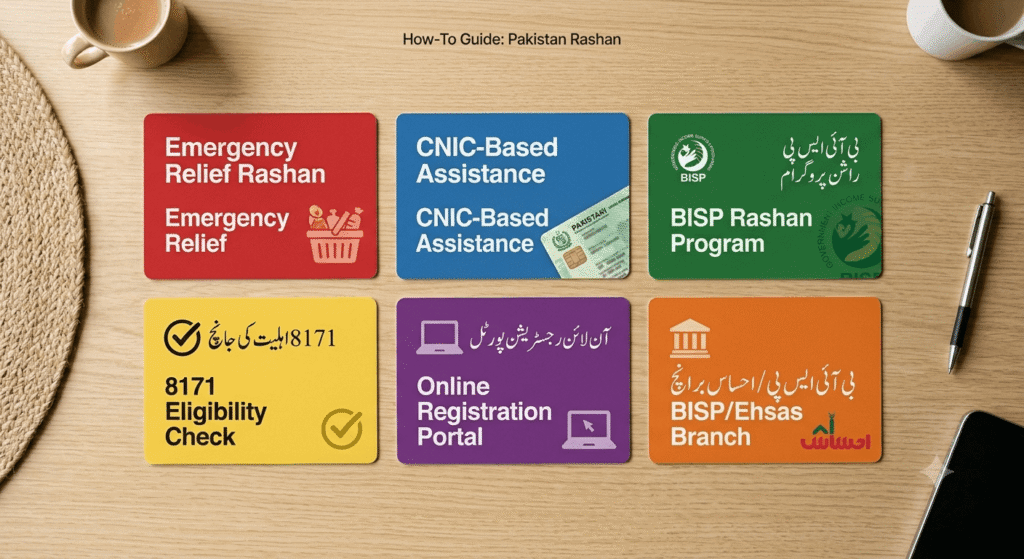
1. Ehsaas Rashan Program
2. BISP-linked Ramzan / Seasonal Distributions
3. Punjab Rashan Riayat (Ration Subsidy) Program
4. PM’s Rashan Program (federal, various phases)
5. Pakistan Bait ul Mal (PBM) Emergency Food Assistance
6. Zakat-funded distributions through the Zakat Department
Each of these has different eligibility criteria, different registration requirements, and different distribution timelines. Understanding which one applies to your situation is the starting point.
Program 1: Ehsaas Rashan Program
The Ehsaas Rashan Program was launched as part of the broader Ehsaas social protection initiative. It provides subsidized or free essential food items to low-income households registered in the NSER (National Socio-Economic Registry) or linked to the Ehsaas ecosystem.
What it typically provides:
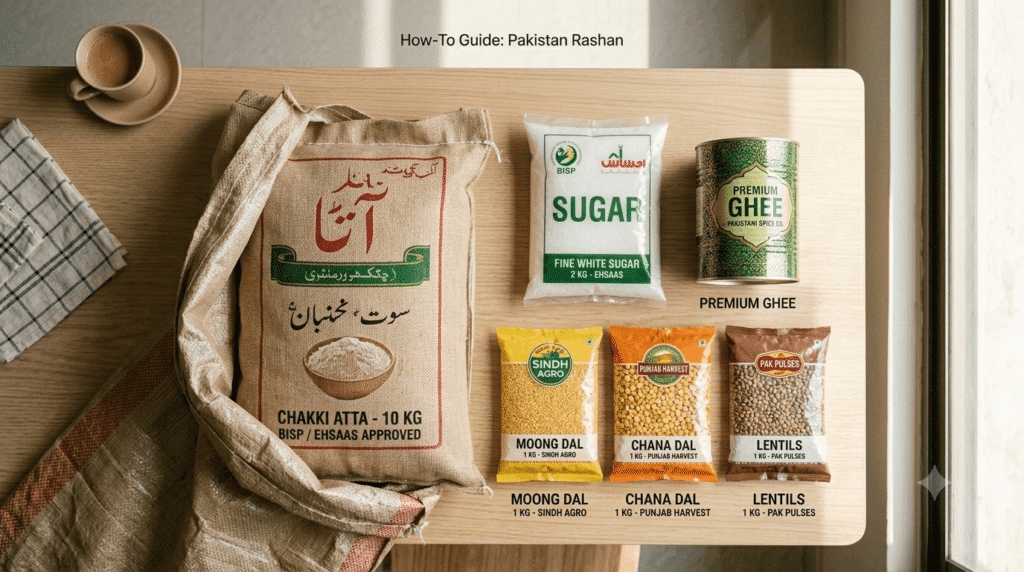
- A rashan bag containing essential staples — flour (5–10kg), sugar (1–2kg), cooking oil or ghee (1kg), pulses (1–2kg)
- Sometimes: rice, salt, tea
Who qualifies:
- Households registered in the NSER with a PMT score below the poverty threshold
- Ehsaas and BISP Kafaalat beneficiaries
- In some phases, households verified as food-insecure through community surveys
How distribution works: The Ehsaas Rashan Program has used different models in different phases:
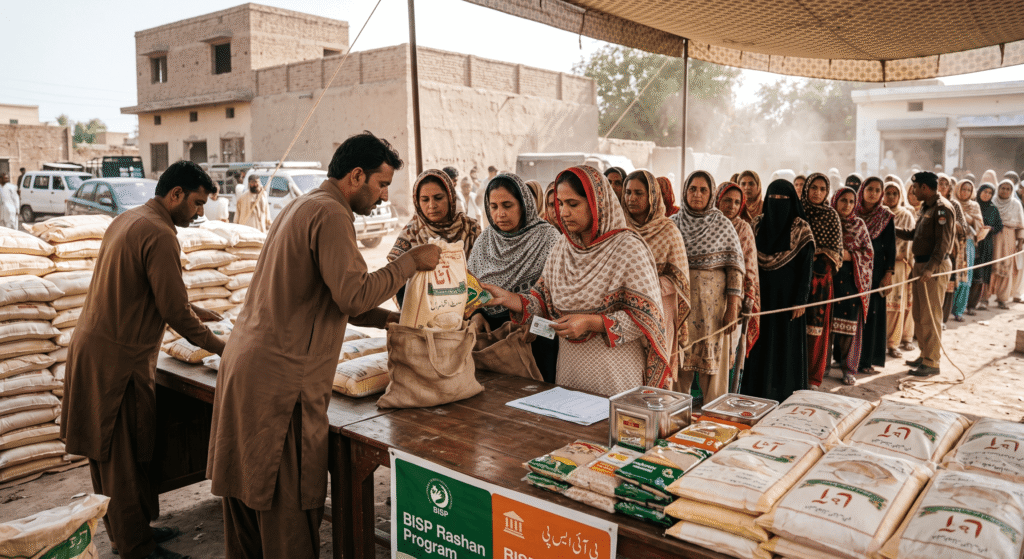
Direct rashan distribution: Physical food packages distributed at designated collection points — government schools, open grounds, BISP centers, or through Union Council offices. Beneficiaries are notified by SMS to their registered mobile number and told when and where to collect.
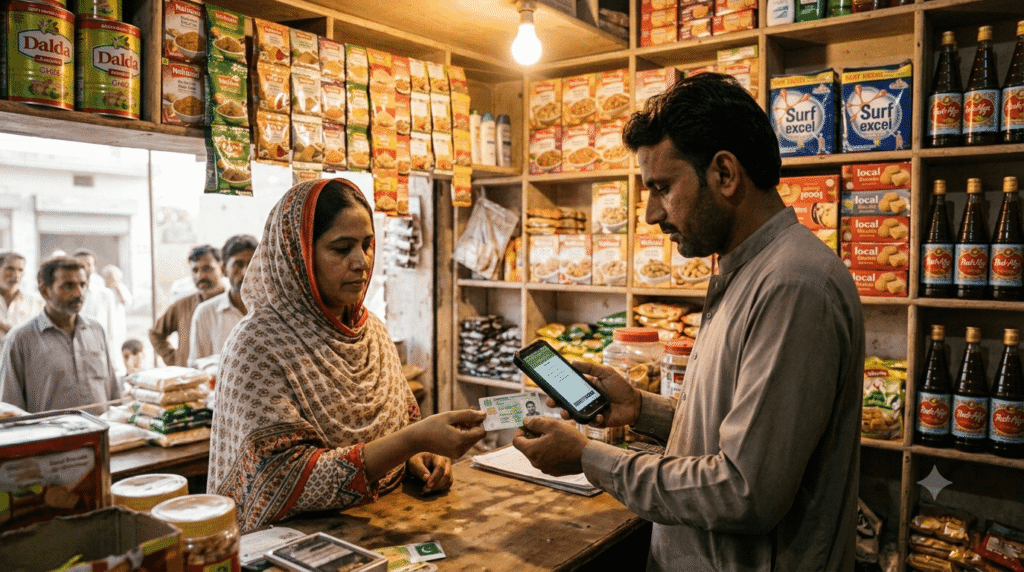
Digital subsidy voucher: In some phases, instead of physical rashan bags, beneficiaries receive a digital subsidy — a credit linked to their CNIC that can be used at participating kiryana shops or Utility Stores to purchase subsidized items. The shopkeeper scans or verifies the CNIC and applies the subsidy to the bill.
How to check if you’re included:
- Send your CNIC to 8171 via SMS. If you’re in the Ehsaas system, your status will indicate your registration category. Some 8171 replies include information about active distributions.
- Call the Ehsaas helpline: 0800-26477 and ask specifically about rashan distribution for your CNIC/household.
- Check with your local Union Council or BISP Tehsil Office — they receive advance notice of distributions scheduled for their area.
- If you’re registered, watch for SMS notifications on your BISP-registered mobile number. These are the primary notification channel.
Program 2: BISP Seasonal / Ramzan Distributions
Linked to the main Kafaalat program, BISP periodically runs targeted food distributions outside the regular quarterly cash transfer — particularly during Ramzan and in response to emergency situations (floods, inflation spikes).
These distributions go to BISP Kafaalat beneficiaries and are coordinated through BISP’s district offices. Collection is typically at BISP payment centers or designated community collection points.
This is distinct from the quarterly Kafaalat cash payment. The rashan distribution is a separate benefit — food, not cash — and has its own collection process and timeline.
Parveen’s situation was this program. She didn’t miss her Kafaalat payment — she missed a separate food distribution that her registered status entitled her to, but which she wasn’t notified about in time through her registered number.
What to do if you’re a BISP beneficiary:
Before each Ramzan (and during flood or crisis periods), proactively:
- Check 8171 for any updated status messages
- Call 0800-26477 and ask if any rashan distribution is planned for your district
- Visit your BISP Tehsil Office and ask the same question in person
Don’t wait for the SMS to reach you. Sometimes messages don’t reach all registered numbers. Taking initiative to ask is what prevents missing a distribution.
Program 3: Punjab Rashan Riayat Program
The Punjab government’s Rashan Riayat (Ration Subsidy) Program has been one of the most significant provincial food support initiatives in recent years. In its various phases, it has provided:
- Monthly ration subsidy to eligible households (credited digitally to purchase staples)
- Direct distribution of ration bags through Union Councils and community points
- Special Ramzan packages with enhanced support during the holy month
Eligibility for Punjab Rashan Riayat:
- Punjab domicile
- Income below defined threshold
- Registered in NSER/Ehsaas or meeting the program’s specific survey criteria
- Some phases specifically targeted daily-wage workers who lost income
How to access:
- Check punjab.gov.pk for current program status
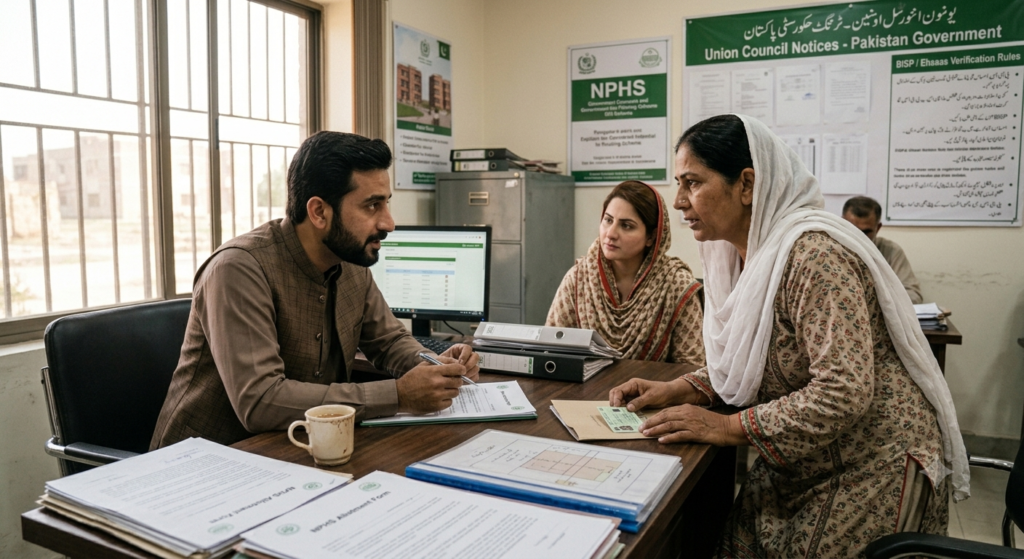
- Visit your Union Council office — UC Secretaries receive instructions about distribution in their jurisdiction and are often the most direct point of contact for community-level rashan programs
- Check with the local MPA’s (Member of Provincial Assembly) office — Rashan Riayat distributions are often administered through political constituency offices, and the MPA secretariat has information about distribution dates and locations
Important note on constituency-based distribution: Some phases of provincial rashan programs route packages through elected representatives’ offices. This can mean that access to the distribution is more effective if you’re registered in your UC and known through community channels — rather than showing up as an unknown household. Your UC Secretary and your neighborhood council member are your best allies here.
Program 4: PM’s Rashan Program (Federal)
Various federal governments have announced Pakistan-wide rashan distribution programs — sometimes called the PM’s Rashan Program, sometimes under other branding depending on the current government. These are announced during high-inflation periods, Ramzan, or as emergency responses.
These programs are typically:
- Targeted at low-income households (BISP/Ehsaas registered)
- Announced through national press conferences and official social media
- Distributed through a combination of USC stores, direct distribution points, and through BISP infrastructure
How to track federal-level rashan announcements:
- Follow verified official social media accounts of the PM’s office and the Ministry of Social Protection
- Check bisp.gov.pk and ehsaas.gov.pk for program updates
- Monitor news coverage from reliable sources (Dawn, Geo, ARY) for announcement details
The challenge with federal rashan programs: they’re often announced with specific timelines, and the registration or collection window is limited. When an announcement is made, act immediately — don’t wait a week to investigate.
Program 5: Pakistan Bait ul Mal (PBM) Food Assistance
Pakistan Bait ul Mal (pbm.gov.pk) provides direct financial assistance to extremely poor and deserving families — and in some cases, this assistance is structured as food provision rather than cash.
PBM assistance is not a regular monthly program — it’s typically one-time emergency support for families facing acute need. This includes:
- Families affected by natural disasters
- Households with severely ill or disabled members
- Widow-headed households in extreme poverty
- Orphaned children’s support
How to apply for PBM assistance:
- Visit your District Bait ul Mal office (present in every district headquarters)
- Fill in the application form with your CNIC, household details, and a description of your need
- Submit supporting documents (CNIC, disability certificate if applicable, death certificate for widows)
- The district committee reviews and processes applications
PBM amounts are modest but the assistance is non-repayable (it’s a grant, not a loan). For families in genuine acute need who don’t qualify for BISP, PBM is worth pursuing.
Program 6: Zakat-Funded Food Distributions
The federal Zakat Department and provincial Zakat Committees administer zakat funds collected through banks and formal channels. A portion of this goes to food assistance (food-based guzara allowance) for mustahiq (deserving) families.
Zakat-funded rashan or cash support is available to:
- Muslims below the nisab threshold (poverty line based on Islamic criteria)
- Registered mustahiq families through local Zakat Committees
How to access: Visit your local Zakat Committee — typically located at the Union Council level or through the district Zakat and Ushr Department office. The committee determines mustahiq status and distributes assistance.
This channel is often underutilized because people don’t know the formal structure exists. The informal image of zakat as something given mosque-to-mosque obscures the fact that there’s a formal government zakat system with actual offices and budget.
Step-by-Step: What Parveen Did After Missing the First Distribution
After that frustrating Ramzan experience, she set up a system that would prevent her from missing future distributions.
Step 1: She visited her BISP Tehsil Office and asked them to confirm that her mobile number on file was correct and active. It was — but she made a point of confirming, since outdated numbers are a common reason for missed SMS notifications.
Step 2: She asked the Tehsil Office officer to note her name and tell her when the next rashan distribution was planned for her area. The officer couldn’t give a date but confirmed they’d send SMS notices when it was announced.
Step 3: She noted the direct number for the Tehsil Office’s administrative desk (not the national helpline, but the local office number) so she could call them directly before future Ramzans.
Step 4: She connected with two neighbors who were also BISP beneficiaries and agreed they’d share information immediately if any of them heard about a distribution first. This informal network is, honestly, as important as any official channel.
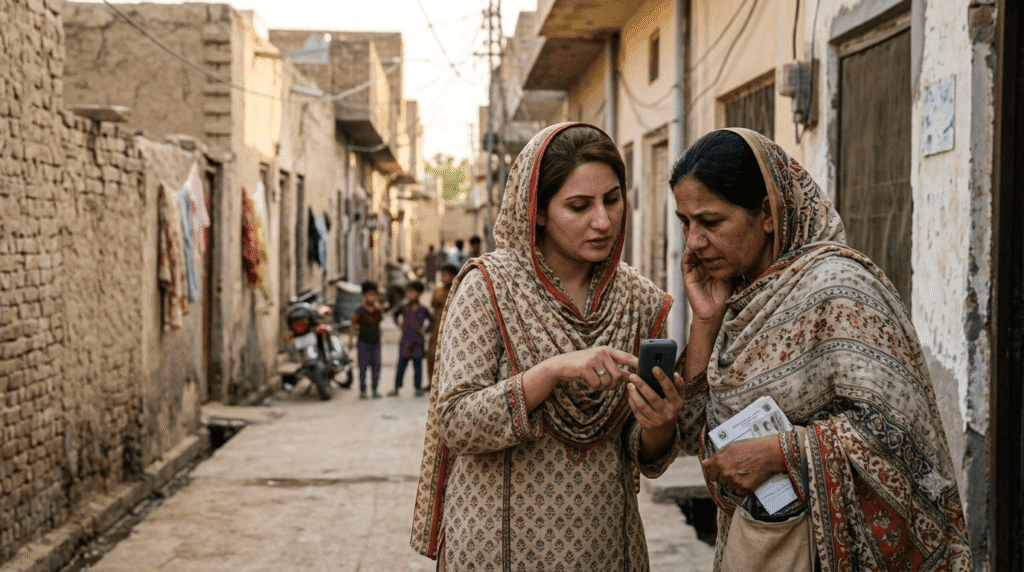
Step 5: She started checking the 8171 SMS system monthly rather than only when she was checking her payment status — because distribution announcements sometimes show up in the status message.
The next Ramzan, she received an SMS notification three days before the distribution. She went on the first day. Got her rashan bag.
The difference between missing it and getting it was three steps: correct phone number confirmed, proactive check-in with the Tehsil Office, and an informal neighbor network.
Common Mistakes That Leave Eligible Families Empty-Handed
Assuming the SMS will arrive if you’re eligible. SMS notification systems work imperfectly. Outdated numbers, network issues, system errors — these cause eligible beneficiaries to miss notifications. Don’t rely solely on receiving a message. Actively check.
Not knowing which program is currently running. “Is there a rashan program?” is too vague a question. Ask specifically: “Is there an Ehsaas Rashan distribution in my area this month? Is there a BISP Ramzan package for my district? Is there a Punjab Rashan Riayat collection happening near me?” Specific questions get specific answers.
Waiting too long after hearing about a distribution. When someone tells you a distribution is happening, go as early as possible. These programs have limited stock. The first day often has the most available packages and shortest queues.
Not verifying your registered phone number. If the number linked to your BISP account is someone else’s phone or an old number you no longer use, you’ll miss every SMS notification. Go to the BISP Tehsil Office and confirm your contact details are current.
Trusting social media announcements without verifying. Every rashan season, unofficial social media posts circulate claiming “free rashan registration is open — click here.” These are often scams harvesting CNICs or leading to misinformation. Verify through 8171, the official BISP portal, or the Tehsil Office before acting on any announcement.
Not building an information network with neighbors. This sounds informal and it is — but it’s genuinely the most reliable way to catch distribution announcements in time. BISP beneficiaries in the same neighborhood who share information give each other a real advantage over isolated households that rely only on official notification.
Quick Reference: Which Program to Check
| Your Situation | Program to Check First | How to Check |
|---|---|---|
| BISP Kafaalat beneficiary | BISP seasonal distributions | 8171 SMS, 0800-26477, BISP Tehsil Office |
| Ehsaas/NSER registered | Ehsaas Rashan Program | 0800-26477, ehsaas.gov.pk |
| Punjab resident, low income | Punjab Rashan Riayat | punjab.gov.pk, Union Council office |
| Acute emergency need | Pakistan Bait ul Mal | District PBM office |
| Muslim, below nisab | Zakat Committee assistance | Local Zakat Committee / UC office |
| Any low-income family | Utility Store subsidies | Nearest USC outlet (no registration needed) |
The programs described in this guide exist because Pakistan’s policy framework recognizes that low-income families need food support, not just aspirational development targets. The money is allocated. The food is purchased. The distribution infrastructure exists.
The only thing that breaks the chain is information not reaching the people it’s meant for.
Parveen should never have had to find out about her rashan package from the woman ahead of her in a payment queue. That’s a systems failure. But until those systems are fixed, knowing how to proactively find the information yourself is the next best thing.
Check 8171. Confirm your phone number at the Tehsil Office. Connect with your neighbors. Go early when a distribution is announced.
The rashan is there. You just have to know where to show up.
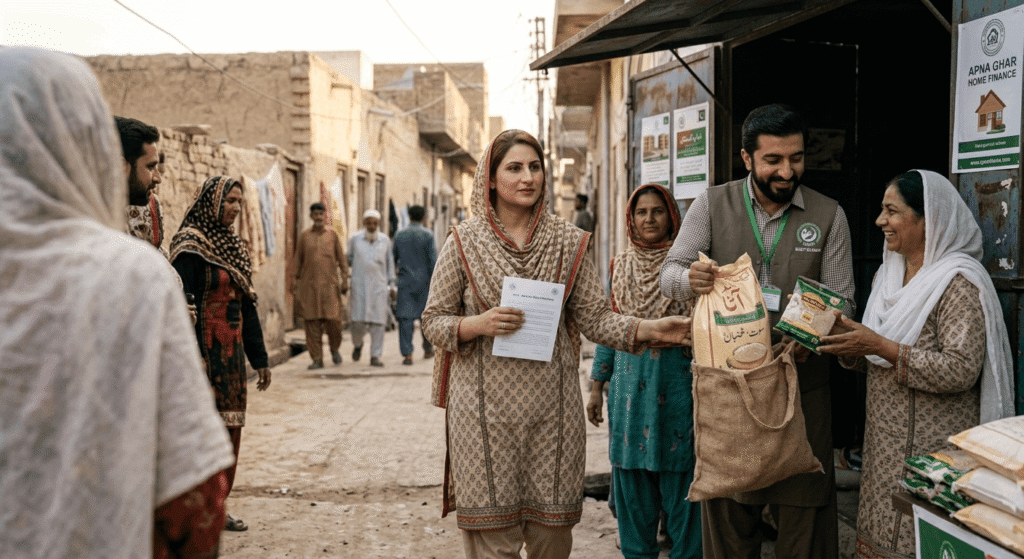
Want to apply for the Free Rashan Program? Visit the official government portal below to complete your registration, check your eligibility, and get the latest updates on the Rashan subsidy program.
Apply for Free Rashan Program OfficialHave you recently found out about a rashan distribution in your area that others might be missing? Drop the details in the comments — which city, which program, how to access it. That information helps people who need it find it in time.