

A private kiryana shop is convenient — familiar faces, home delivery, buy-now-pay-later on trust. It’s also, for most basic staples, running 20-30% more expensive than it needs to be.
That gap is exactly what Utility Stores exist to close, though plenty of households go years without using them simply out of habit. One Karachi household discovered this three years after moving to the city — a neighbor’s suggestion led to a first trip to the nearest Utility Store Corporation outlet, and a 10kg bag of atta and a bottle of cooking oil, both noticeably cheaper than the usual kiryana prices.
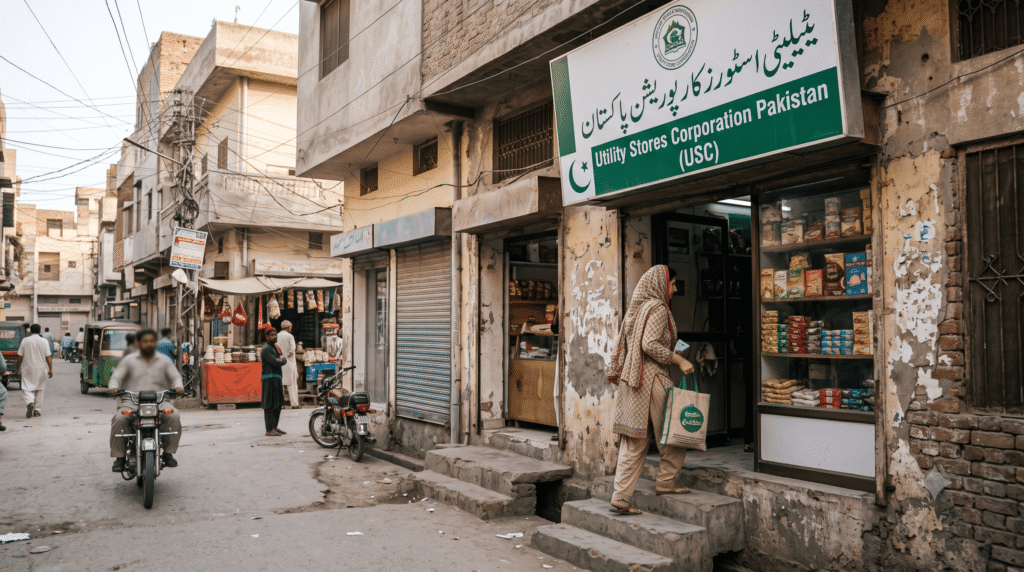
The pattern that followed: Utility Store every ten to fourteen days for staples, kiryana only for fresh items and whatever the utility store doesn’t stock. The combination saves the household roughly Rs. 1,500-2,000 a month compared to buying everything privately.
Not a dramatic number on its own. Over a year, it adds up to Rs. 18,000-24,000 — close to a semester of school fees, or two months of a basic utility bill. For a household working with a tight budget, that difference is real money, not a rounding error.
This guide covers how Utility Stores actually work, what the subsidies cover, when the savings are biggest, and how to use them effectively rather than just knowing they exist.
What Utility Store Corporation Is
The Utility Store Corporation (USC) is a government-owned retail chain operating under the Ministry of Industries and Production. It’s been running since 1971 — originally set up specifically to provide essential goods to lower and middle-income consumers at prices below the open market.
The stores aren’t charities. They operate commercially and cover their costs. The difference between USC prices and market prices comes from:
- Government subsidies on specific items: The federal government allocates subsidies on essential commodities — flour, sugar, ghee, cooking oil, pulses, tea — that reduce what USC pays for its stock, allowing them to sell at lower prices.
- Direct procurement: USC sometimes procures directly from producers or PASSCO at rates below what private wholesale channels charge.
- Reduced margin operations: USC operates on lower profit margins than private retailers.
The result: subsidized items at USC are genuinely cheaper than the same items at a regular kiryana or grocery store — particularly during periods of government price support.
The network spans over 5,000 outlets across Pakistan, including in cities, towns, and some rural areas. In many neighborhoods, the nearest Utility Store is closer than people assume — they just haven’t looked.
What’s Subsidized — And What Isn’t
This is important because people sometimes go to Utility Stores expecting everything to be cheaper and then feel let down. The subsidy applies to specific items. Other things are sold at or near market rates.
Items typically subsidized at USC:
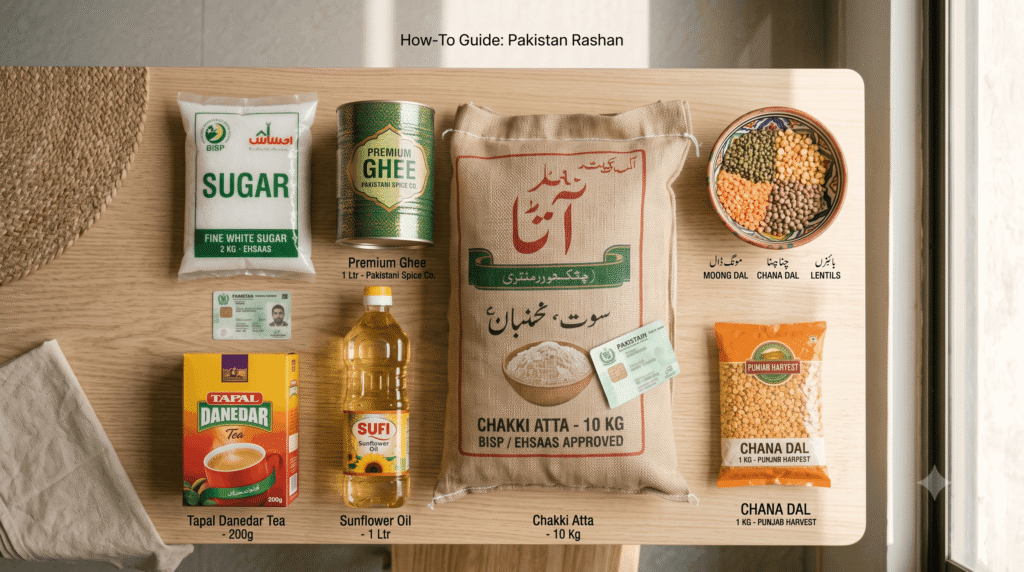
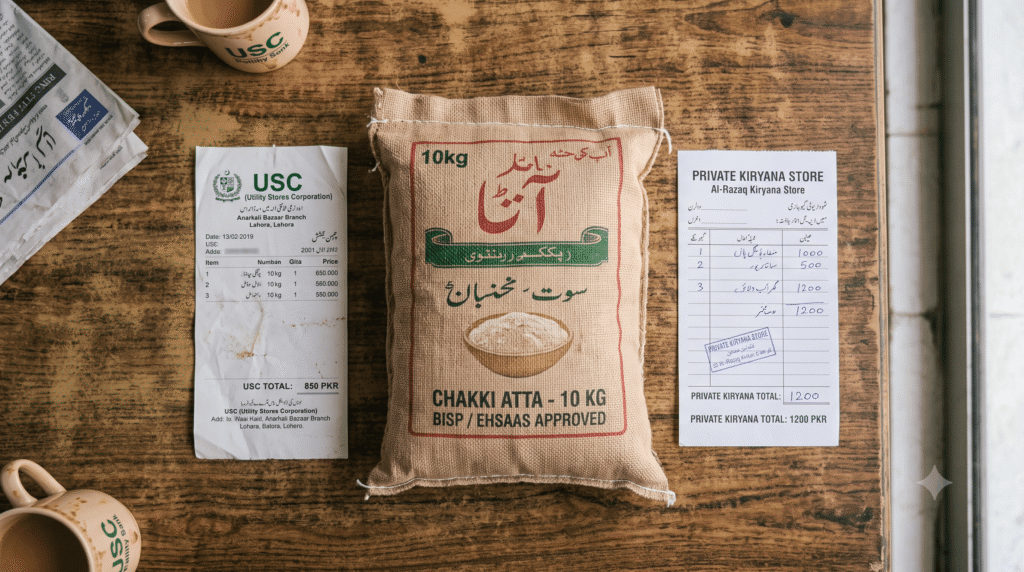
- Atta (wheat flour): 10kg bags at below-market prices. This is often the most significant saving — flour price differences between USC and market can be Rs. 50 to Rs. 150 per 10kg bag depending on the period.
- Sugar: Per kg price is usually Rs. 5 to Rs. 20 below open market during normal periods, more during Ramzan.
- Cooking oil / Ghee: Subsidized rates on specific pack sizes.
- Pulses (dal, chana, moong, masoor, mash): Subsidized prices on government-specified pulses.
- Tea: Some varieties sold at below-market rates.
- Rice: Available at USC, with pricing depending on government support levels at any given time.
Items sold at or near market rate:
- Fresh produce (vegetables, fruits) — USC doesn’t typically carry these
- Beverages, snacks, and packaged foods beyond the basic staples
- Non-food items (cleaning products, personal care)
- Premium food brands
The most value comes from the flour and cooking oil subsidies. These two items typically account for the largest share of a low-income household’s food spending, and the savings here are real.
How the Subsidy Works in Practice
The subsidy isn’t something you apply for. It’s built into the shelf price. Anyone who walks into a Utility Store pays the government-subsidized price for the items covered.
There’s no registration. No CNIC requirement for basic purchases (some items have limits that are tracked, but the default is just walk in and buy).
Purchase limits: To prevent bulk buying and resale, USC enforces per-household purchase limits on heavily subsidized items.
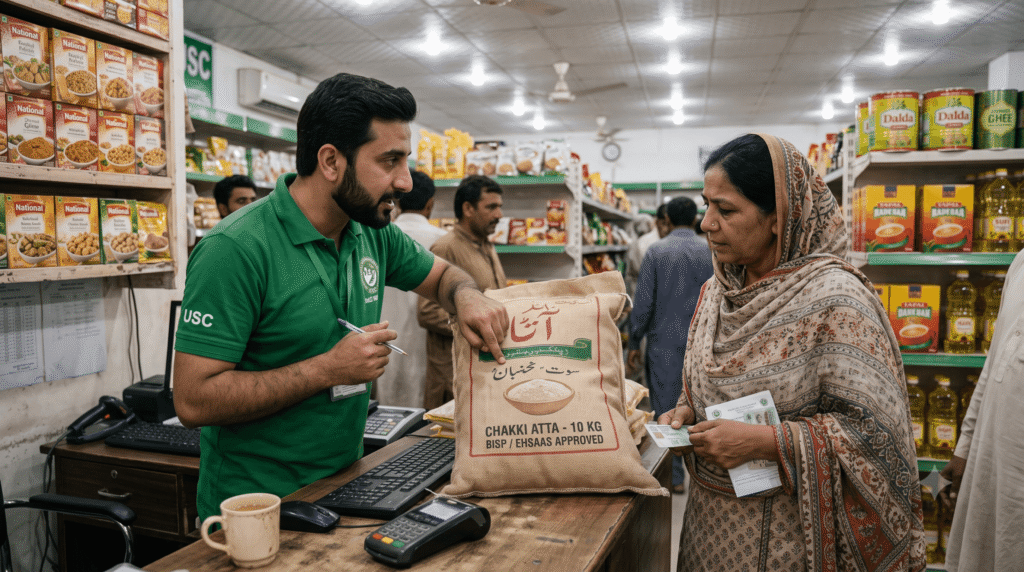
These limits vary by item and by current policy:
- Typically: 1 bag of 10kg atta per customer visit
- Sugar: 2–5kg limit per customer
- Ghee/oil: 1 unit per customer
These limits are enforced by counter staff. Trying to buy two bags of flour in one visit will usually result in being sold one.
Getting around this while staying within the rules: Two family members going separately on the same day (or different days) can each buy their limit. Many families with 4–5 members send different people across the week. This is normal and within how the system is intended to work.
When Subsidies Are Biggest
Utility Store subsidies exist year-round but increase significantly during two periods:
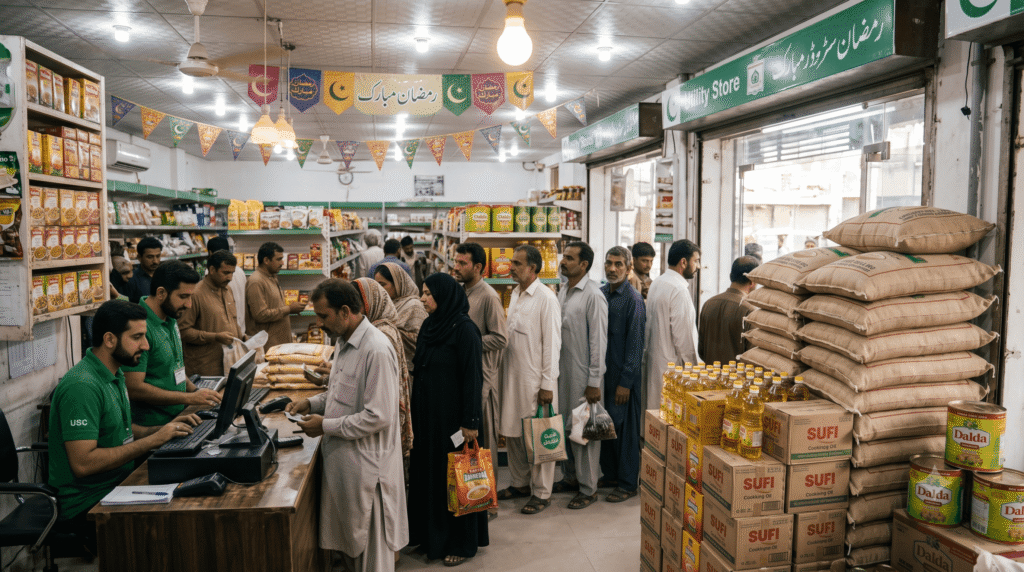
Ramzan: The federal government increases its subsidy allocation for Ramzan specifically. More stock is released, prices are further reduced on some items, and USC receives additional government funding to cover deeper discounts. During Ramzan, a 10kg bag of atta at USC can cost Rs. 100 to Rs. 200 less than open market. This is when the savings are most dramatic.
Budget cycle support: After federal budget announcements, the government sometimes provides temporary subsidy support on specific items in response to inflationary pressure. These are announced publicly and typically run for a few months.
Year-round: Even outside Ramzan and special announcements, the baseline subsidy on flour and cooking oil means USC is consistently 10–20% cheaper than private retail on these items.
How to Find Your Nearest Utility Store
This is the step most people skip — and then assume Utility Stores are “far away” without actually checking.
Online: Go to utilitystores.gov.pk and use the store locator. Enter your city or district to find the nearest outlets.
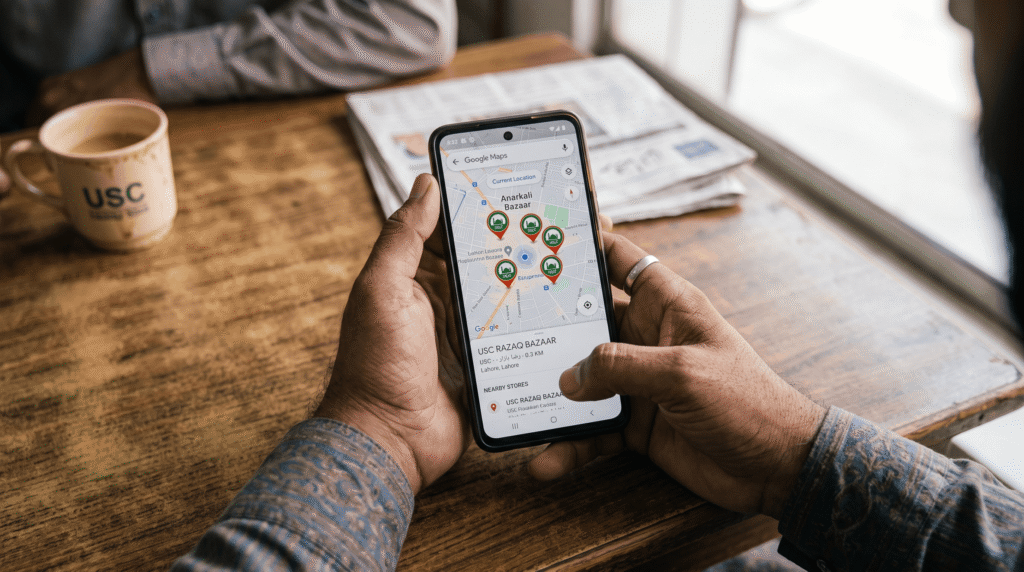
Google Maps: Search “Utility Store” or “USC” near your location. Most USC outlets have been mapped and show up on Google Maps with addresses and sometimes phone numbers.
Ask locally: Long-term residents of any neighborhood usually know where the nearest Utility Store is. Ask a shopkeeper, a neighbor who’s been in the area for years, or the local mosque’s admin — they’ll know.
Once you know where it is, note the opening hours. USC stores typically operate from 9 AM to 9 PM but hours can vary. Some stores close briefly at lunch or prayer times depending on staffing.
Practical Tips for Getting the Most Value
Go on weekdays in the morning. Utility Stores get crowded on weekends and in the evenings. Weekday mornings mean shorter queues, fresher stock, and less waiting.
Make a list focused on subsidized items. Know what you’re going for before you arrive. The savings are in the staples — flour, ghee, pulses. Don’t go in planning to buy everything and then be disappointed when the non-subsidized items aren’t particularly cheaper.
Check stock before making a special trip. Stock of subsidized items varies. During high-demand periods (early Ramzan, after a subsidy announcement), stock runs low quickly. If you can, call the store before going to check whether your needed items are available.
Bring your own bags. USC stores vary in how well they’re stocked with packaging for customers. Bringing a couple of cloth bags or grocery totes for staple items saves hassle.
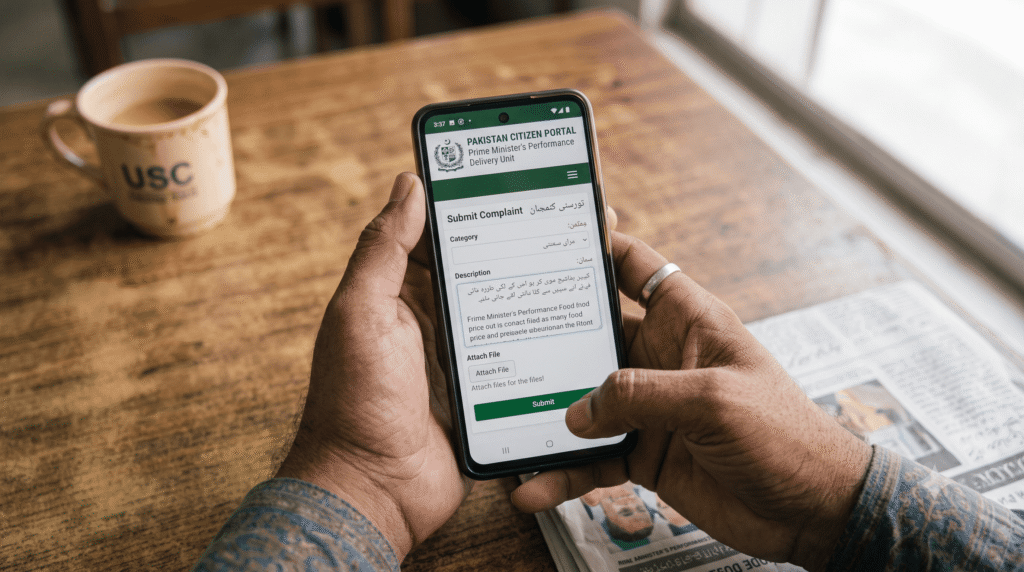
Keep your receipts. If there’s a price discrepancy — you’re charged more than the posted subsidized price — the receipt is your evidence. Overcharging at USC stores can be reported to the USC helpline and also to the Pakistan Citizen Portal app.
Pair USC with your regular kiryana. My mother-in-law’s approach — basics from USC, fresh produce from the neighborhood shop — is optimal. Trying to do all grocery shopping at USC doesn’t work because the product range is limited. Use it for what it does well.
The BISP/Ehsaas Integration — Deeper Discounts for Registered Families
For families registered in the BISP Kafaalat program or the Ehsaas system, some USC stores have a separate subsidy arrangement that provides even deeper discounts on the subsidized items.
This works through CNIC-linked verification at certain USC outlets — your CNIC is scanned, your BISP registration is confirmed, and you receive the BISP-tier subsidy price rather than the general public subsidy price.
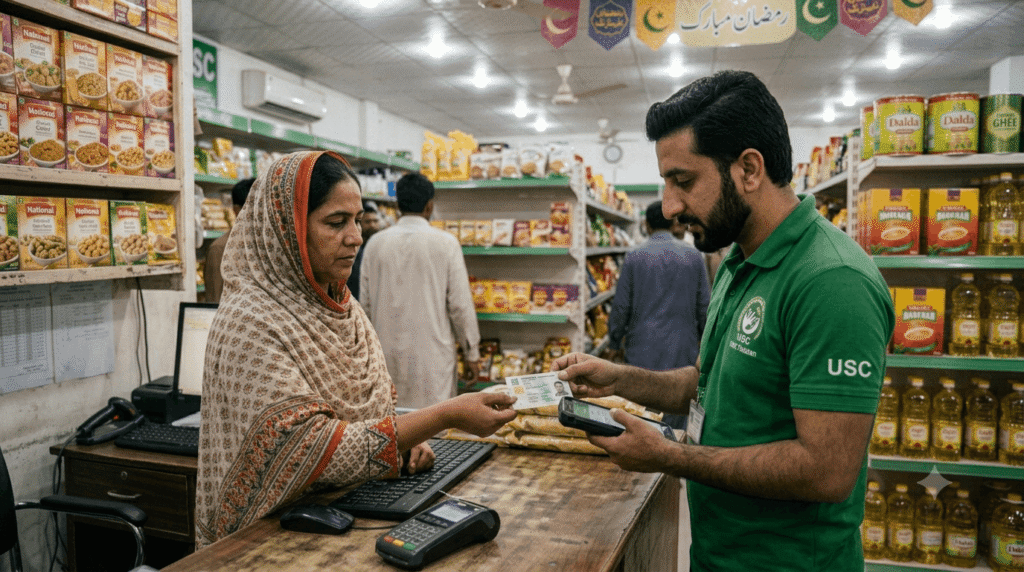
This isn’t available at every USC outlet — it requires the store to have the verification equipment and be part of the integrated program. But where it exists, it can mean an additional 10–20% reduction on already subsidized prices.
How to find out if this applies to you:
- Check with your nearest USC store whether they have CNIC-based BISP integration
- Ask at your BISP Tehsil Office whether USC BISP discounts are operational in your area
- When visiting USC, bring your CNIC and ask the counter staff whether BISP pricing applies
Reporting Problems: When USC Isn’t Following the Rules
Utility Stores are government institutions, and like all government institutions, they sometimes don’t function as they should. Common issues include:
- Overcharging: Selling subsidized items above the official government price
- Stock hoarding: Claiming items are out of stock when they’re available for sale at higher prices
- Short weight: Selling flour or pulses at less than the stated weight
- Refusing BISP pricing: A store that should have BISP integration but claims not to
If you experience any of these:
- Ask to speak with the store manager and raise the issue directly
- Note the store name, location, and what happened
- Report through the Pakistan Citizen Portal app (download on Android or iOS) under “Consumer Protection” or “Utility Stores”
- Call the USC helpline — the number is posted at USC outlets and on utilitystores.gov.pk
- Contact your provincial government’s Price Control Department (in Punjab, this is under the DC office)
Reporting actually works sometimes — particularly for overcharging on controlled-price items. The government takes price control violations seriously during high-inflation periods.
What I Noticed After Using USC Regularly for Eight Months
I started going to USC regularly after we moved to a neighborhood where one was conveniently located. A few observations from actual regular use:
The flour savings are real. The 10kg atta consistently costs Rs. 100 to Rs. 150 less than the same weight at our neighborhood grocery store. We buy atta exclusively from USC now.
The pulses savings are inconsistent. Sometimes the USC price is better, sometimes it’s comparable to market. Depends on what government subsidies are active at that moment. I check both before committing to either.
The cooking oil savings vary by brand. USC stocks specific brands at subsidized rates. If that’s not the brand you normally use, you either switch or pay the difference elsewhere. We switched.
The experience is basic. USC stores are not premium retail environments. Queues, limited shelf organization, occasional stock issues. If you’re used to a well-organized supermarket experience, the adjustment takes getting used to. The savings compensate.
The staff quality varies. Some USC stores have genuinely helpful staff. Others are frustrating. This seems to depend more on specific store management than on any system-wide pattern.
Overall: for the staples it covers, USC consistently delivers on the value proposition. For everything else, it’s either comparable to or not worth the trip.
Common Mistakes to Avoid
Going in expecting a full grocery shopping experience. USC is for subsidized staples, not your complete grocery list. Go with that specific expectation.
Not knowing the daily purchase limits. Arriving and expecting to buy three bags of flour will result in buying one and a wasted trip if you needed more. Plan your household’s USC visits accordingly — multiple family members, multiple visits.
Going during Ramzan without going early. The best Ramzan discounts are in the first week. After that, stock depletes and the best prices are gone. Early Ramzan = maximum savings.
Not reporting overcharging. Many people don’t report price violations because they assume it won’t matter. Reports do get processed, and stores with repeated violations face consequences. Use the Pakistan Citizen Portal.
Assuming USC is only for poor families. USC is open to everyone. The subsidies exist to reduce consumer prices broadly, not just as a targeted welfare program. Middle-income families save real money at USC. There’s no income requirement to shop there.
Quick Reference
| Item | Typical USC Savings vs. Market |
|---|---|
| Atta (10kg) | Rs. 100–200 below market |
| Cooking Oil (1 liter) | Rs. 20–50 below market |
| Sugar (1kg) | Rs. 10–30 below market |
| Pulses (per kg) | Rs. 20–60 below market (varies) |
| All items during Ramzan | Additional 15–25% reduction |
The Utility Store subsidy system isn’t perfect and it isn’t comprehensive. But for the items it covers — and particularly during Ramzan — it’s one of the most consistent forms of direct consumer price support available to Pakistani households.
My mother-in-law’s Rs. 1,500–2,000 per month saving is real. It accumulates. And she wishes she’d found the store five years earlier.
Find yours now — before the next Ramzan announcement catches you unprepared.
Want to check the latest Utility Store subsidy, discounted items, or government relief packages? Visit the official Utility Stores Corporation website below for the latest announcements and program updates.
Visit Official Utility Stores Portal OfficialKnow of a USC store in your area with particularly good stock management or a location that’s not showing up online? Share it in the comments — it might help someone nearby who doesn’t know it exists.