
Rs. 28,000 per semester at a public university is manageable for many households. For a family running on a combined income of around Rs. 30,000 a month — a father working as a daily wage sweeper, a mother doing domestic work in a few nearby houses — it wasn’t.
The obvious first step was HEC’s Need-Based Scholarship, and he qualified on financial grounds. What almost got missed entirely was a second option: dedicated minority scholarships, mentioned only in passing by the university’s financial aid office, as if it were assumed knowledge rather than something that needed explaining.
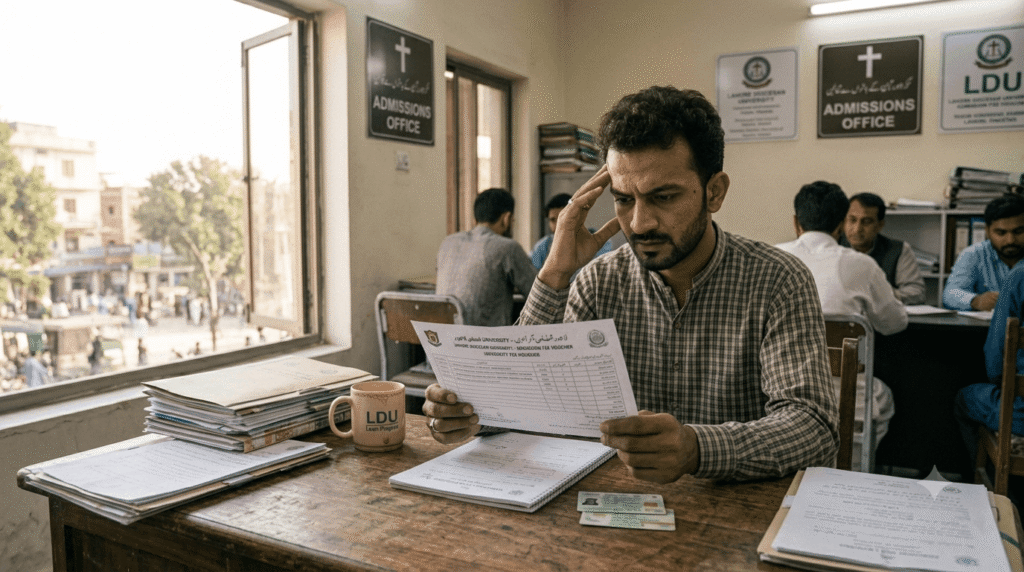
It wasn’t assumed knowledge. He hadn’t known, and most students in the same position don’t.
Combining the standard need-based scholarship with a dedicated minority scholarship ended up covering most of his education costs through graduation.
This guide covers exactly that second, less-known category: what dedicated minority scholarship programs exist in Pakistan, how they work, and how non-Muslim students can actually access them.
Why Minority-Specific Scholarships Exist
Pakistan’s religious minority communities — Christians, Hindus, Sikhs, Parsis, Bahais, Ahmadis (in some scheme contexts), Kalash, and others — face a combination of barriers that make higher education access harder than the general population average:
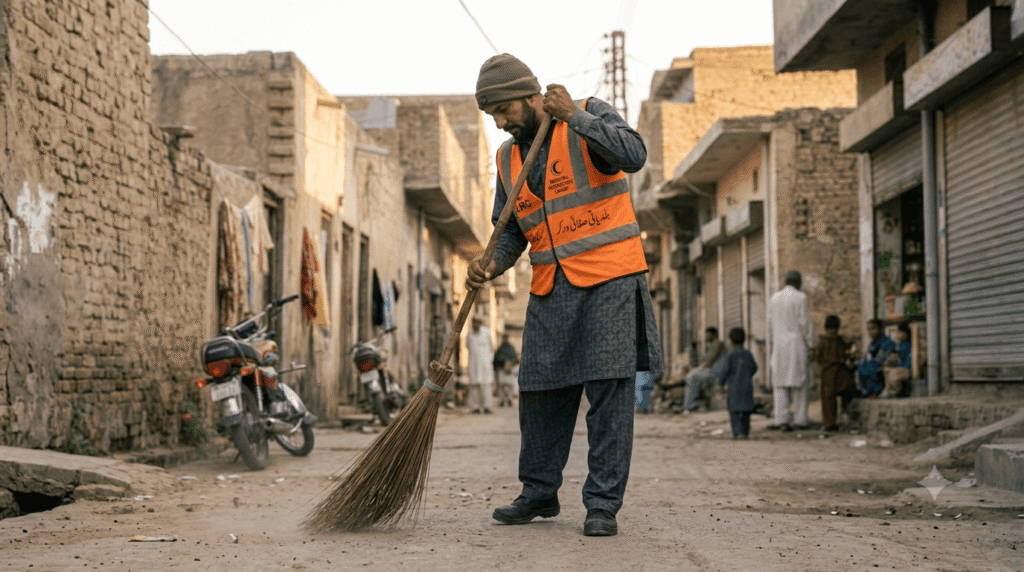
Historical employment patterns mean minority communities are disproportionately represented in lower-income occupations — sweepers, sanitation workers, agricultural laborers in some regions, domestic workers. This isn’t universal, but it’s a documented pattern that affects educational access.
Geographic concentration matters too. Large Hindu communities in Sindh’s rural areas, Christian communities in specific urban neighborhoods, Sikh communities in Punjab — these concentrations sometimes mean lower-quality local schooling, longer distances to universities, and less access to the informal networks that help families navigate scholarship applications.
Minority-specific scholarships exist to address this — not as charity, but as targeted access programs that recognize specific structural barriers.
The Main Minority Scholarship Programs in Pakistan 2026
1. Ministry of Minorities’ Scholarship Program (Federal)
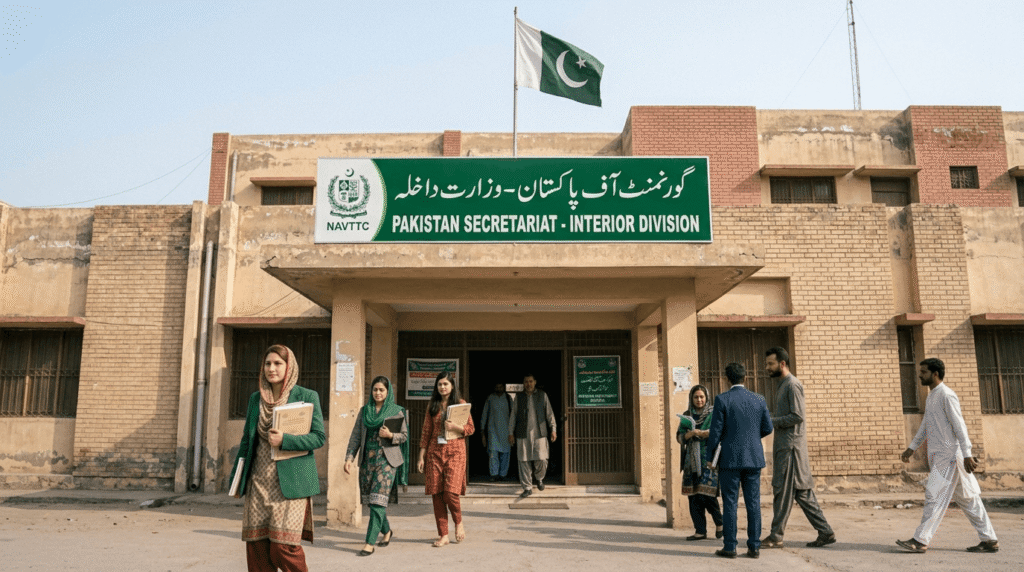
The Ministry of Minorities Affairs (momin.gov.pk) administers a dedicated scholarship program for students from religious minority communities enrolled in educational institutions across Pakistan.
What it covers:
- Scholarship support for students from Class 1 through university level
- Financial assistance for both general education and technical/vocational training
- Some components specifically for professional degree programs (medical, engineering, law)
Eligibility:
- Pakistani national belonging to a recognized religious minority (Christian, Hindu, Sikh, Parsi, Bahai, and others)
- Proof of minority status — typically a certificate from a registered religious leader (church pastor, temple priest, gurdwara committee), or documentation from the National Database and Registration Authority (NADRA) where religion is registered on the CNIC
- Enrolled in a recognized educational institution
- Financial need — income documentation required
- Academic standing — minimum grade requirement (varies by program level)
How to apply: Applications are submitted through the Ministry of Minorities portal or through the district-level Minority Affairs offices. For some cycles, applications are submitted through the educational institution directly. Check momin.gov.pk for the current cycle’s process and deadlines.
Important note: This program’s annual cycle has historically been somewhat inconsistent in timing — sometimes announcing in early year, sometimes mid-year. Check the portal regularly and set up alerts through the ministry’s social media if possible.
2. HEC Need-Based Scholarship — Open to All, Including Minorities
The HEC Need-Based Scholarship is not a minority-specific program, but it is fully accessible to students from minority communities. Financial need is the primary criterion — religion is not a selecting or deselecting factor.
This matters because: you should apply for both. The HEC NBS and the Ministry of Minorities scholarship are separate programs with separate funding pools. Being a minority student doesn’t disqualify you from the general need-based pool — it makes you eligible for an additional dedicated stream on top of it.
Samuel’s dual support came from exactly this combination.
Apply through: Your university’s financial aid office. Details: See our Need-Based Scholarships Guide for the full process.
3. PEEF Minority Scholarship (Punjab)
The Punjab Educational Endowment Fund (PEEF) has a dedicated minority scholarship component within its broader scholarship programs. This specifically targets students from minority communities in Punjab who are enrolled in Punjab’s public sector educational institutions.
What it covers: Partial or full fee support for enrolled students.
Eligibility:
- Punjab domicile
- Belonging to a religious minority community (Christian, Hindu, Sikh, or others)
- Enrolled in a public sector institution in Punjab
- Financial need (income below defined threshold)
- Minimum academic standing
How to apply: Through peef.punjab.gov.pk when the application window opens, or through your institution’s administration which is informed directly by PEEF about application cycles.
The PEEF minority component is separate from PEEF’s general need-based scholarship — applying for one does not automatically enter you in the other. If you’re in Punjab, apply for both.
4. Provincial Minority Scholarship Programs
Beyond Punjab, other provinces also run minority scholarship programs:
Sindh: The Government of Sindh through its Minorities Affairs Department provides scholarships for students from Hindu, Christian, and other minority communities. Given Sindh’s large Hindu population (particularly in districts like Umerkot, Tharparkar, Mirpurkhas), this program has significant reach. Contact the Sindh Minorities Affairs Department or check through the provincial education department.
KPK: The Khyber Pakhtunkhwa government has run minority scholarship programs particularly for Christian students in KPK. The KPK Minorities Affairs Department or the Directorate of Social Welfare administers these. Application processes are announced through district offices.
Balochistan: Smaller minority populations but dedicated support exists through the Balochistan Minorities Department and in some cases through the provincial education department’s scholarship programs.
For provincial programs: Because these are managed at the provincial level, the best first step is contacting your local district government’s Minorities Affairs or Social Welfare office. They maintain current information about what’s running, when applications open, and where to submit.
5. Church, Temple, and Community Organization Scholarships
This is a category that often doesn’t appear in official government lists but is genuinely impactful for many minority students.

Many registered churches, temples, and gurdwaras in Pakistan maintain scholarship or educational support funds — either from congregation donations, international religious organization support, or zakat-equivalent community contributions.
For Christian students: the Catholic Diocese, Church of Pakistan diocese offices, and various denominational bodies (Baptist, Presbyterian, Pentecostal, etc.) have education welfare programs at the community level. These are worth pursuing through your local church leadership regardless of income level, as they operate separately from government programs.
For Hindu students: Hindu Seva Mandals and Hindu community organizations in Sindh and Punjab provide education support through their community funds.
For Sikh students: Gurdwara Prabandhak Committees often manage education support funds with resources from both Pakistan’s Sikh community and international Sikh organizations.
These are not usually advertised publicly — you access them through the community, which means your church elder, your temple committee, or your gurdwara management is the starting point.
6. International Organization Scholarships Specifically for Pakistani Minorities
Some international organizations provide scholarship support specifically for students from minority communities in Pakistan:
Asia Foundation, USAID-linked programs, various European development organizations have at different times provided scholarship support targeting minority communities in Pakistan. These programs are announced through NGOs working with minority communities, through universities, and sometimes through minority community organizations.
For staying current on these opportunities: follow organizations like Pakistan Christian Post, National Commission for Minorities, and minority-focused civil society organizations that track and announce these opportunities.
How Minority Status Is Documented
This is a practical question that many students aren’t sure about. How do you prove you’re from a minority community for a scholarship application?
CNIC: For adults who have a CNIC, the religion field on the CNIC reflects registration at NADRA. A Christian, Hindu, or Sikh CNIC holder has their religion documented on the card (though this is not visible externally — it’s in the database).
For CNIC-based verification: The scholarship administrator may verify through your CNIC number against NADRA records. This is the most formal verification method.
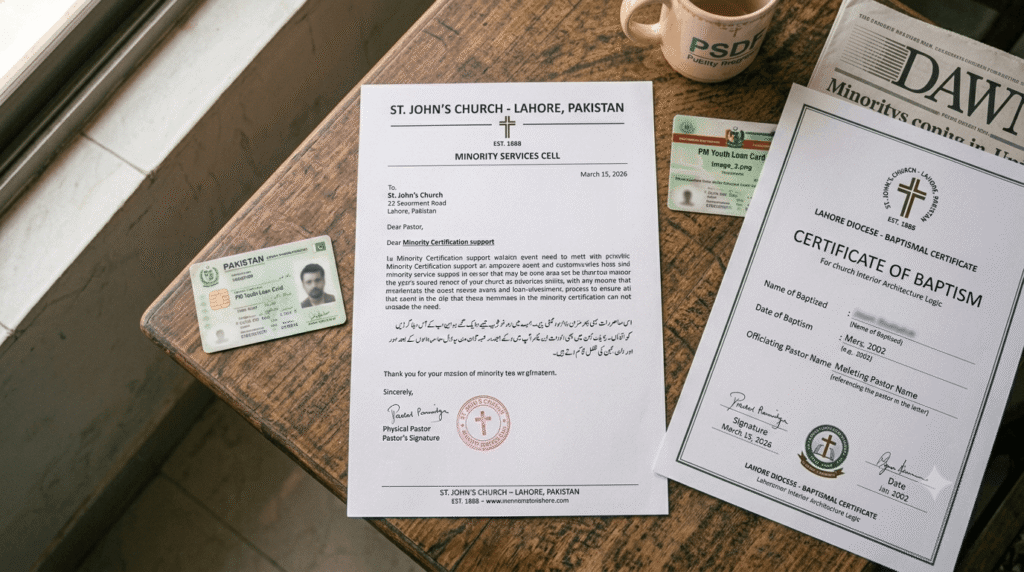
Religious leader certificate: A letter from a registered religious leader — your church’s pastor on official church letterhead, a temple priest, a gurdwara committee secretary — certifying that you are a practicing member of their community. This letter should include the religious leader’s name, contact information, the church/temple/gurdwara’s name and registration details, and a statement confirming your membership and religion.
This certificate is usually the simplest to obtain and is accepted by most programs as primary documentation.
Baptism certificate (for Christians): A copy of your baptism certificate from your church, which records the date of baptism and the church’s name. This is a secondary supporting document, often submitted alongside the pastor’s letter.
Collect all three if possible — CNIC, religious leader certificate, and where applicable a religious document like a baptism certificate. Different programs may require different combinations. Having all three means you can respond to whatever the program asks for without scrambling.
Step-by-Step: How Samuel’s Application Was Structured
After his financial aid officer mentioned the minority scholarship option, here’s what Samuel did:
Step 1: Confirmed he belonged to a recognized minority by checking the Ministry of Minorities website’s list of eligible communities (yes, Christian communities are listed).
Step 2: Got a letter from his church pastor — Church of Pakistan, Faisalabad diocese — on the church’s official letterhead, signed and stamped, confirming his membership and religion.
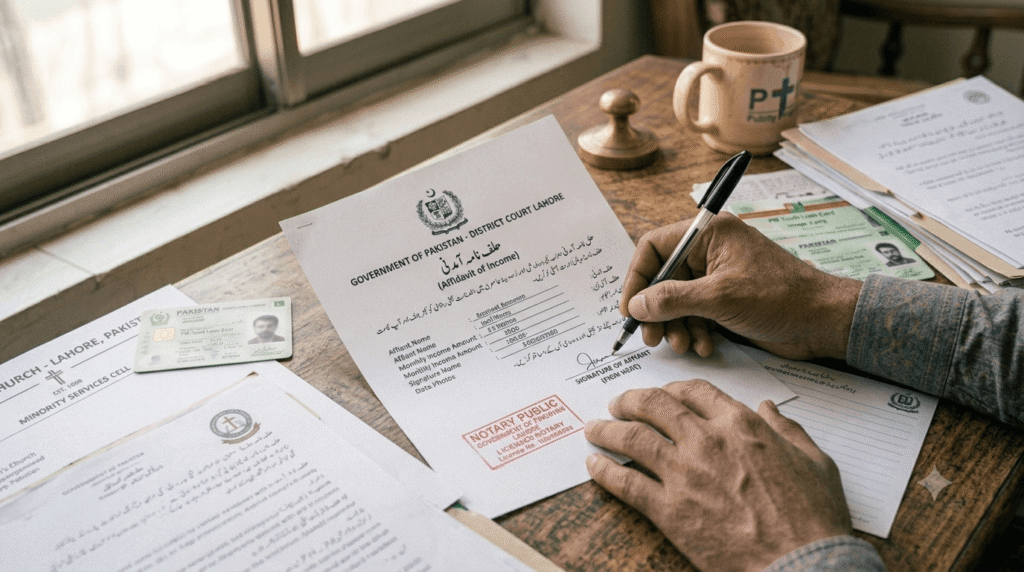
Step 3: Collected his father’s salary information. His father’s income is cash-in-hand as a sweeper employed by the municipality. No salary slip exists. He obtained an income affidavit from a notary specifying monthly income. He also got a letter from the municipal supervisor confirming employment and approximate pay.
Step 4: Applied for the Ministry of Minorities scholarship through the online portal with:
- CNIC copy
- Enrollment certificate from university
- Last semester result card
- Father’s income affidavit
- Municipal supervisor employment letter
- Pastor’s certificate
- Utility bill (home address)
- Passport photographs
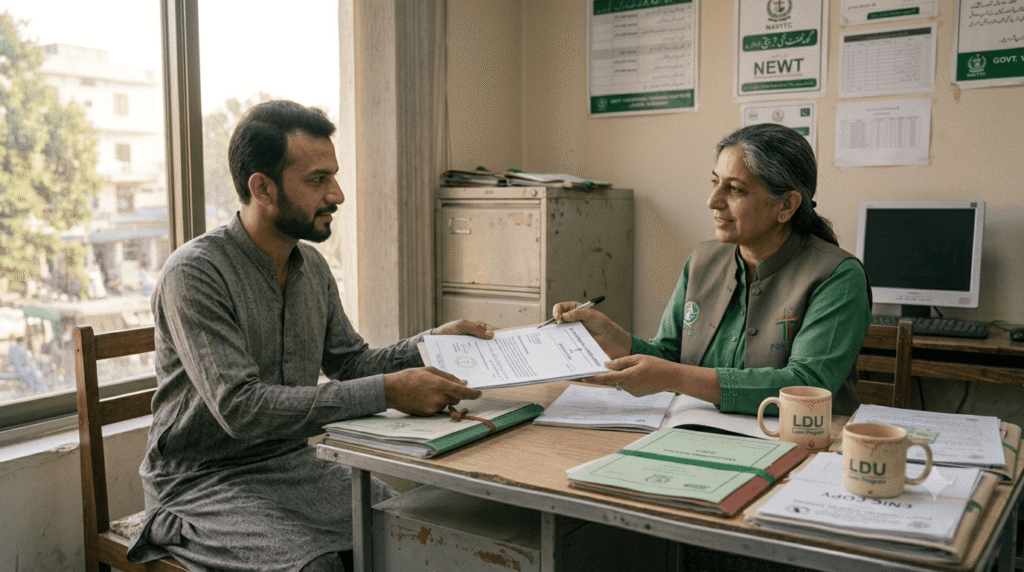
Step 5: Applied simultaneously for HEC Need-Based Scholarship through his university’s financial aid office with largely the same documentation plus the family’s specific expense breakdown.
Step 6: Followed up with both the Ministry portal and his university’s financial aid office two weeks after submission, confirming both applications were marked complete.
Both approvals came through within the same semester, covering different components of his costs.
Common Mistakes That Minority Students Make
Not knowing both tracks exist. The most common mistake — applying for either the general need-based program OR the minority program, not realizing both are available simultaneously and have separate funding pools.
No religious leader certificate prepared. Students often wait until the application window opens to ask their pastor or priest for a letter. These letters sometimes take a week to prepare if the church has a process. Ask in advance, before you need it.
Income affidavit for cash income not obtained. Many minority community parents — particularly sweepers, domestic workers, and informal wage earners — have no formal income documentation. The affidavit is how informal income gets formally documented. Get it done before the application window.
Applying to the wrong level of government. Ministry of Minorities is federal. PEEF is Punjab-specific. Sindh has its own program. KPK has its own. Applying to the federal program when your provincial program’s deadline has also opened means missing provincial funding. Apply at both levels where applicable.
Assuming rejection means the scholarship doesn’t exist or you’re not eligible. Processing times for minority scholarships can be slow. Follow-up is essential. A non-response is not necessarily a rejection.
Not leveraging community organization support alongside government programs. Church and temple scholarship funds are separate from government programs. There’s no rule against receiving church scholarship support while also receiving a government minority scholarship. Pursue both.
A Note on Dignity and Rights
This is something Samuel said to me that I’ve thought about since:
“People act like minority scholarships are some kind of special favor. They’re not. They’re recognition that specific communities face specific barriers. I worked as hard as any Muslim student to get my marks. The scholarship isn’t because I’m Christian — it’s because being Christian in Pakistan comes with economic realities that come with specific disadvantages.
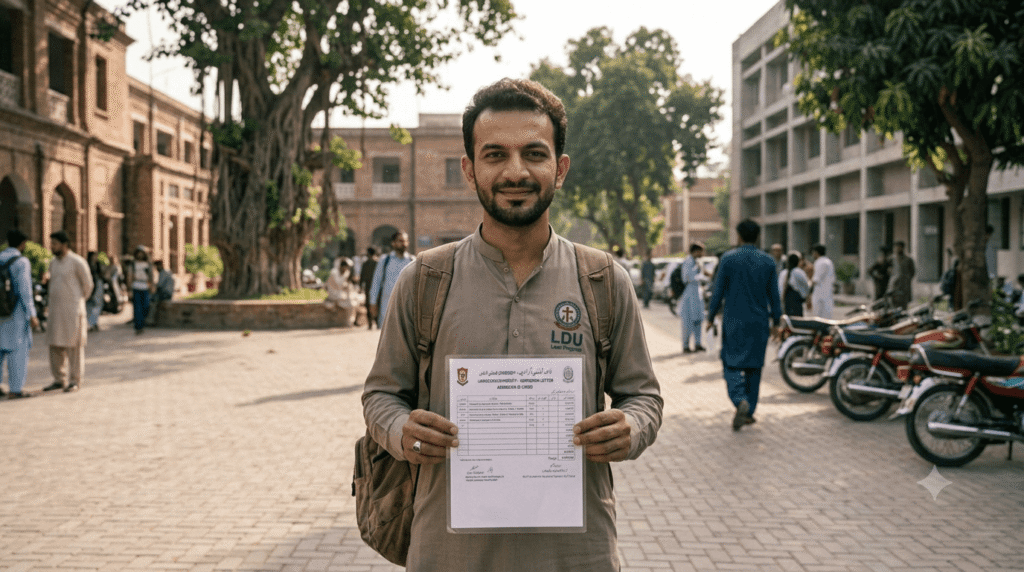
The scholarship levels something that wasn’t level to begin with.”
That framing is exactly right. Minority scholarships aren’t charity. They’re targeted access programs addressing documented disparities. Applying for them is not asking for a favor — it’s accessing what exists specifically for your situation.
Apply for everything you qualify for. Do it properly. Do it on time.
Quick Reference
| Program | Level | Who | Apply At |
|---|---|---|---|
| Ministry of Minorities Scholarship | Federal | All minorities, all levels | momin.gov.pk / district offices |
| HEC Need-Based Scholarship | Federal | All (incl. minorities) | University financial aid |
| PEEF Minority Component | Punjab | Minority students in Punjab | peef.punjab.gov.pk |
| Sindh Minorities Department | Sindh | Sindh minority students | Sindh Minorities Dept. |
| KPK Minority Programs | KPK | KPK minority students | KPK Minorities Dept. |
| Church/Temple/Gurdwara Funds | Community | Community members | Through local religious leader |
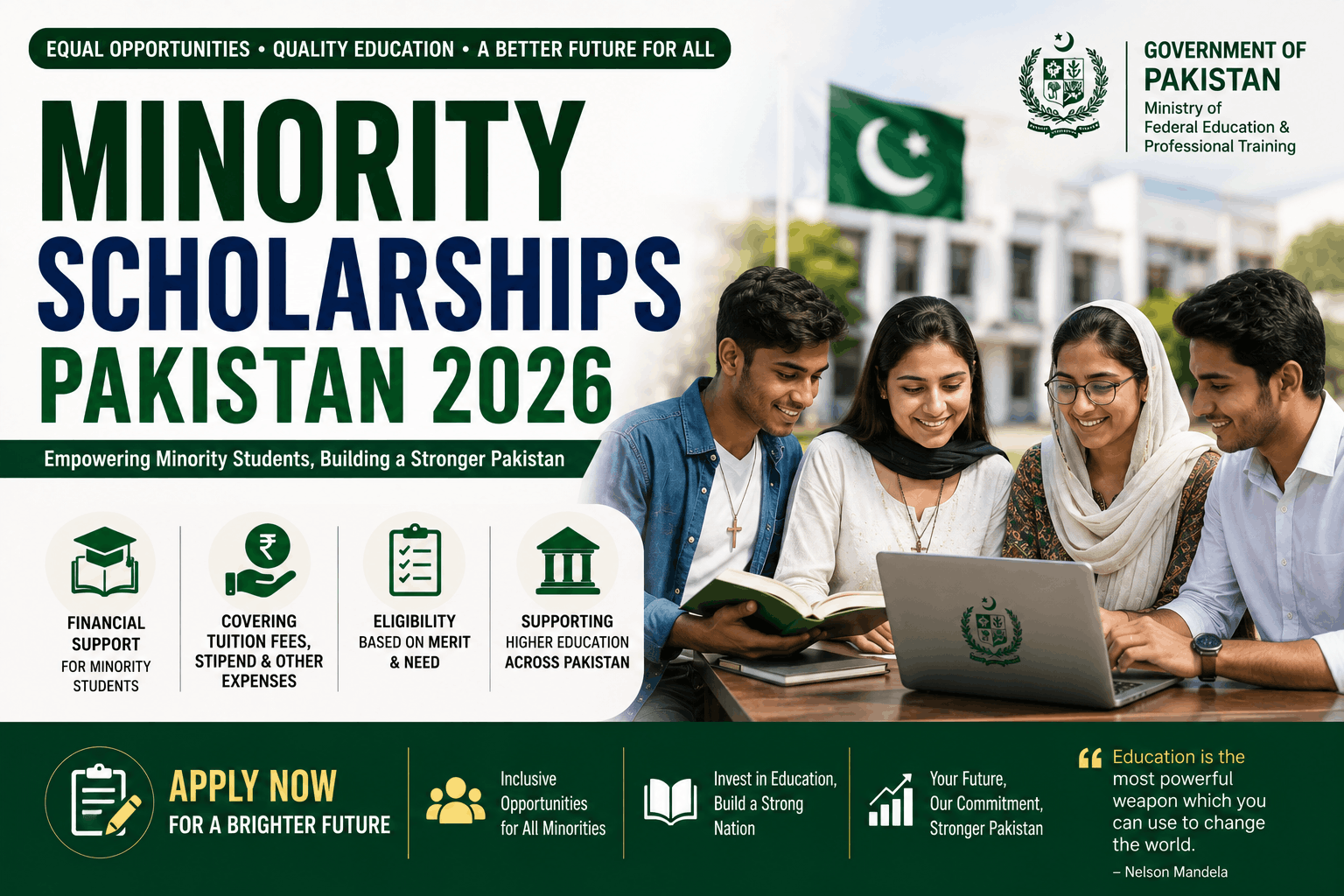
If you belong to a minority community and are looking for financial support for higher education, visit the official Ministry of Religious Affairs scholarship portal below to review the eligibility criteria and submit your scholarship application.
Apply for Minority Scholarship OfficialAre you a minority student trying to figure out which programs apply to your specific community, province, or degree level? Leave a comment with your situation and we’ll try to help you identify what’s available to you.