
Millions of eligible borrowers in Pakistan have never heard of interest-free lending, or don’t know how to access it — even when a branch is sitting a few kilometers from their house.
That gap played out clearly for one household last summer, when a broken water pump created an unexpected Rs. 80,000 expense. The first instinct was to borrow from relatives — one already struggling, another able to spare only Rs. 20,000. Two weeks of awkward calls followed before someone mentioned a local Akhuwat branch offering interest-free loans.
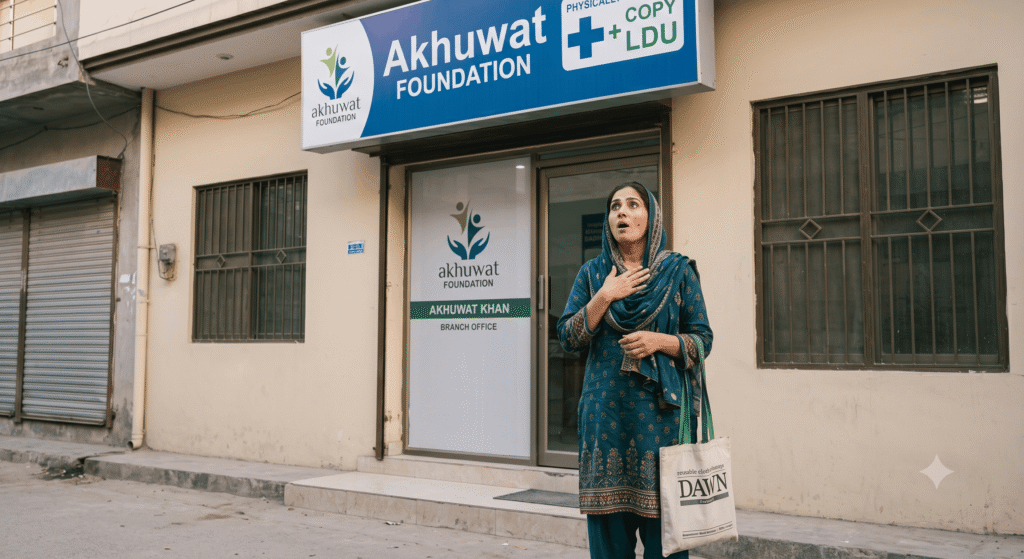
The branch had been three kilometers away for four years, unnoticed the entire time.
The application went through in three weeks: Rs. 75,000 deposited, zero markup, zero processing fee, repayable in monthly installments of Rs. 4,200. The final repayment total — exactly Rs. 75,000, not a rupee more.
When this story circulated among a few neighbors afterward, the reaction was consistent: several hadn’t known interest-free lending was a real, funded, currently operating option — they’d been borrowing from committees and absorbing late fees instead.
This guide covers every major interest-free loan program currently operating in Pakistan, how each one works, and exactly what’s required to apply.
First: What “Interest-Free” Actually Means Here
In the Pakistani context, “interest-free” loans fall into two main categories:
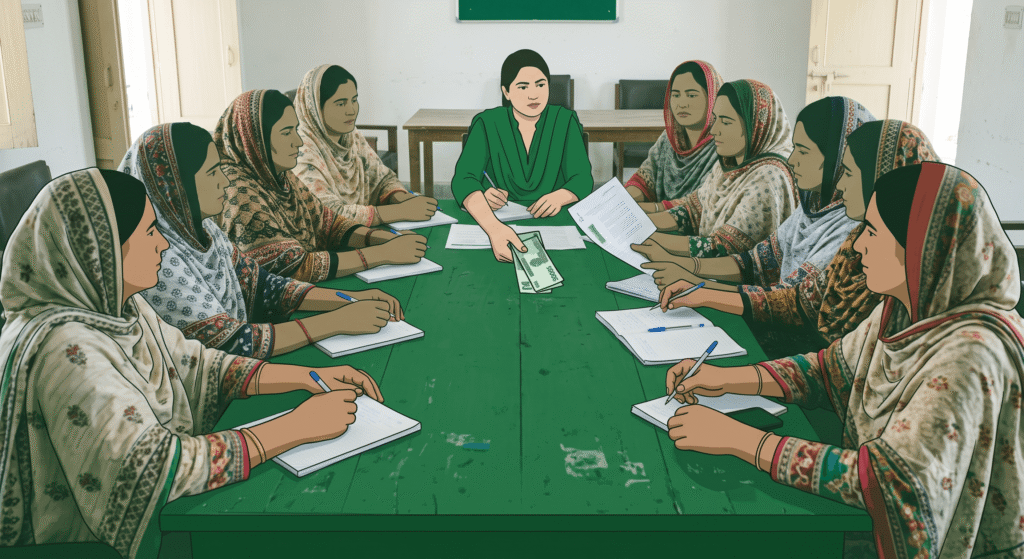
Qarz-e-Hasna (Benevolent Loans): Islamic finance concept where a loan is given purely as an act of charity or community support, with only the principal to be repaid. No markup, no service charge, no hidden fees. Organizations like Akhuwat operate on this model.
Government-Subsidized Zero-Markup Loans: The government absorbs the financing cost entirely — what would normally be an 18–25% markup gets paid by the government, and the borrower pays nothing extra. HEC student loans and some BISP-linked programs work this way.
Both are genuinely free of financing cost for the borrower. The difference is in who funds that zero cost — charitable donations in the first case, public funds in the second.
Understanding this distinction matters because it tells you something about the scale of available funding and the selection process. Akhuwat’s pool is funded by private donations — it’s finite and demand consistently exceeds supply. Government schemes have public budget backing — larger in scale but with more bureaucratic process.
The Main Interest-Free Loan Programs in Pakistan 2026
1. Akhuwat Foundation — The Largest Islamic Microfinance Program
If you ask anyone familiar with interest-free lending in Pakistan to name one organization, it’s Akhuwat.
Founded in 2001 by Dr. Amjad Saqib, Akhuwat has disbursed over Rs. 150 billion in interest-free loans to more than 5 million families across Pakistan. It operates through a network of branches in over 400 cities — including many small cities and towns where conventional banking is sparse.
What they offer:
- Family Enterprise Loans: Rs. 10,000 to Rs. 100,000 for small businesses and income-generating activities
- Housing Loans: Up to Rs. 150,000 for home repair, renovation, or construction materials
- Education Loans: Rs. 10,000 to Rs. 100,000 for school and university fees
- Health/Emergency Loans: For medical expenses
- Liberation Loans: Specifically to help people escape informal moneylender debt (replacing high-cost debt with zero-cost debt)
How it works:
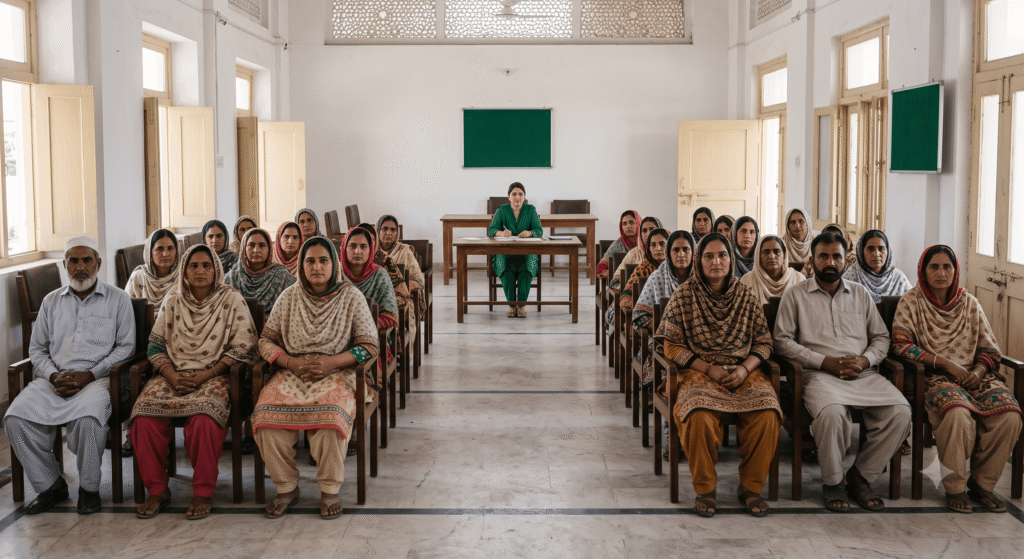
Akhuwat typically disburses loans through mosques, churches, temples, or community halls — emphasizing the social and communal nature of the transaction. Repayment is in fixed monthly installments. There are no hidden charges. If you borrow Rs. 50,000, you repay Rs. 50,000.
How to apply:
Go to akhuwat.org.pk to find a branch near you, or call their helpline. The application requires:
- CNIC
- Proof of residence (utility bill)
- Purpose of loan (business, education, housing, medical)
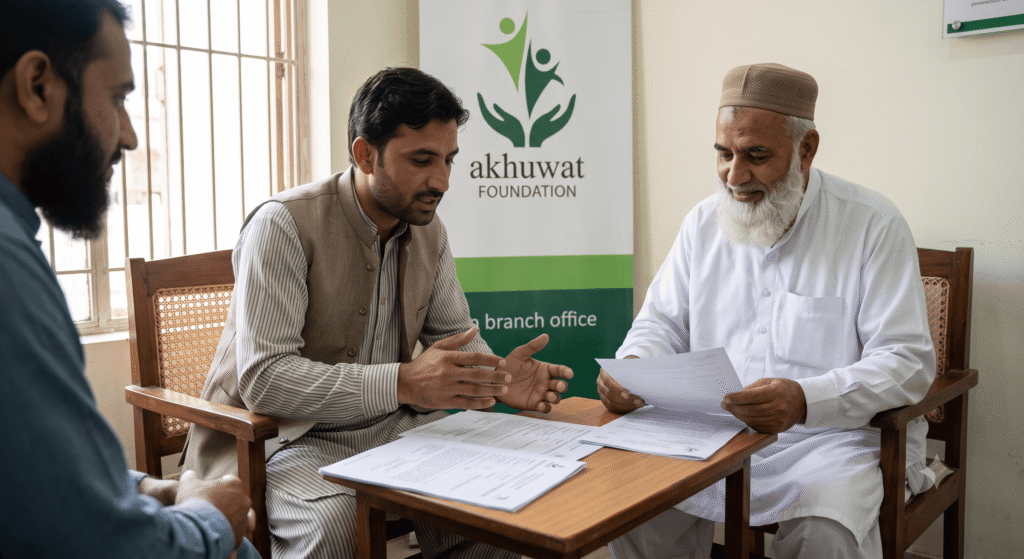
- Two guarantors — community members who vouch for your character and ability to repay. This is Akhuwat’s risk mitigation mechanism instead of collateral.
The guarantor requirement is where some people get stuck. The guarantors don’t need to be wealthy — they need to be known community members in good standing. A neighbor, a local shopkeeper you’ve dealt with for years, a mosque committee member — these work. The guarantor is saying “I know this person and I believe they’ll repay.”
Processing time: 2 to 4 weeks from application to disbursement.
Honest note on availability: Akhuwat’s funding comes from private donors and zakaat contributions. Their capacity is large but not unlimited. In some cities, demand exceeds current disbursement capacity and there are informal waiting lists. Apply and be patient — but do apply.
2. HEC Interest-Free Student Loan
The Higher Education Commission’s Interest-Free Loan Scheme for Students is one of the best-structured programs in Pakistan — specifically because it’s designed for a clear, verifiable purpose (education) and repayment is structured around graduation.
We’ve covered this in detail in the Student Loan Guide, but to summarize:
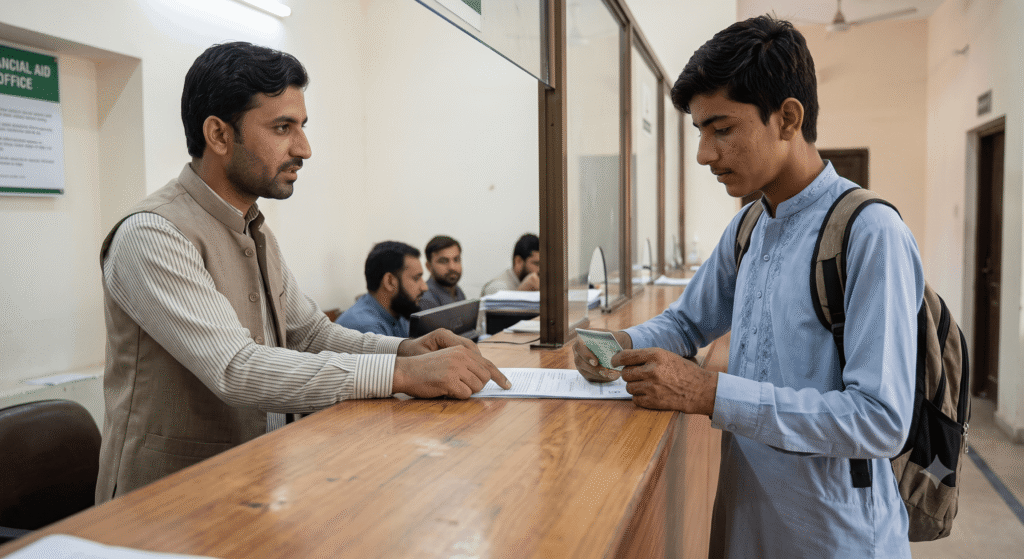
students enrolled in HEC-recognized universities from low-income families can apply through their university’s financial aid office for zero-markup loans covering tuition. Repayment begins after graduation with a grace period.
This is the ideal financing arrangement for students whose families can’t afford fees but who will be earning after graduation — the loan cost is zero, and the repayment burden falls at a time when income has (hopefully) improved.
3. Ehsaas Nashonuma — Not a Loan, but Worth Understanding
The Ehsaas Nashonuma program provides cash support specifically for mothers of children under two years old from BISP-registered households, in exchange for attending regular health and nutrition check-ups.
This isn’t a loan — it’s a conditional cash transfer — but it’s frequently misunderstood as one. I’m mentioning it here to prevent confusion. If someone tells you there’s an “interest-free loan for mothers,” they may be thinking of Nashonuma, which is actually a grant (non-repayable).
4. Akhuwat Khuwateen Enterprise Loan (Women-Specific)
Akhuwat runs a dedicated program specifically for women entrepreneurs — the Khuwateen (women’s) loan program. The terms are the same as their standard enterprise loan (zero markup, guarantors instead of collateral) but it’s specifically targeted at women running or wanting to start home-based or small businesses.
This matters because women applicants sometimes feel hesitant about the standard application process.
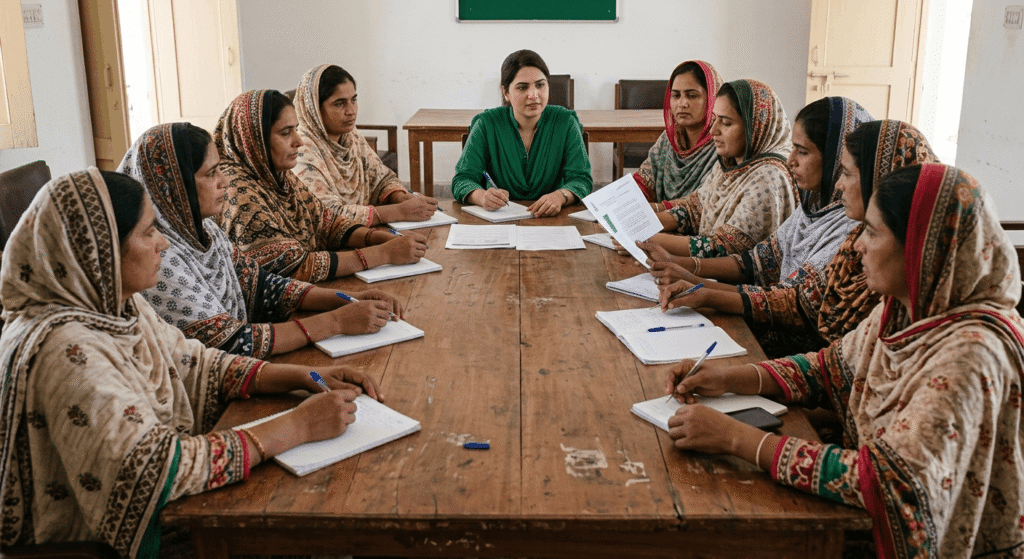
The Khuwateen program has field officers and loan committees that specifically work with women borrowers and handle the process more sensitively.
Women who run tailoring businesses, home-based food businesses, embroidery work, or similar income-generating activities are the primary audience.
5. Pakistan Bait ul Mal (PBM) — Education and Vocational Support
Pakistan Bait ul Mal (pbm.gov.pk) is a government body that provides financial assistance to poor and deserving citizens. While their primary model is grants (not loans), they do provide:
- Individual Financial Assistance for medical emergencies, funerals, and urgent needs
- Educational scholarships and support for orphaned and deserving children
PBM funding is grant-based — you don’t repay it. This is different from a loan, but it fills a gap for people whose need is acute and whose ability to repay anything is genuinely zero.
Applying requires submitting an application to the District Bait ul Mal office with documented need. The amounts are typically small (Rs. 20,000 to Rs. 50,000) but they’re non-repayable.
6. NRSP (National Rural Support Programme) — Rural and Agricultural
For rural households and small farmers, NRSP Microfinance Bank offers loan products designed for agricultural and rural income activities. While not all NRSP products are interest-free, they do offer some zero-markup facilities for specific purposes (like agricultural inputs under government-backed schemes) and their community-based social mobilization approach makes them more accessible to rural borrowers who have no relationship with formal banks.
NRSP works through community organizations and local support units. In rural districts where Akhuwat or NBP presence is limited, NRSP is often the most practical option.
7. Zakat-Linked Interest-Free Lending at Community Level
This one is less formal but worth knowing about: mosques and community organizations in many Pakistani cities and towns manage small interest-free lending pools funded by local zakat contributions.
These aren’t advertised, they don’t have websites, and the amounts are small — but for an immediate Rs. 10,000 to Rs. 30,000 need in a community context, they’re sometimes the fastest path. Talk to your mosque committee or local welfare organization.
How to Decide Which Program Is Right for You
Here’s a simple framework based on your situation:
If you need money for a small business (under Rs. 150,000) and have community connections: → Akhuwat Foundation enterprise or business loan
If you’re a student with financial need at an HEC-recognized university: → HEC Interest-Free Student Loan through your university
If you’re a woman running or wanting to start a small business: → Akhuwat Khuwateen Enterprise Loan
If you’re in a rural area or related to agriculture: → NRSP Microfinance Bank, or government agricultural support schemes
If your need is a one-time emergency (medical, funeral, urgent crisis) and you genuinely cannot repay: → Pakistan Bait ul Mal for a grant (not a loan)
If you need Rs. 150,000 to Rs. 500,000 for a business and can document income: → Government-subsidized schemes like PM Youth Loan or Asaan Karobar Card (these are low-markup, not strictly zero-markup, but 3–5% is close)
The Application Process — What’s Common Across All Programs
Regardless of which program you choose, a few things apply universally:
Your CNIC must be valid and current. Expired CNICs stop every application process. Renew first.
You need proof of what the money is for. Education fees need fee vouchers. Business loans need a description of the business. Medical loans need bills or estimates. The purpose of the loan determines how much you receive and whether you qualify for that specific product.
Guarantors or community references are usually required instead of collateral. This is how interest-free programs manage risk without requiring property. Think about who in your community would vouch for you before you apply.
Repayment is real and expected. “Interest-free” does not mean “don’t worry about paying back.” These programs rely on repayment to lend to the next person in line. Defaulting hurts the entire community of borrowers who come after you. Take it seriously.
Demand often exceeds supply. Apply early, apply properly, and be patient.
The Mistakes People Make
Applying to Akhuwat with weak guarantors. The guarantors are doing the work that collateral would otherwise do. If your guarantors are people the loan officer doesn’t know and can’t verify, your application may be held up.
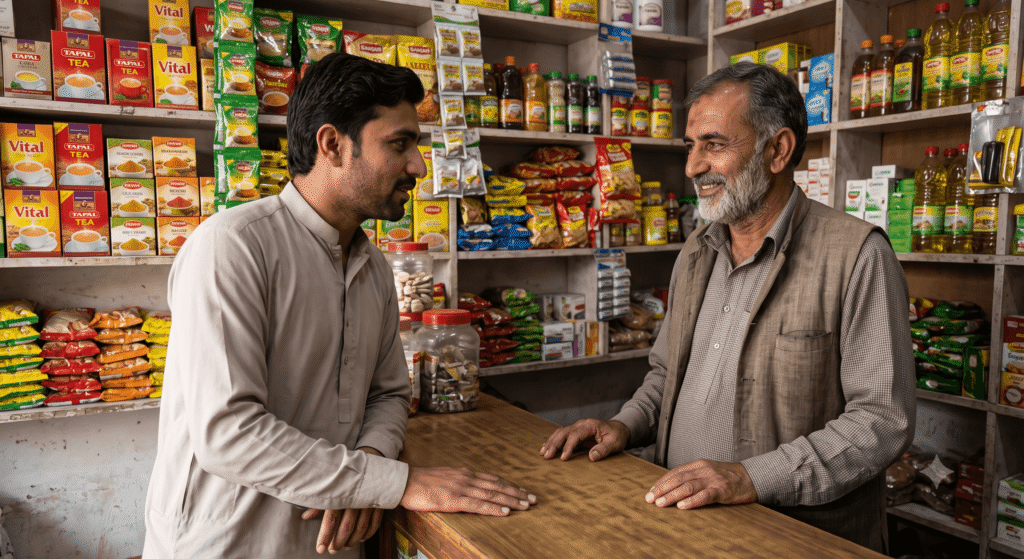
Bring guarantors who are known in the community — mosque committee members, long-standing local shopkeepers, school teachers.
Not knowing which branch covers your area. Akhuwat has hundreds of branches but each covers a specific area. Go to the branch designated for your neighborhood. Applications submitted at the wrong branch get redirected, which adds delay.
Confusing grants with loans. If someone tells you “you don’t have to pay it back,” verify that. Most programs require repayment. PBM assistance is genuinely non-repayable, but Akhuwat loans must be repaid — zero markup, but principal repaid in full.
Applying for more than you need. Interest-free programs prioritize genuine need. Inflating the loan request to have extra cushion tends to backfire — the assessor will ask specific questions about what the money is for, and a vague or inflated request raises suspicion.
Missing installments and not communicating. Life happens. Sometimes an installment month is genuinely difficult. Most programs have processes for handling this — communicate early, before you miss a payment. Ghosting on an interest-free loan from a charitable organization is the worst possible response.
Fareeha’s Update
The water pump is fixed. She’s made seven of her eighteen monthly installments on time. She told me she recommended Akhuwat to three neighbors since then — two of them applied and received loans.
She also said something that has stayed with me: “I spent two weeks making difficult phone calls asking relatives for money, feeling like I was begging.
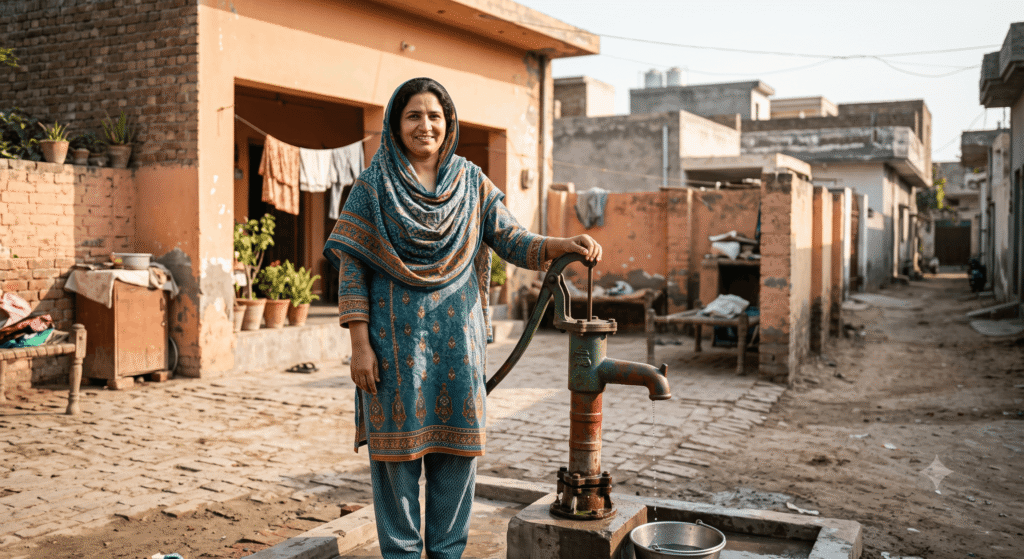
The Akhuwat application felt nothing like begging. It felt like a transaction. Like a system that was designed for someone exactly like me.”
That’s what these programs are supposed to feel like. That’s worth knowing they exist.
Quick Reference
| Program | Amount Range | Zero Markup? | Purpose | Apply At |
|---|---|---|---|---|
| Akhuwat Enterprise | Rs. 10K–100K | ✓ Yes | Business | akhuwat.org.pk |
| Akhuwat Housing | Up to Rs. 150K | ✓ Yes | Home repair | akhuwat.org.pk |
| Akhuwat Education | Rs. 10K–100K | ✓ Yes | School/University fees | akhuwat.org.pk |
| Akhuwat Khuwateen | Rs. 10K–100K | ✓ Yes | Women’s business | akhuwat.org.pk |
| HEC Student Loan | Tuition fees | ✓ Yes | University tuition | University financial aid |
| Pakistan Bait ul Mal | Rs. 20K–50K | Grant (no repayment) | Emergency need | District PBM office |
| NRSP | Rs. 25K–200K | Varies | Rural/agricultural | NRSP local office |
Looking for an interest-free government loan? Visit the official Prime Minister’s Youth Business & Agriculture Loan Scheme portal below to check your eligibility, explore available financing options, and submit your application online.
Apply for an Interest-Free Loan OfficialKnow of someone who needs an interest-free loan but doesn’t know where to look? Share this page — the awareness gap is real and it costs people more than it should. If you have questions about which program fits your situation, leave a comment below.