
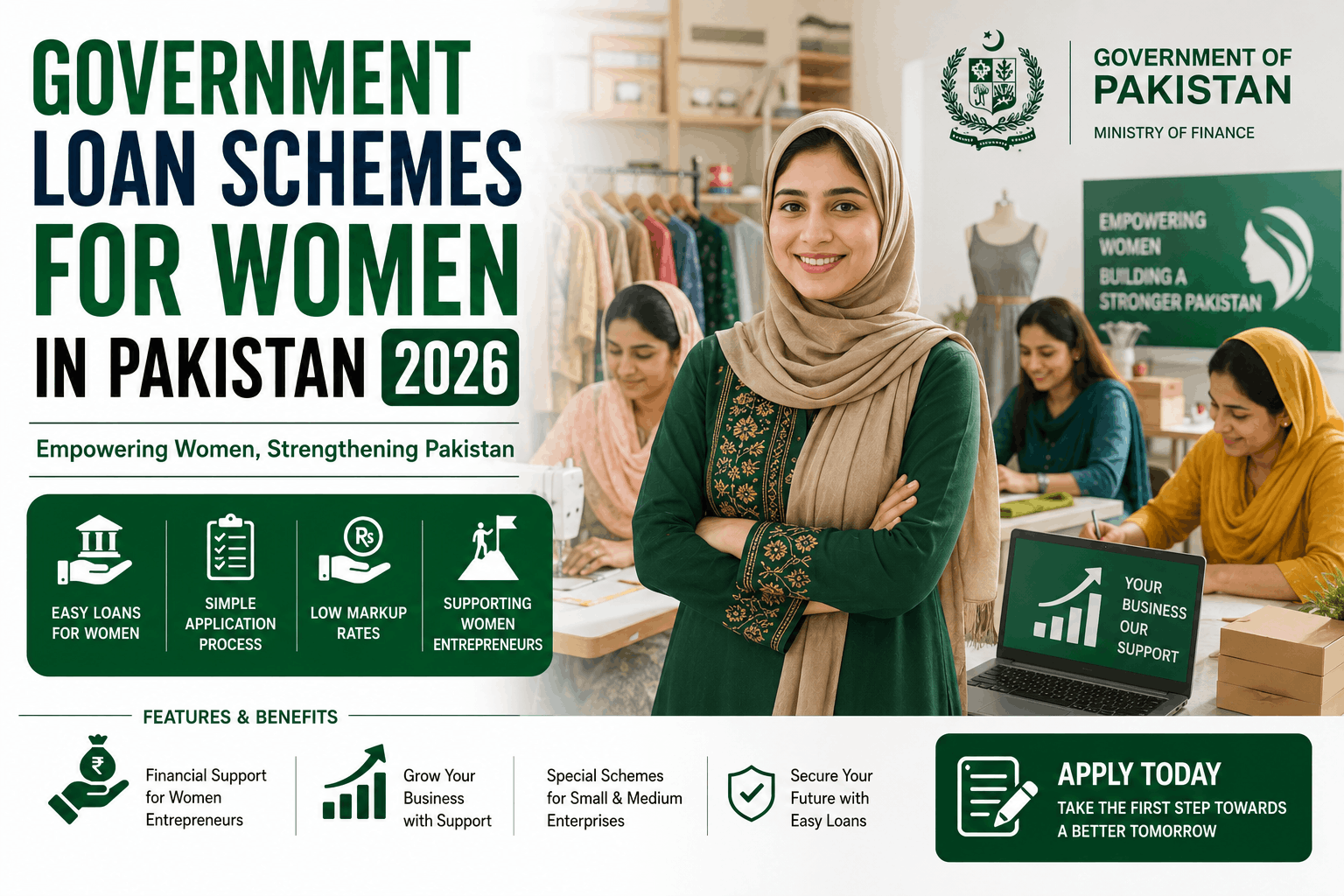
A male guarantor. Property documents in the husband’s name. An unspoken assumption that a woman isn’t a “serious” borrower. These are the barriers that keep plenty of women-run home businesses from ever getting the capital to grow past a certain point — and they’re common enough that many women stop asking before they’re even rejected.
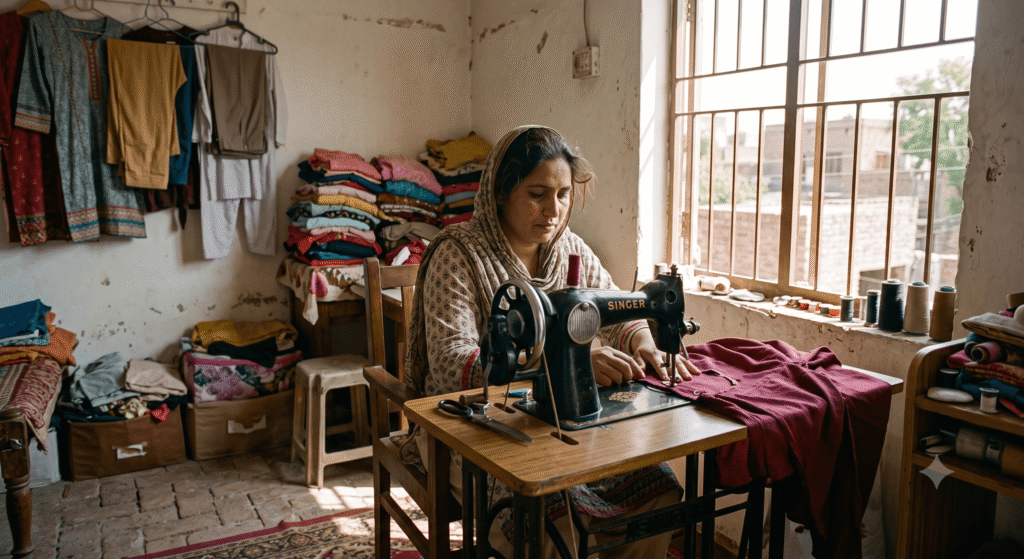
One home-based tailoring business in Sahiwal ran into exactly that ceiling after six years of steady growth — from one inherited sewing machine to a real customer base of school uniforms, party wear, and bridal alterations. Every attempt to expand hit the same wall: money went to school fees, medicine, and utility bills before it ever reached equipment. The business wasn’t short on skill or customers. It was short on capital.
A loan seemed like the obvious next step, and the hesitation that followed wasn’t unfounded — it was based on real accounts from other women who’d run into exactly the barriers described above, and some institutions genuinely still operate that way.
What often goes unmentioned is that programs exist specifically structured around how women-run businesses in Pakistan actually operate — loans issued directly to the woman, under her own CNIC, with eligibility criteria that don’t assume a male co-signer.
This guide covers exactly those programs: which ones exist, how they work, and what actually gets asked for.
Why Women-Specific Loan Programs Exist
There’s a reason most major government and microfinance schemes in Pakistan now have dedicated women’s quotas or entirely women-focused products.
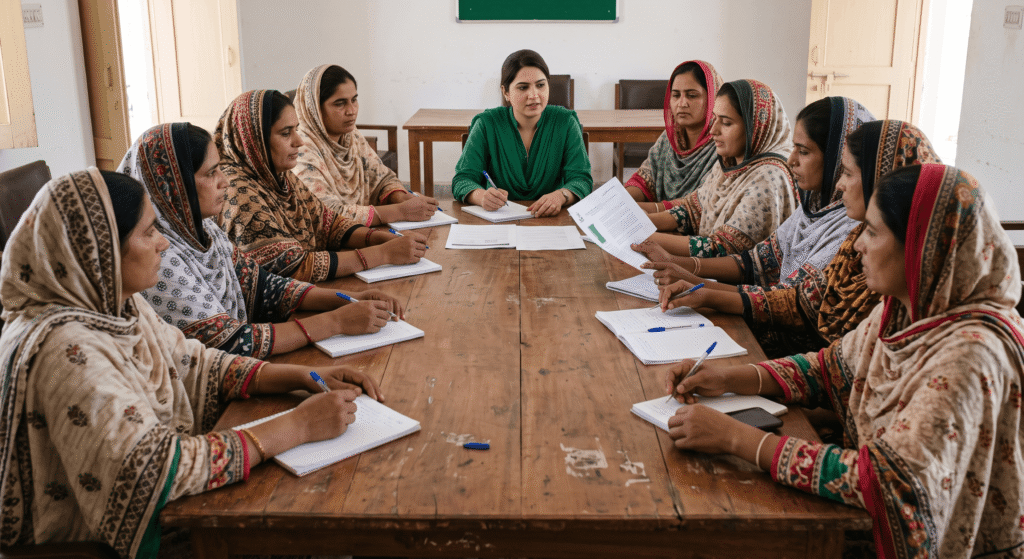
Global and domestic research consistently shows that women borrowers have higher repayment rates than male borrowers. Akhuwat’s own data, and similar findings from Grameen Bank models worldwide, shows women repay more reliably.
Despite this, women access formal credit at far lower rates than men in Pakistan — because the structural barriers are real. Many women don’t have property in their name (it’s often in a father’s or husband’s name). Many women-run businesses are home-based and informal, making documentation harder. Social norms in some communities make it awkward for a woman to visit a bank branch alone.
The programs described in this guide address these barriers in different ways — some by removing collateral requirements entirely, some by offering women-specific branches or field officers, some by specifically accepting home-based business descriptions without requiring a formal shop.
The Main Government and Government-Linked Loan Programs for Women
1. PM Youth Business Loan — Women’s Quota (Kamyab Jawan)
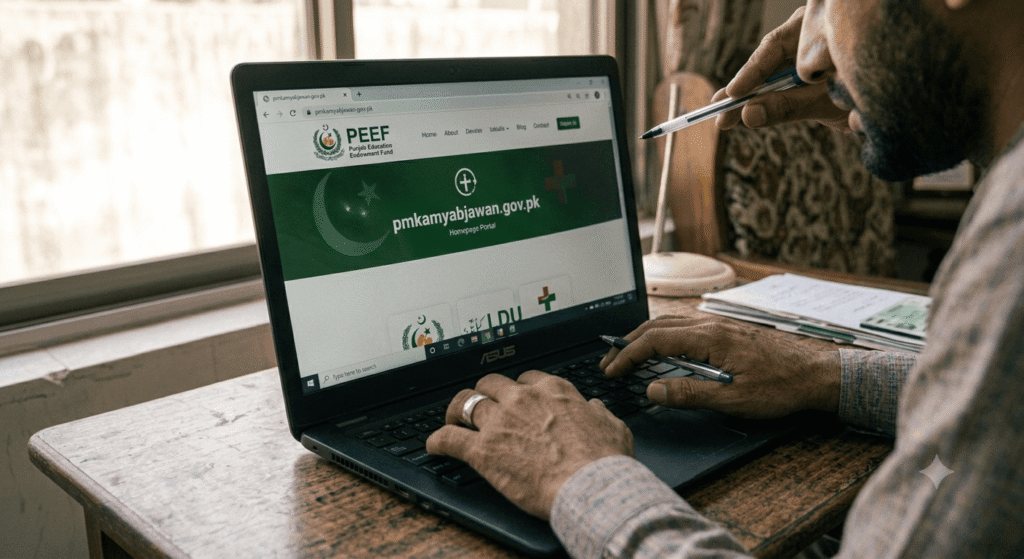
The PM Youth Business and Agriculture Loan Scheme (pmkamyabjawan.gov.pk) reserves 25% of all loans for women applicants. This is a formal quota — meaning female applicants compete against other female applicants for their portion of the funding, which significantly improves approval odds compared to the open pool.
Loan amounts: Rs. 100,000 to Rs. 7.5 million Markup rate: 3–5% per annum (subsidized by government) Age requirement: 21 to 45 years Who it’s for: Women who want to start or expand a business
The 25% women’s quota combined with typically lower competition in the women’s pool means eligible female applicants have a genuinely better approval probability than male applicants with identical profiles.
How to apply: Register on the official portal at pmkamyabjawan.gov.pk with your CNIC. Select the appropriate loan tier. Prepare a business description, income documents, and business location details.
What works for home-based businesses: For Tier 1 (Rs. 100,000–500,000), home-based businesses are explicitly considered. A tailoring business run from home, a home bakery, a hand-embroidery operation, a tutoring service — these are valid business types for this tier.
2. First Women Bank Limited (FWBL)
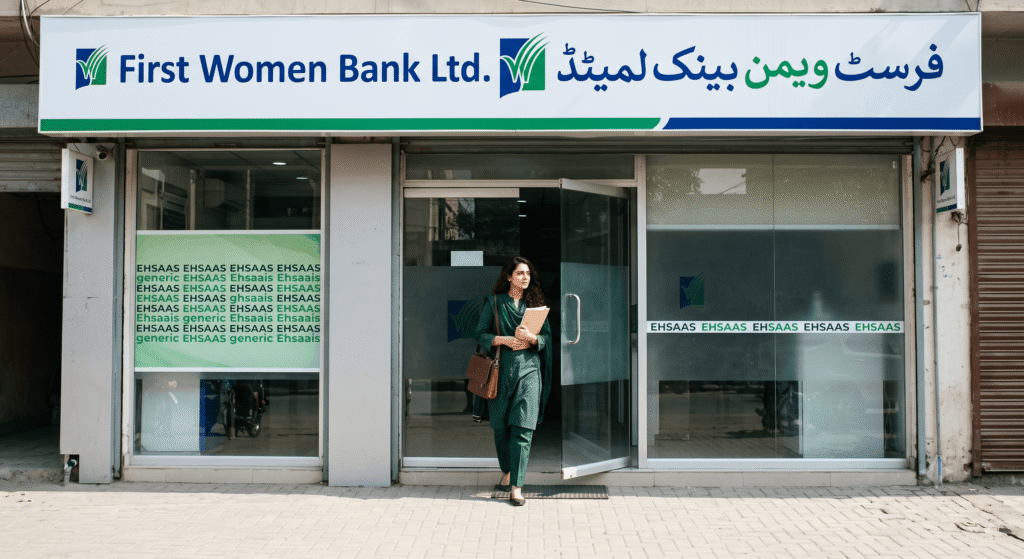
First Women Bank is a unique institution — it’s a fully government-owned commercial bank specifically chartered to serve women. It’s been operating since 1989 and is Pakistan’s only bank with this mandate.
FWBL offers:
- Business loans for women entrepreneurs — from small working capital loans to larger commercial financing
- Microfinance products — smaller loans for home-based and micro-business operators
- Home loans — housing finance specifically for women
- Agricultural loans — for women farmers and agri-businesses
What makes FWBL different from applying at a standard commercial bank:
- Branch staff are trained specifically to work with women borrowers
- The bank actively accommodates home-based and informal business documentation
- Male guarantor requirements are not standard — a woman can apply in her own right
FWBL has branches in major cities and some smaller cities. In areas where there’s no FWBL branch, some of their products can be accessed through their partner network.
Website: fwbl.com.pk For small business loans: Visit a branch and ask for their SME financing for women or microfinance products depending on your loan size.
3. Asaan Karobar Card — Women’s Business Financing (Punjab)
The Asaan Karobar Card (Punjab government revolving credit facility) is open to both male and female business owners, but women applicants are a priority in the scheme’s stated objectives.
For a tailoring business owner like Nadia — who has an established customer base but informal documentation — this revolving credit facility (borrow up to Rs. 1 million, repay and reuse) is particularly well-suited because:
- It accepts home-based business documentation
- It assesses the business through a field visit rather than requiring formal accounts
- The revolving structure means she can draw for machine purchases, repay as orders come in, draw again for the next purchase — matching how a home-based business actually operates
See our separate Asaan Karobar Card guide for full application details.
4. Akhuwat Khuwateen Enterprise Loan (Women’s Islamic Microfinance)
Akhuwat’s women-specific program offers interest-free loans (zero markup, repay only principal) of Rs. 10,000 to Rs. 100,000 specifically to women running or wanting to start small businesses.
What makes this program particularly accessible:
- No collateral required — guarantors (community members) instead
- No formal business documentation required for smaller amounts
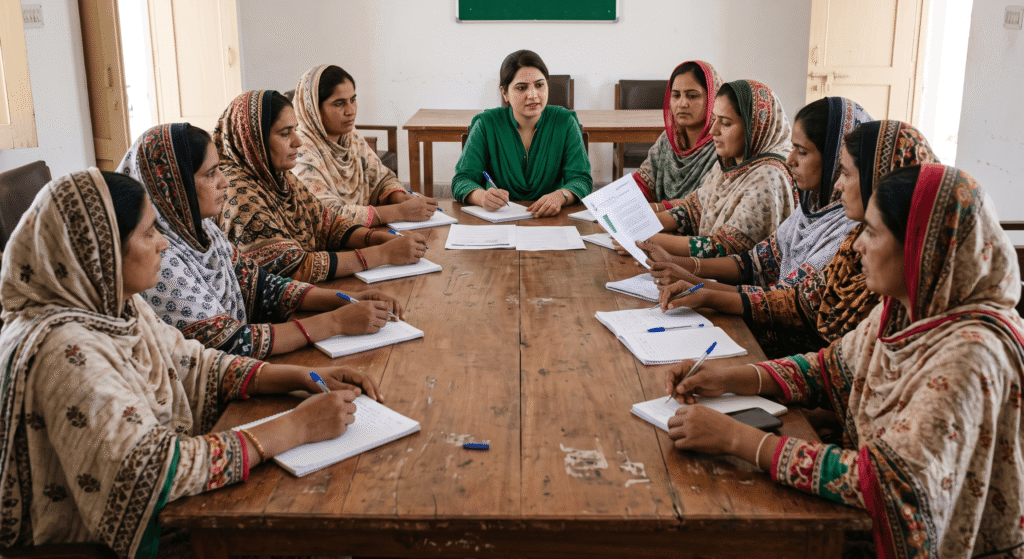
- Female loan officers conduct the field assessments and disbursement in many locations
- Disbursements are sometimes done in community settings (women’s centers, mosques, community halls) making the process less intimidating for women who are hesitant about visiting a bank
For Nadia’s situation: A Rs. 75,000 to Rs. 100,000 Akhuwat Khuwateen loan would cover a second sewing machine (Rs. 35,000–45,000) and an overlock machine (Rs. 25,000–35,000) with some working capital left for fabric stock. Zero markup means she repays exactly what she borrowed.
How to access: akhuwat.org.pk → branch locator → ask specifically for the Khuwateen loan program.
5. Punjab Rozgar Scheme — Women’s Priority
The Punjab Rozgar Scheme has a dedicated women’s quota in its business financing track. Women applicants are assessed separately and receive priority consideration, which again improves approval odds in the competitive application pool.
Additionally, the skills training track of the Rozgar Scheme offers free vocational training in fields specifically relevant to women’s self-employment — tailoring, beauty services, cooking and catering, handcraft and embroidery, computer skills. These training programs include a stipend and, for graduates, eligibility for business financing.
If you’re a woman who wants to start a business but doesn’t yet have documented skills, the training route first can strengthen a subsequent financing application significantly.
6. Benazir Income Support Programme (BISP) — Business Support Linkages
While BISP’s Kafaalat program is a cash transfer, not a loan, it’s worth knowing that BISP-registered women get priority access to several loan schemes — including PM Youth Business Loan’s women’s quota and some Ehsaas program business support components.
If you’re already a BISP beneficiary and want to start a business, mention your BISP registration number when applying for business loans. It actively strengthens your application in programs that prioritize financial inclusion.
7. NRSP Women’s Microfinance (Rural Areas)
For women in rural and semi-rural areas where urban microfinance branches are distant, National Rural Support Programme (NRSP) Microfinance Bank runs group-lending programs where women from the same community collectively guarantee each other’s loans.
This community guarantee model eliminates the need for individual collateral entirely. The group meets regularly, tracks each other’s repayments, and provides social accountability that works better in rural community settings than formal credit checks.
Loan amounts: Rs. 20,000 to Rs. 150,000 per member in the initial cycle, increasing with each successful repayment cycle.
NRSP has field offices in many rural districts. Their social mobilization teams actively reach out to communities rather than waiting for applicants to come to them — in some areas, they’re the ones who knock on doors.
Step-by-Step: What Nadia Did
After researching these options with her, here’s the path we mapped out for her situation — a home-based tailoring business with established customers but informal documentation.
Step 1: Gathered what she had.
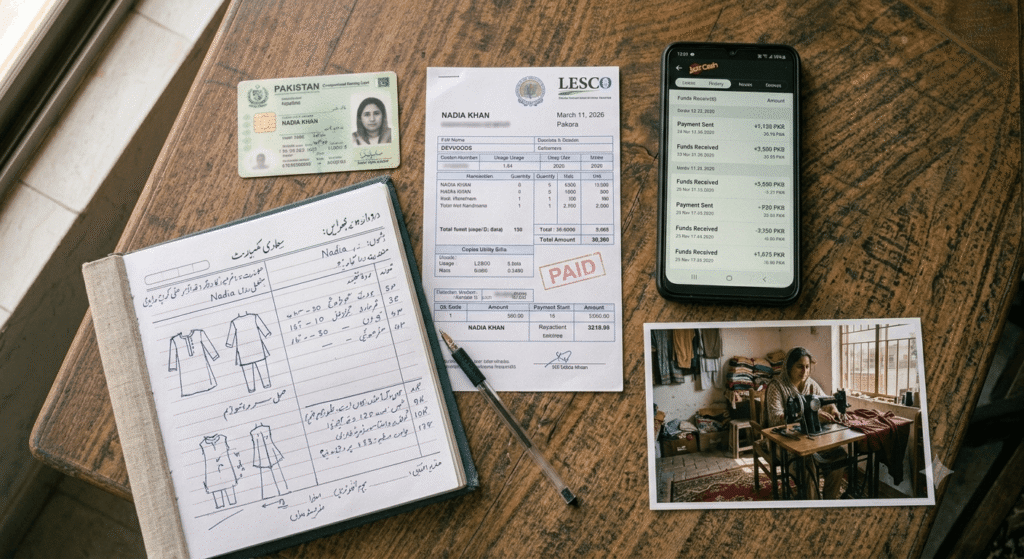
Nadia had: her CNIC, her husband’s CNIC, utility bills for the house, a mobile JazzCash account where some customers paid her, a notebook where she tracked orders and income, and photographs of her workspace showing the sewing machine and fabric stock.
That’s actually a reasonable documentation base for informal business lending. The photographs, the JazzCash transaction history, and the order notebook together paint a credible picture of an active business.
Step 2: Checked Akhuwat’s branch for her area.
The Akhuwat branch in her district was 4km away. She went with her neighbor (who agreed to be a guarantor). The loan officer — a woman — walked her through the application, asked about the business, looked at the photographs, and explained the process clearly.
Application submitted.
Step 3: Guarantors confirmed and community verification done.
Akhuwat’s community verification process — a brief check with the guarantors and a local community member who knew Nadia — took about 10 days.
Step 4: Loan disbursed.
Rs. 85,000 disbursed at the Akhuwat branch, in Nadia’s own name, 3 weeks after initial application. Zero markup.
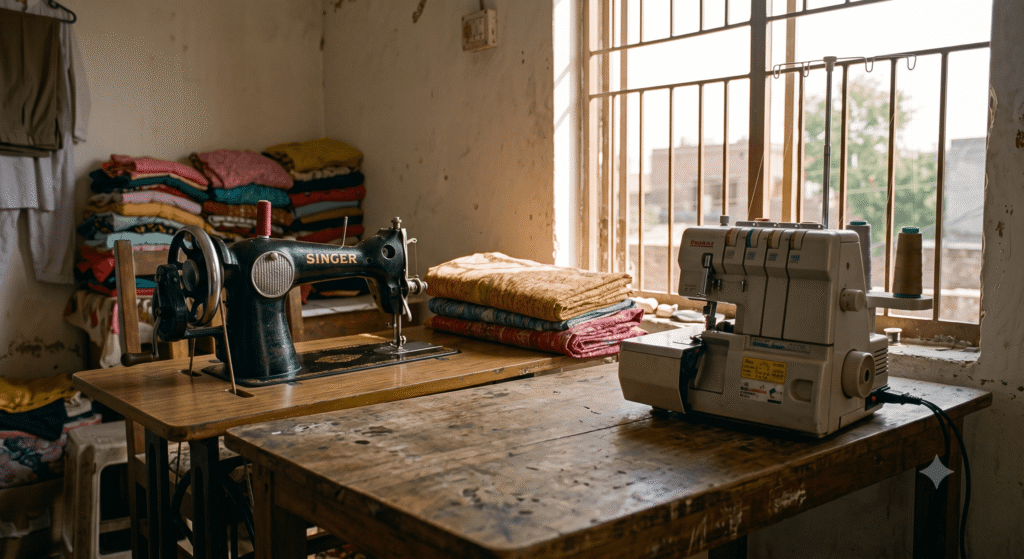
She bought a second Brother sewing machine (Rs. 38,000) and a Jack overlock machine (Rs. 28,000). The remaining Rs. 19,000 she kept as working capital for fabric purchases.
What happened next: With two machines running, she can now take double the number of orders. She’s also training her teenage daughter to use the second machine during school holidays — building the next generation’s skill set at the same time.
Her monthly repayment: Rs. 5,000 per month for 17 months.
Her estimated additional monthly revenue from the expanded capacity: Rs. 12,000 to Rs. 15,000.
Common Mistakes Women Applicants Make
Assuming a male co-applicant is required. Several programs specifically designed for women don’t require this — Akhuwat, FWBL products, and the PM Youth Loan women’s tier all allow women to apply fully in their own name. Don’t accept “you need a male guarantor” without confirming this is genuinely a program requirement and not an individual officer’s assumption.
Undervaluing informal business evidence. Order notebooks, WhatsApp message threads with customers, JazzCash transaction history, photographs of a workspace — these are legitimate evidence for Tier 1 and microfinance applications. Don’t think you need formal tax returns and audited accounts to prove your business is real.
Not having a personal bank account. Many women run business income through their husband’s or father’s account. This makes it impossible to demonstrate personal income when applying. Opening your own bank account — even a basic Asaan Account which requires only a CNIC and can be opened at most banks with zero minimum balance — is a foundational step before applying for any business loan.
Giving up after an unhelpful experience at one institution. Not every bank officer is familiar with every women’s loan program. Not every branch will be equally welcoming. If one institution gives you a runaround, try a different one — First Women Bank exists specifically for situations where standard banks create barriers.
Not knowing about the PM Youth Loan women’s quota. This is possibly the most underused financing option available to women entrepreneurs in Pakistan right now. The 25% quota means the effective competition for women is much lower than the total application pool. Many women who would qualify haven’t applied because they don’t know the quota exists.
Skipping the FWBL option. First Women Bank is specifically chartered to serve women borrowers. If you’ve struggled with other banks making you feel unwelcome or adding requirements that don’t fit your situation, FWBL is exactly what the government created to address that.
Quick Reference: Programs by Loan Size and Type
| Program | Amount | Markup | Best For |
|---|---|---|---|
| Akhuwat Khuwateen | Rs. 10K–100K | 0% | Home-based micro business |
| NRSP Women’s Group | Rs. 20K–150K | Subsidized | Rural women, group-based |
| PM Youth Loan (Women’s Quota) | Rs. 100K–7.5M | 3–5% | Business start or expansion |
| Asaan Karobar Card | Up to Rs. 1M | Subsidized | Revolving working capital |
| First Women Bank | Varies | Subsidized/Commercial | Established business, housing |
| Punjab Rozgar Scheme | Rs. 50K–500K | Subsidized | Business with skills training |
One Thing Worth Saying
The barriers women face in accessing credit in Pakistan are real. Some of them are structural (property not in women’s names), some are cultural (hesitation about formal institutions), and some are institutional (bank officers who add unofficial requirements).
But the programs described in this guide exist precisely because those barriers have been documented and taken seriously at the policy level. The quotas, the women-specific banks, the community-based lending models — these are all designed around the reality of how women in Pakistan actually live and work.
The gap, most of the time, is awareness. Knowing these programs exist, knowing which one fits your situation, and knowing you have the right to apply on your own terms — that’s what closes it.
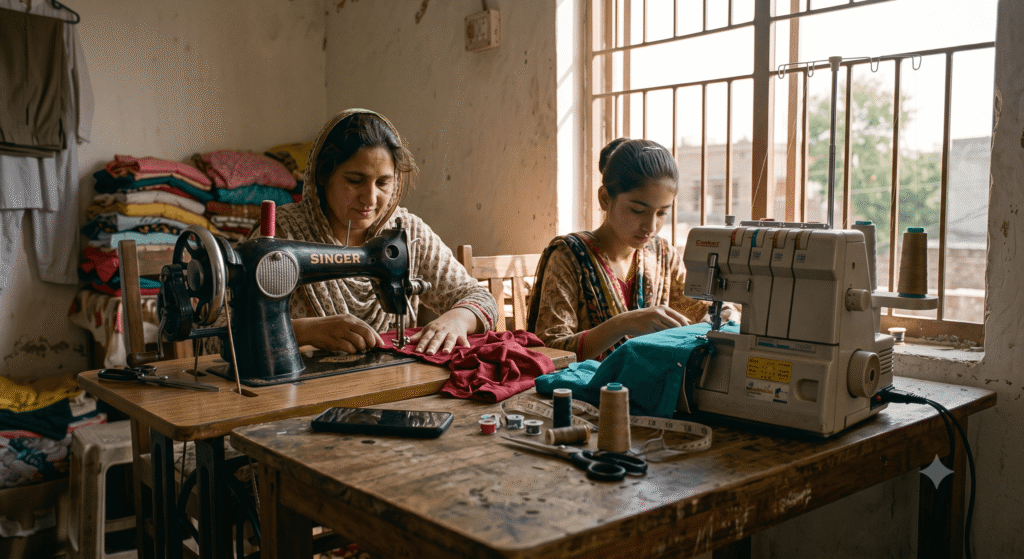
Nadia’s second sewing machine is running right now. She’s taking orders she couldn’t have accepted three months ago.
That’s what the right information at the right time can do.
Looking for a government loan scheme for women? Visit the official government portal below to check your eligibility, explore available financing options, and submit your loan application online.
Apply for Women’s Loan Scheme OfficialAre you a woman entrepreneur trying to figure out which program fits your specific business type or situation? Leave a comment with the details — we’ll try to help you identify the best starting point.