
A schoolteacher I know in a small town near Sahiwal told me something that stuck with me for weeks.
She said that out of the 34 students in her class, at least 19 of them came from BISP households — meaning their families were registered beneficiaries. But when she asked how many were receiving the Benazir Taleemi Wazaif stipend for their school enrollment, only 6 raised their hands.
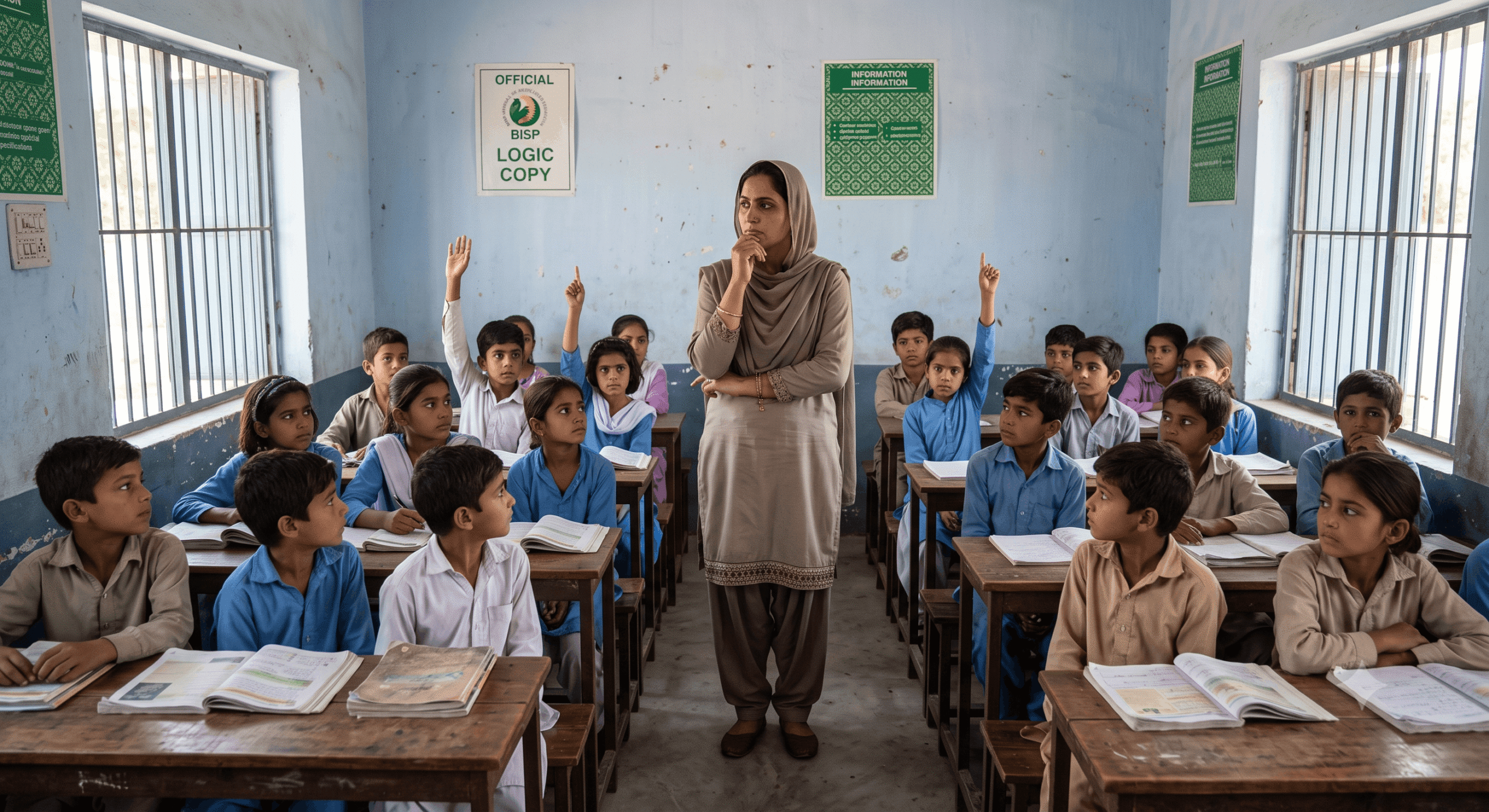
Nineteen families eligible. Six actually receiving. Thirteen children missing out on money that existed specifically for them.
When she dug into why, the answers were all variations of the same thing: “We didn’t know we had to do anything extra.” “We thought it came automatically with BISP.” “Someone told us the school handles it but the school said we have to go ourselves.” “We went once but they said something was missing and we never went back.”
That’s the Benazir Taleemi Wazaif problem in one paragraph. The program is real, the money is real, and the eligibility criteria are clear — but the gap between being eligible and actually receiving the stipend is filled with confusion, missing steps, and information that never quite reaches the people who need it most.
This guide is an attempt to close that gap.
What Benazir Taleemi Wazaif Actually Is
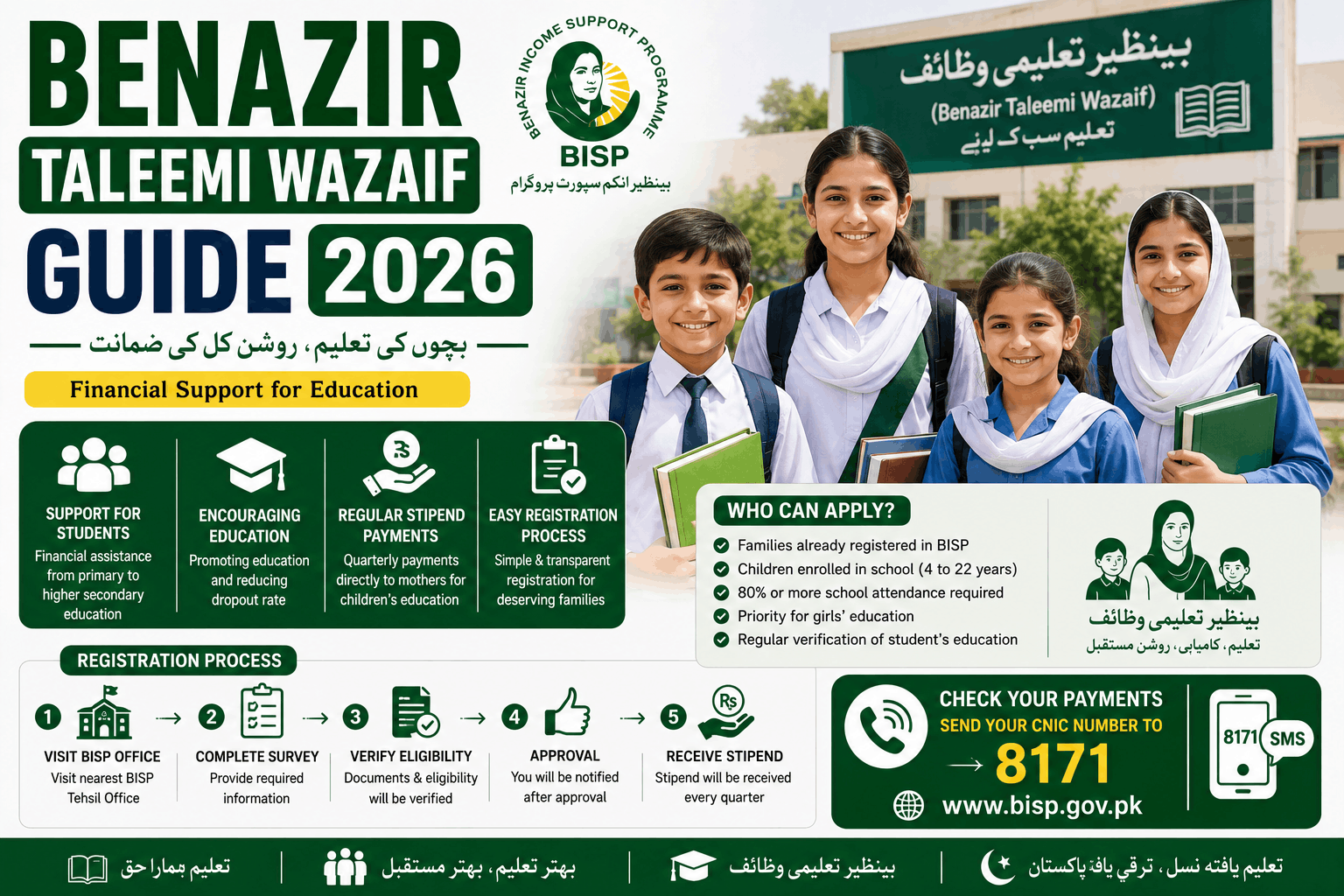
Benazir Taleemi Wazaif (BTW) is an education stipend program under the broader BISP/Ehsaas umbrella. The goal is straightforward: keep children from low-income families in school by providing their households with a quarterly cash stipend tied to school enrollment and attendance.
The logic behind it is solid. In many low-income households, the cost of keeping a child in school — uniform, books, transport, fees — competes directly with daily expenses. When money is tight, school can lose. The stipend is designed to tip that calculation in favor of education.
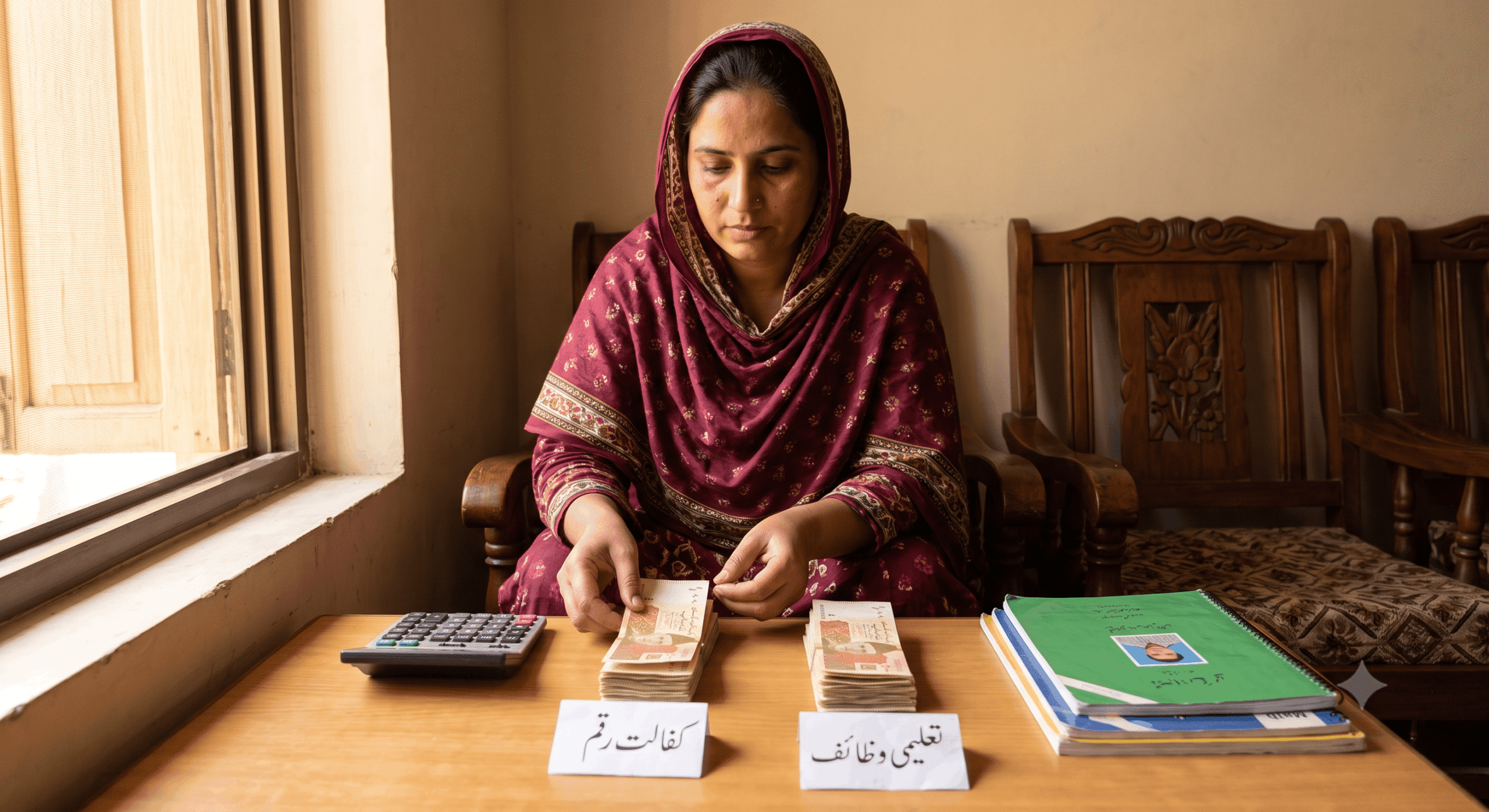
The payment goes to the mother (or female guardian registered in the BISP system), just like the main BISP Kafaalat payment. It’s a separate amount, on top of the regular BISP payment, and it’s linked to each enrolled child — not a flat household amount.
Current stipend amounts (as of 2026):
- Primary level (Class 1–5): Rs. 750 per quarter per child
- Secondary level (Class 6–10): Rs. 1,500 per quarter per child
- Girls receive a higher stipend in some program configurations to specifically incentivize female enrollment
These amounts may be revised. Always verify current figures at your nearest BISP office or through the official BISP portal (bisp.gov.pk) before relying on them for planning.
Who Is Eligible?
Three conditions need to be true simultaneously:
1. The household must be a registered BISP Kafaalat beneficiary. This is the foundation. If the family isn’t in the BISP system and receiving the main cash transfer, Taleemi Wazaif isn’t available to them. If you’re not sure whether your household is registered, send your 13-digit CNIC to 8171 via SMS and check your status.
2. The children must be enrolled in a government school. This is where many families get tripped up.
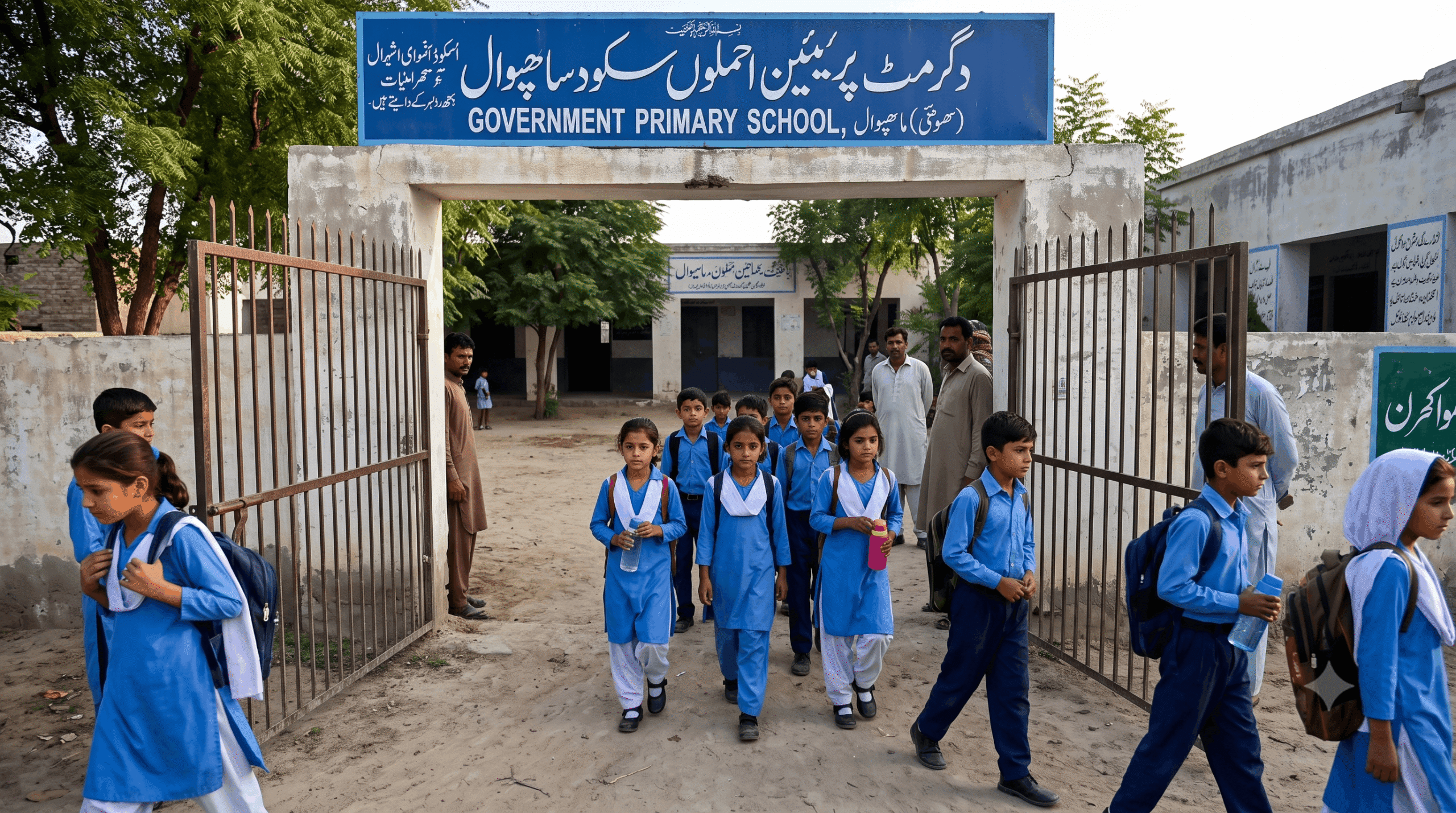
The stipend applies to children enrolled in government schools — not private schools, not madrassas (in most cases), not informal education centers. The school must be registered and the child must be officially enrolled on the school’s rolls.
3. The children must meet the attendance requirement. Enrollment alone isn’t enough. There’s an attendance condition — children need to maintain a minimum attendance percentage (typically 70%) to qualify for payment in a given quarter. If a child is enrolled but has been absent frequently, the payment may be withheld.
Children eligible by age typically range from 4 to 16 years, covering primary through secondary levels. Boys and girls both qualify, though some program phases have prioritized girls’ enrollment specifically.
How to Actually Get Registered for Taleemi Wazaif — Step by Step
This is the part where most guides fall short. They tell you what the program is but not how you actually get into it. Here’s the real process.
Step 1: Confirm BISP Kafaalat Eligibility First
As mentioned above — you cannot access Taleemi Wazaif if your household isn’t already a BISP beneficiary. Check via 8171 SMS first.
If you’re eligible and receiving Kafaalat payments, move to Step 2.
If you’re not yet registered in BISP, that needs to be sorted first. Read our BISP Registration Guide for how to go about that.
Step 2: Enroll Your Children in a Government School
If your children are already in a government school, great — make sure they’re officially on the enrollment register. This matters because the school’s records are what BISP cross-references when verifying eligibility.
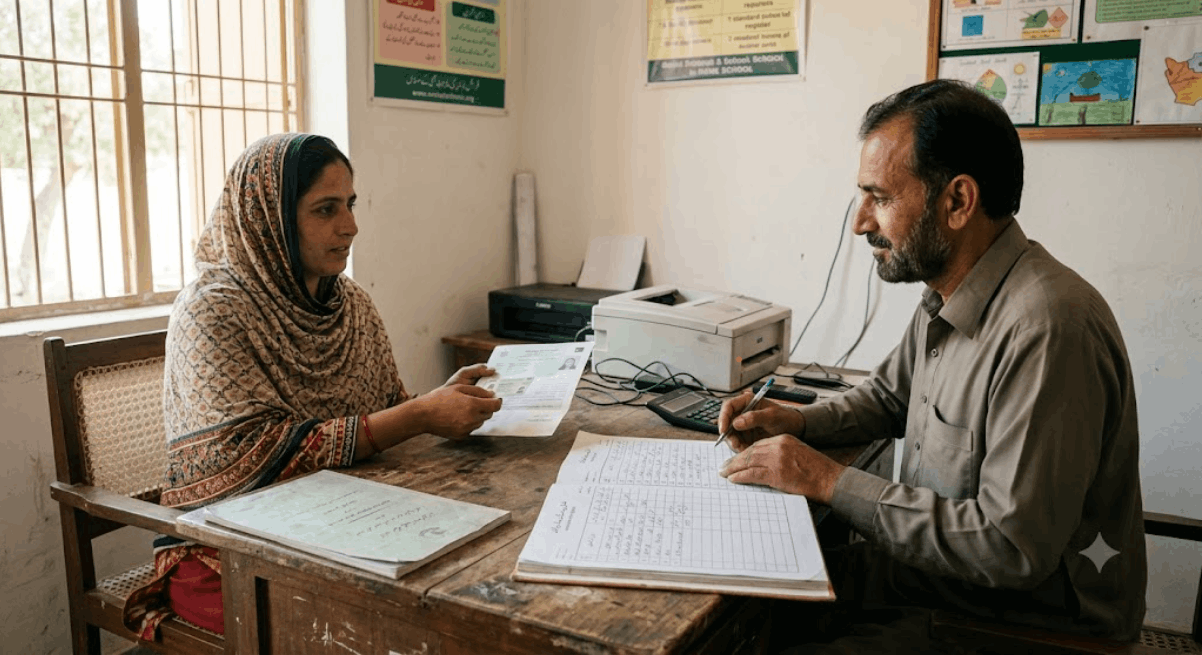
If your child has been attending informally or hasn’t been officially registered in the school system yet, speak to the head teacher about formal enrollment. This usually requires:
- Child’s B-Form (NADRA identity document for children)
- Mother’s CNIC
- Previous school leaving certificate if transferring from another school
Step 3: Visit Your Nearest BISP Tehsil Office
Once your children are enrolled in school and your BISP status is confirmed, go to the BISP Tehsil Office and ask specifically to register for Benazir Taleemi Wazaif.
Don’t assume the registration is automatic. In many cases, it isn’t — you need to actively register each child in the program.
Bring these documents:
- Original CNIC of the registered female beneficiary (the mother)
- B-Forms for each child you’re registering
- School enrollment confirmation for each child — a letter from the school or the child’s enrollment slip/school ID card
- Your BISP payment book or any BISP-related documentation you have
- Registered mobile number
The officer will process your children’s registration into the Taleemi Wazaif system. They may give you a receipt or reference number — keep this.
Step 4: School Verification Process
After your registration at the BISP Tehsil Office, there’s typically a school verification step. A BISP representative or an Education Department official may visit the school to confirm that the children you registered are actually enrolled and attending.
This is the step where attendance becomes critical. If a child is registered for the stipend but the school records show poor attendance, the verification may come back negative and the stipend won’t be released.
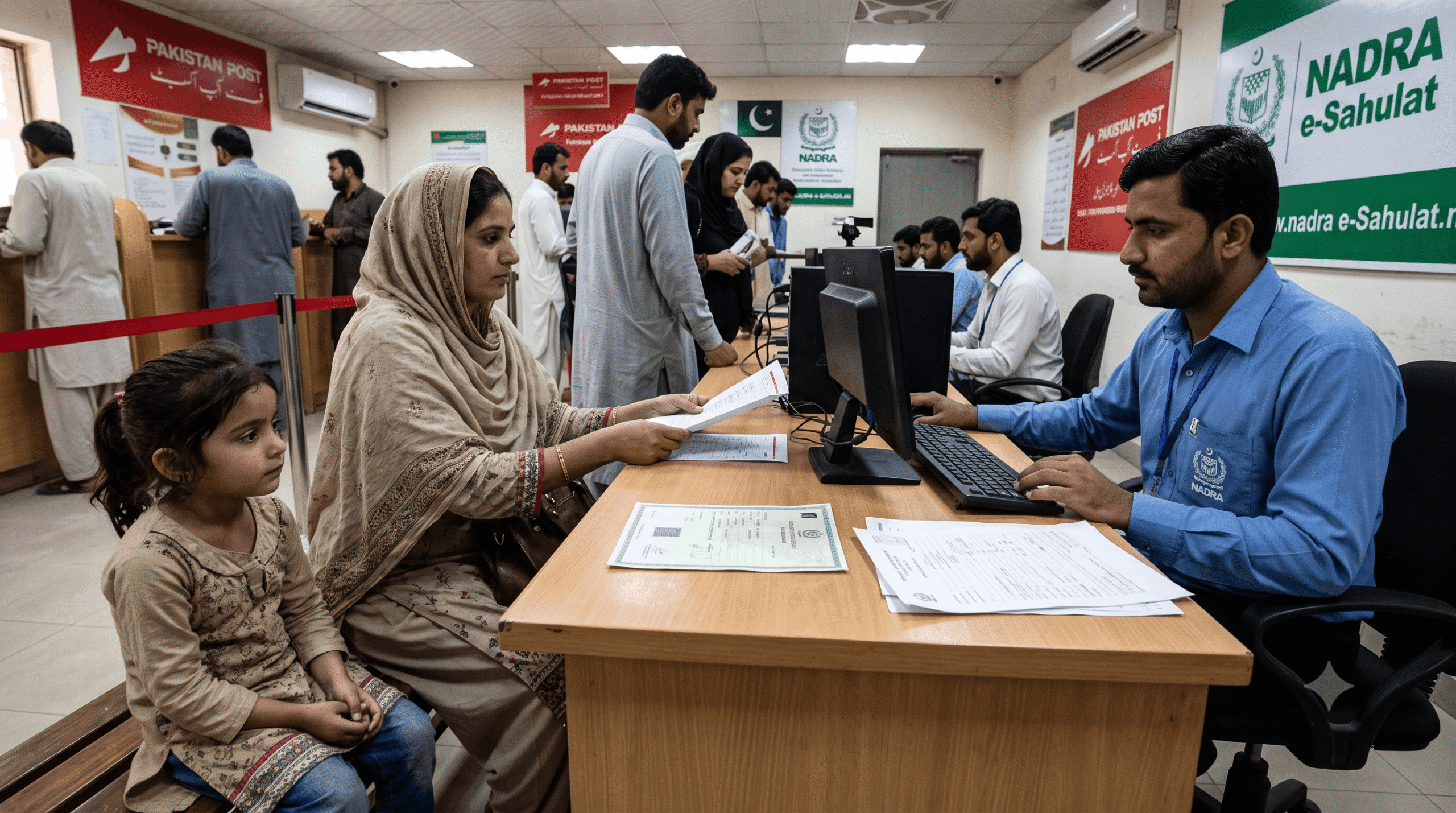
Talk to your child’s teacher. Let them know you’ve registered for Taleemi Wazaif. Ask them to make sure your child’s attendance is being properly recorded. This isn’t about cheating the system — it’s about making sure legitimate attendance isn’t being accidentally missed in record-keeping.
Step 5: Payment Collection
Once registration and verification are complete, the stipend gets added to the BISP payment cycle. The Taleemi Wazaif payment is typically made quarterly — four times a year — and is collected through the same payment channel as the main BISP Kafaalat payment (HBL Konnect agents, BISP payment centers, or designated payment points depending on your area).
The stipend appears as a separate amount from the Kafaalat payment, though it may be disbursed at the same time. When you go to collect, you should receive both.
If you receive your Kafaalat payment but not the Taleemi Wazaif stipend, that indicates a verification or registration issue that needs to be followed up at the Tehsil Office.
What Can Go Wrong — And How to Handle It
The stipend isn’t arriving even though you registered
This usually means one of a few things:
- The school verification wasn’t completed or failed (check with the school whether anyone came to verify)
- Attendance records show the child below the minimum threshold
- A data mismatch between the BISP registration and the school’s enrollment records — sometimes a child’s name on a B-Form is spelled differently from the school enrollment register, and this causes a failed match
For the data mismatch issue: go to the BISP Tehsil Office, explain the problem, and ask for a manual verification. Bring both the B-Form and the school enrollment document so they can see the discrepancy and correct it.
The child aged out or graduated — stipend stopped
Taleemi Wazaif is tied to school enrollment. When a child completes Class 10 or stops attending school (for any reason), the stipend associated with that child stops. This is expected — but some families don’t realize it and keep waiting for a payment that won’t come.
If a younger sibling starts school, they need to be separately registered for the program. The registration doesn’t automatically transfer.
The school closed or changed
If your child moved to a different government school — whether because of relocation, school closure, or any other reason — you need to update this at the BISP Tehsil Office. A child enrolled in a school that doesn’t match the one in BISP’s records won’t pass verification.
You registered but the quarterly payment is inconsistent
Some families report receiving stipends for some quarters but not others. The most common reason is attendance falling below the threshold in a specific quarter. If your child was sick for an extended period, had a family emergency, or missed school for another legitimate reason, the attendance dip may have flagged that quarter’s payment.
Unfortunately, there’s no formal “excuse” mechanism for attendance — the threshold is what it is. The practical advice is to minimize absences whenever possible during the school year.
The Mistakes Families Commonly Make
Assuming registration is automatic. It isn’t. Being a BISP beneficiary does not automatically enroll your children in Taleemi Wazaif. You have to go register them separately.
Registering children who attend private schools. The program is for government school students. If your child is in a private school — even a low-fee one — they don’t qualify. Registering them anyway and expecting payment won’t work; it’ll fail at verification.
Not updating when children change schools. Any school change needs to be reflected in the BISP system. Otherwise the verification fails and payments stop.
Ignoring the B-Form requirement.
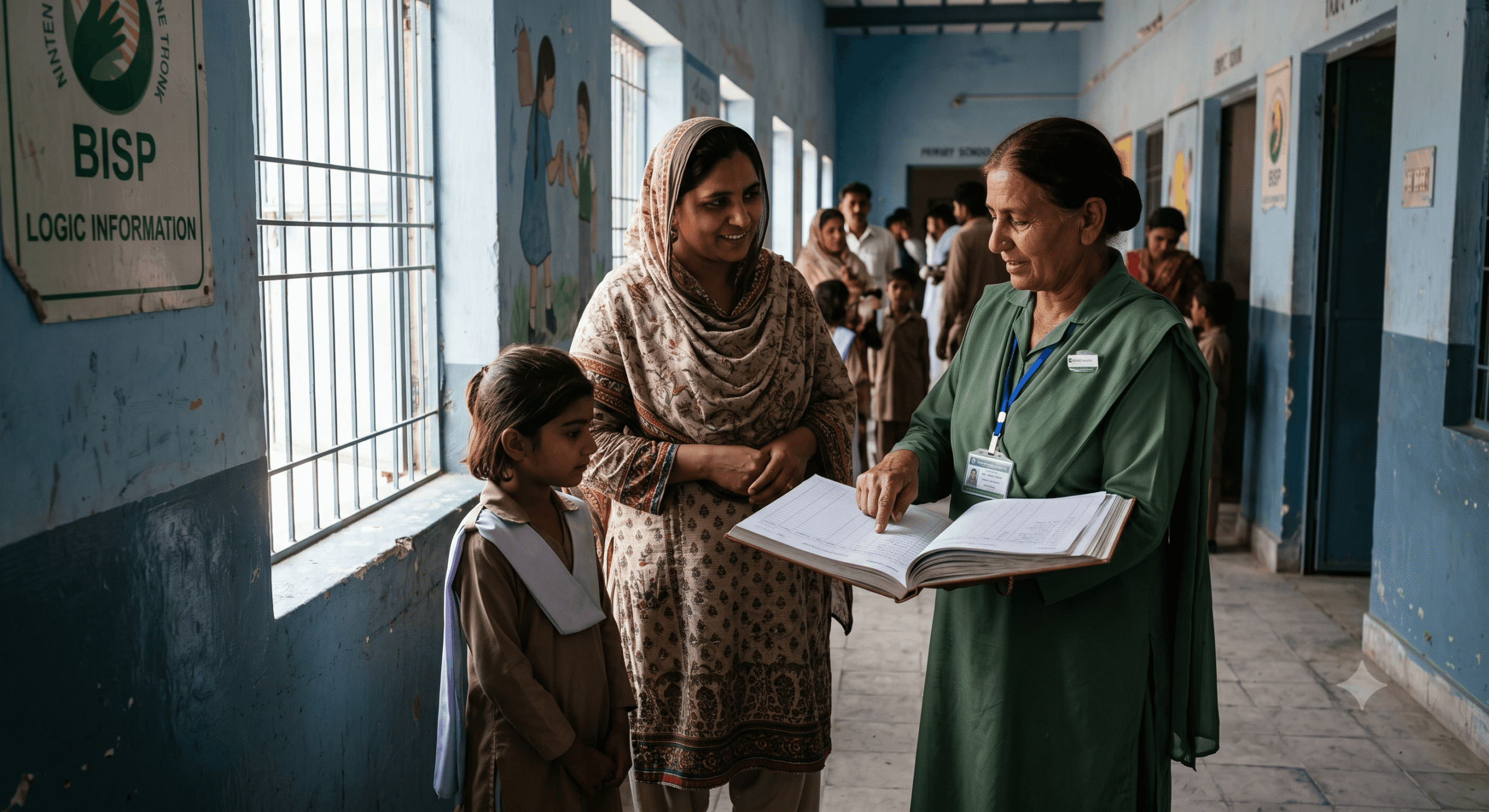
Children without B-Forms can’t be formally registered. If your children don’t have B-Forms yet, get these done at NADRA first. NADRA e-Sahulat centers at post offices are often faster than full NADRA offices for B-Forms.
Only registering some children. Each eligible child needs to be registered individually. Families sometimes register one child and don’t realize they need to register each one separately. Every enrolled child means a separate stipend — don’t leave that money uncollected.
Not following up after the initial visit. Registration at the Tehsil Office is the beginning, not the end. If you don’t hear anything or don’t receive a stipend within two quarters, follow up. Cases without follow-up can sit indefinitely.
A Word on the Attendance Requirement
This part deserves its own mention because it’s the one ongoing condition that families need to actively maintain.
The attendance requirement isn’t a one-time hurdle you clear during registration. It applies every quarter. Each payment cycle, the school’s attendance records are what determine whether the stipend gets released.
For families where a child’s attendance might be inconsistent — due to health, distance to school, or seasonal agricultural work that pulls children away — this creates a real challenge. There’s no easy fix for this, but awareness helps. If you know a particular quarter had poor attendance, it’s worth following up at the Tehsil Office proactively rather than waiting to discover the payment didn’t come.
Quick Reference: Documents You Need
| Purpose | Documents Required |
|---|---|
| Initial registration | Mother’s CNIC, Children’s B-Forms, School enrollment proof |
| Adding a new child | Child’s B-Form, New school enrollment letter |
| Updating school change | New school enrollment confirmation, CNIC |
| Disputing a missed payment | BISP registration receipt, School attendance records |
| B-Form application (if needed first) | Parent’s CNIC, Child’s birth certificate, Hospital/UC record |
One More Thing Worth Saying
Thirteen children in that classroom near Sahiwal were missing payments they were entitled to — not because of policy gaps, but because of information gaps.
The program exists. The eligibility is real. The money is there. What’s missing, too often, is someone sitting with a family and walking them through exactly what to do and in what order.
If you’re a teacher, a community worker, a local volunteer, or just someone with a smartphone in an area where others have less access — sharing this kind of information is genuinely useful. Not in a complicated way. Just: “You know you have to register each child separately, right? Here’s what to bring.”
That conversation, in the right moment, is the difference between a family collecting what they’re owed and a child’s stipend sitting unclaimed in a system nobody told them how to access.
Want to secure financial support for your child’s education? Visit the official BISP 8171 portal below to verify eligibility, access Benazir Taleemi Wazaif services, and get the latest information about registration and payments.
Check Benazir Taleemi Wazaif OfficialIf you’re stuck at a specific step — registration not processing, verification failing, payments not arriving — drop a comment with the details. We’ll try to point you toward the right next move.