
Rs. 180,000 in working capital against a Rs. 600,000 minimum order — that gap is what stood between a Gujranwala auto parts shop owner and an exclusive distributorship for a Chinese parts brand gaining traction across Punjab.
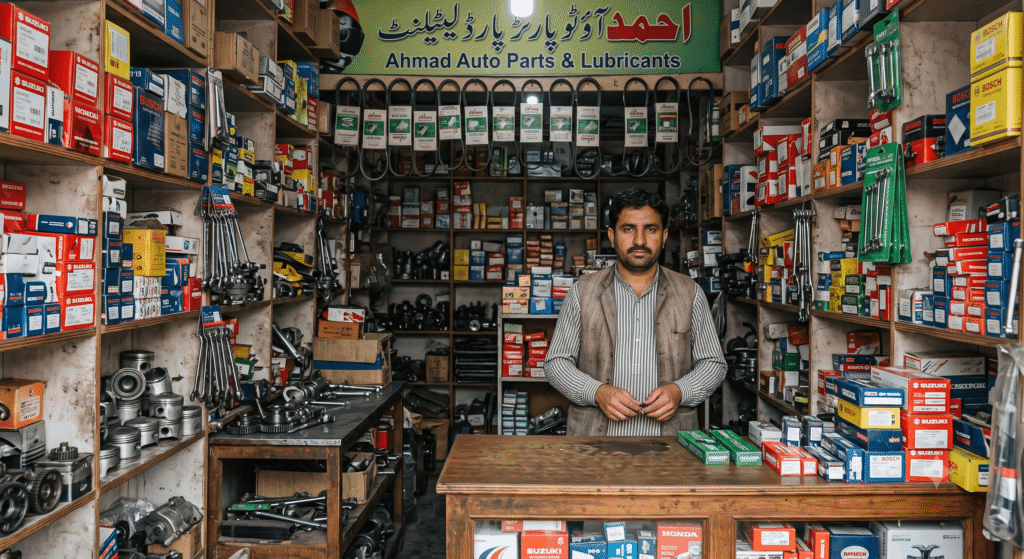
Seven years running a single shopfront, a loyal base of mechanics and workshop owners, never a missed supplier payment — none of that mattered much when it came to closing a Rs. 420,000 financing gap. Three banks were approached. The first called the shop too small. The second wanted two years of tax returns filed under a specific business classification, which his accountant had never used. The third offered a personal loan at 28% annual interest — a rate that would have consumed the entire first year’s additional profit from the distributorship.
The opportunity nearly got dropped entirely.
SBP’s SME financing schemes and a handful of government small-business loan programs turned out to be the actual answer — options that don’t show up in a standard bank conversation unless someone specifically asks about them. Financing came through, and the distributorship is now running.
Here’s the complete picture of what small business loan options currently exist in Pakistan, and how to actually access each one.
The Problem With Small Business Financing in Pakistan
Before getting into specific schemes, it helps to understand why small business lending is so difficult here — because that context changes how you approach the solution.
Pakistani banks are structurally cautious about small business lending. They operate under regulatory requirements that push them toward collateral-backed, documented lending.
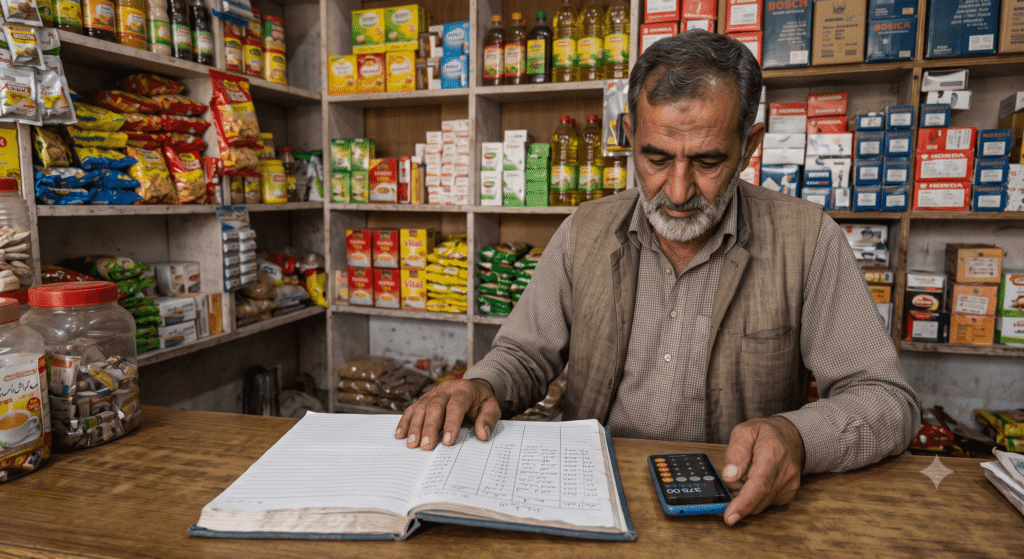
For a small business owner whose assets are shop inventory (not property), whose revenue comes in cash, and whose “accounts” are a notebook and a phone calculator — that profile doesn’t fit neatly into what banks are designed to process.
This is why government-backed SME schemes exist. They’re designed to bridge the gap between how small businesses actually operate and what the financial system requires.
But even government schemes have processes, documentation requirements, and eligibility criteria. Understanding the landscape means you can approach the right program with the right preparation — instead of wasting months at the wrong institution.
The Main Small Business Loan Options in Pakistan 2026
1. State Bank of Pakistan (SBP) SME Refinancing Schemes
The State Bank of Pakistan doesn’t lend directly to businesses — but it provides concessionary refinancing to commercial banks that lend to small businesses, which makes the banks willing to offer lower rates.
Under SBP’s SME schemes, banks can access funds at a reduced rate from the central bank, pass that saving on to borrowers, and offer loans at markup rates significantly below their normal commercial rates.
Key SBP SME programs:
TERF (Temporary Economic Refinance Facility) — Largely wound down but worth knowing about for context. This provided 5% fixed markup loans for new plant and machinery. Some banks still have outstanding TERF-funded loans.
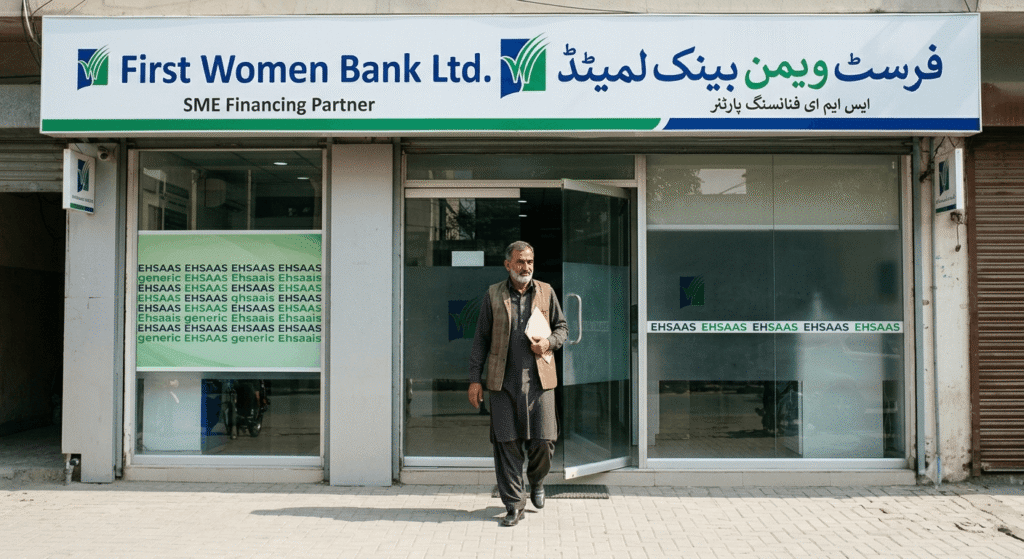
SBP’s SME Asaan Finance Scheme (SAAF) — One of the more accessible current options. Designed specifically for small businesses that lack collateral. Loans up to Rs. 1.5 million with streamlined documentation requirements. Banks participating in SAAF have committed to faster processing timelines and less documentation burden than standard SME loans.
To access SBP-backed schemes: go to a participating commercial bank and ask specifically for SME loan products under SBP refinancing schemes or the SAAF facility. The participating banks include Habib Bank, MCB, Bank Alfalah, Faysal Bank, and others — the SBP website (sbp.org.pk) lists current participants.
2. PM Youth Business Loan (Kamyab Jawan Program)
We covered this in detail in a separate guide, but it belongs in this roundup: the PM Youth Business Loan (pmkamyabjawan.gov.pk) offers subsidized loans from Rs. 100,000 to Rs. 7.5 million for young entrepreneurs aged 21–45. Markup rates are subsidized to 3–5% for smaller loans.
This is particularly useful for newer businesses and entrepreneurs who don’t have the operational history that traditional SME loan programs require.
3. Asaan Karobar Card (Punjab)
For Punjab-based small businesses, the Asaan Karobar Card provides a revolving credit facility up to Rs. 1 million at subsidized markup. The revolving structure — borrow, repay, borrow again — suits businesses with fluctuating working capital needs better than a fixed term loan. Details in our separate Asaan Karobar Card guide.
4. SMEDA Business Support
SMEDA (Small and Medium Enterprises Development Authority) at smeda.org.pk is not a direct lender but is an important resource. They:
- Help businesses develop business plans suitable for loan applications
- Connect applicants with appropriate financing institutions
- Run training programs for SME owners
- Provide free business advisory services
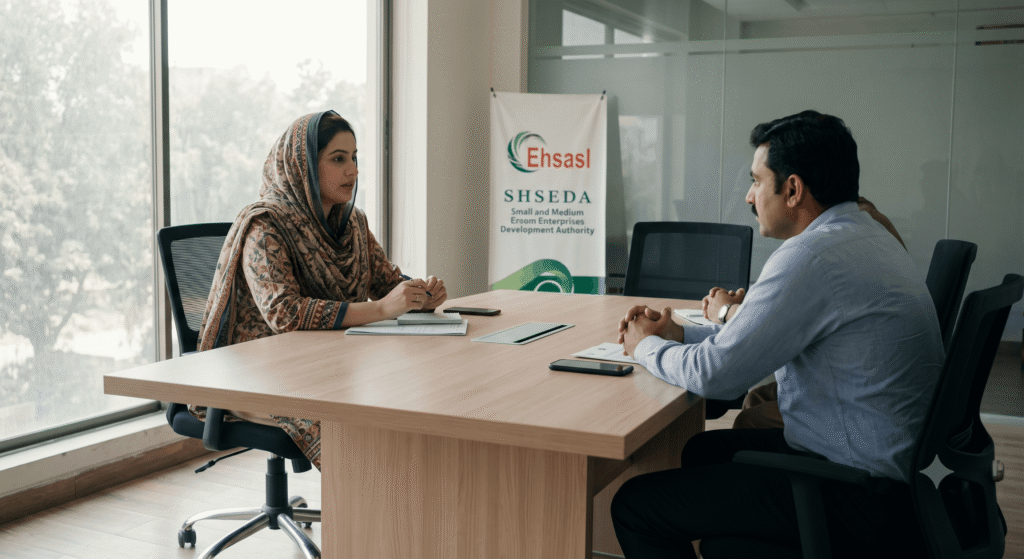
If you’re struggling to put together a loan application because you’re not sure how to present your business on paper — SMEDA is where to go first. Their services are free.
5. Microfinance Institutions
For businesses needing smaller amounts (Rs. 50,000 to Rs. 300,000), microfinance institutions (MFIs) like Khushhali Bank, NRSP Microfinance, U Microfinance Bank, and Akhuwat offer relatively accessible business loans.
Akhuwat deserves special mention — it’s an interest-free microfinance institution operating on Islamic charity principles. Loans are genuinely zero-cost (no markup at all), though amounts are smaller and demand far exceeds supply. Apply early, be patient with the queue.
MFI loans typically have less documentation burden but higher markup rates (except Akhuwat). They’re suited for businesses too small for formal SME loans but needing more capital than personal savings can provide.
What Lenders Actually Look For
Before you walk into a bank or fill out an application form, understand what’s going through the lender’s mind.
Can this business generate enough income to repay the loan?
This is the core question. Everything else feeds into answering it. Your cash flow, your business history, your customer base — all of this is the lender trying to assess repayment probability.
Is the information you’re providing verifiable?
Bank statements, tax returns, utility bills, purchase invoices — these exist because lenders need to cross-check what you tell them against independent records. The better your documentation, the more comfortable the lender is.
What happens if you don’t repay?
Collateral answers this question. For secured loans, collateral (property, vehicle, machinery) gives the bank a recovery option. For unsecured SME schemes (like SAAF), the bank relies more heavily on the business assessment and the SBP risk-sharing framework.
Understanding these three questions helps you prepare in a way that directly addresses what the lender needs — rather than hoping they’ll ignore gaps in your documentation.
Step-by-Step: How Imran Got His Financing
Here’s exactly what happened with Imran’s application — the realistic version.
Step 1: Figure out which program fits.
After research, Imran identified two options: the SBP SAAF facility through a participating bank, and the PM Youth Business Loan. He was 38, so the PM Youth program was an option. His business was 7 years old, which made the SAAF route viable too.
He went with SAAF at a Bank Alfalah branch that specifically advertised SME lending. Why Bank Alfalah? Because the branch manager there was someone Imran knew — not through connections, but because he’d been banking there for four years and they knew his account history.
Step 2: Prepare the documents.
The SAAF facility had a lighter documentation requirement than standard SME loans, but it still needed:
- Business bank account statements — last 12 months
- CNIC
- Business registration (Imran had an NTN — National Tax Number — which served as his business registration for this purpose)
- Tax returns for the last 2 years (his accountant had to refile the most recent year with the correct business classification)
- Shop rental agreement
- Utility bill for the shop address
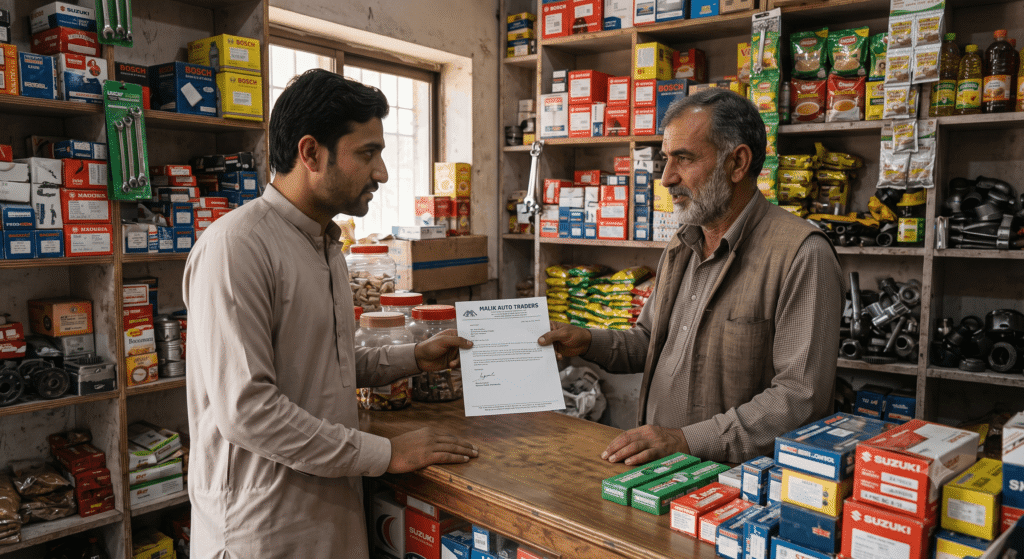
- Two supplier references — letters from suppliers confirming the business relationship and typical order volumes
- A brief business plan — one page explaining the distributorship opportunity and projected revenue
The tax return reclassification took 10 days and cost Rs. 8,000 in accountant fees. Frustrating, but necessary.
Step 3: The bank’s credit assessment.
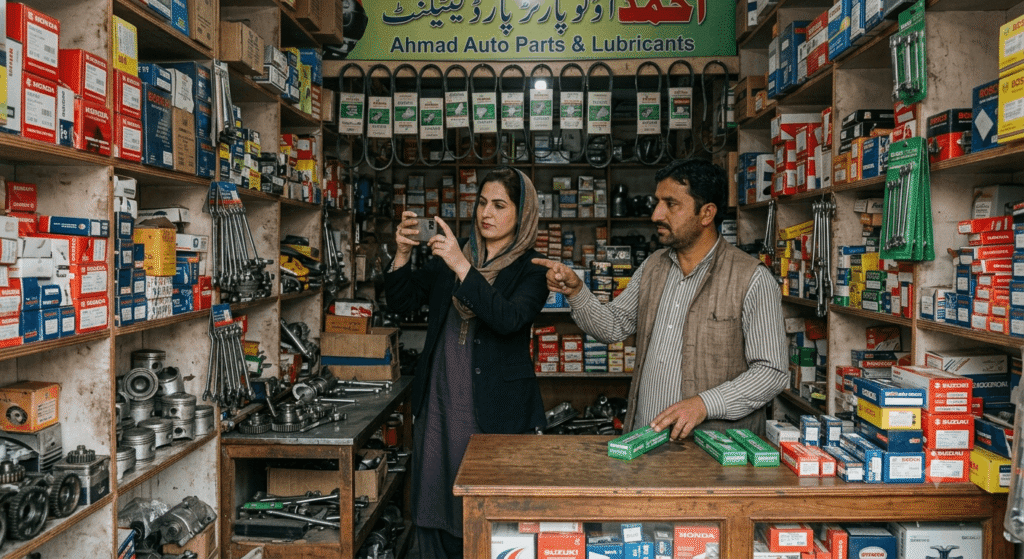
A bank officer visited the shop for field verification. Imran showed him the current inventory, introduced him to a regular customer who happened to be there, and walked him through the supplier relationship and the distributorship opportunity.
The officer was there for about 45 minutes. He photographed the shop, took note of the visible inventory, and asked Imran to walk him through a typical month’s purchasing and sales cycle.
Step 4: The decision.
Loan approved: Rs. 450,000 (slightly above his minimum need, which gave him working capital buffer). Markup rate: 9% per annum (SAAF rate — significantly below Bank Alfalah’s standard SME rate of 20%+). Tenure: 3 years. Monthly installment: approximately Rs. 14,300.
Total time from first bank visit to approval: 6 weeks.
Step 5: Using the loan.
Imran took the Rs. 450,000, added his Rs. 180,000 working capital, and placed the Rs. 600,000 minimum order with the supplier.
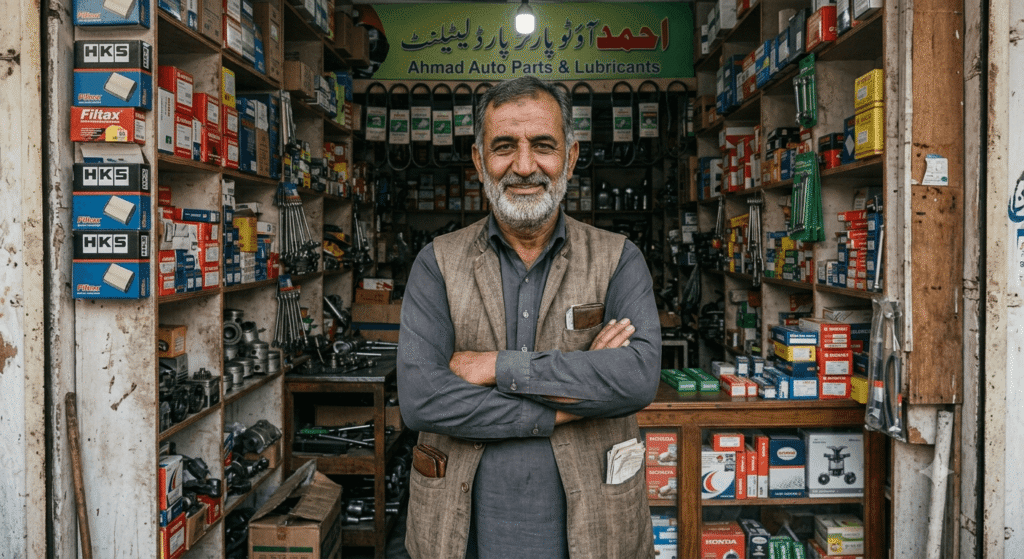
The distributorship is now in its eighth month. Revenue from the branded product line accounts for about 28% of his monthly sales.
His installment is Rs. 14,300. His additional monthly revenue from the distributorship, after supplier costs, is roughly Rs. 35,000 to Rs. 40,000.
The loan is paying for itself and then some.
Documents You Need — By Business Type
Different business types have slightly different documentation realities. Here’s a practical breakdown:
Retail shop / trader:
- Shop rental agreement or ownership documents
- Business bank account statements (12 months)
- NTN or sales tax registration
- Supplier invoices (last 3–6 months)
- Tax return (last 2 years)
Small manufacturer / workshop:
- Workshop rental or ownership documents
- Equipment list with approximate values
- Purchase orders or customer contracts if available
- Utility bills for the premises
- NTN
- Bank statements
- Tax return
Service provider (tailoring, repair, salon, etc.):
- Shop or premises documents
- Bank statements
- NTN
- List of regular clients if possible (written references help)
- Any service contracts or recurring customer documentation
Home-based business:
- Utility bill at home address
- CNIC
- Bank statements showing business-related transactions
- Any online platform presence (Daraz seller account, social media business page, order screenshots)
- NTN (obtain this if you don’t have it — it strengthens any loan application significantly)
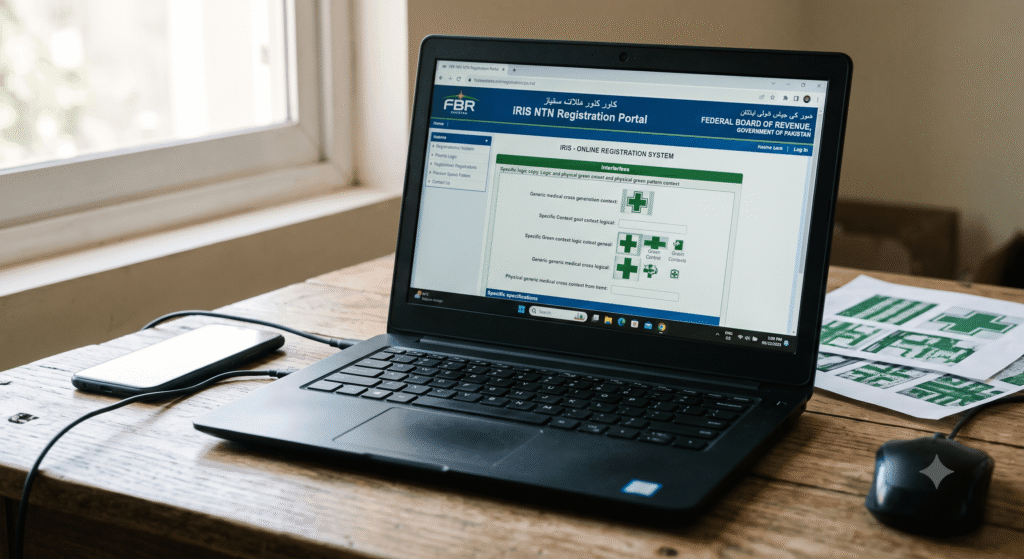
NTN registration is free and can be done online through iris.fbr.gov.pk or at an FBR facilitation center. If your business doesn’t have one, get it before you apply for anything. It’s the single most impactful low-cost document improvement you can make.
Common Mistakes That Get Applications Rejected
Applying for too much. The loan amount should be proportionate to your demonstrable business scale. A shop with Rs. 150,000/month in purchases applying for Rs. 5,000,000 will be rejected immediately. Know your ceiling before you walk in.
Bank statements that don’t reflect the business. If your business revenue is going to your personal savings account rather than a business account, your bank statements tell the bank you have personal income — not a business. Open a separate business account and run all business transactions through it for at least 6 months before applying.
Tax returns in the wrong category. Like Imran’s situation — filed as an individual retailer when the bank needs a business. Work with an accountant to ensure your filings reflect your business correctly.
No NTN. This is the most fixable problem and yet it comes up constantly. Register for NTN before applying. It’s free and it takes 1–2 weeks at most.
Applying to the wrong institution. A tiny home-based business applying to a large commercial bank’s standard SME desk is likely to be rejected or ignored. Match the scale of your business to the appropriate financing channel: microfinance for very small, SBP SAAF or PM Youth Loan for small-medium, standard SME lending for established businesses with documented revenue.
Not having a business bank account. Personal account statements don’t tell the bank’s credit team anything useful about your business cash flows. Open a business account. Use it exclusively for business. Even 3–4 months of clean business account history helps.
Giving up after the first rejection. Different banks assess the same application differently. A rejection from one bank doesn’t mean the same application fails everywhere. If your fundamentals are solid — real business, real revenue, real purpose for the loan — try a different institution or a different product.
The Honest Reality About Small Business Lending in Pakistan
The system is improving but it’s still imperfect. Banks are cautious. Documentation requirements can feel disproportionate for small operations. Processing times are longer than they should be.
But the options available in 2026 — SBP’s SAAF facility, PM Youth Business Loan, Asaan Karobar Card, microfinance institutions, Akhuwat — represent more accessible small business financing than has ever existed in Pakistan before.
The gap between “I need funding” and “I have funding” is mostly a documentation and preparation gap. The businesses that get loans aren’t necessarily the best businesses. They’re often the businesses with the most organized paper trail — the ones that have taken the time to get their NTN, keep their accounts in order, and present their operation in a way that a lender can understand and assess.
Imran’s shop was exactly the same business before and after the loan. What changed was that he took two weeks to get his tax filing corrected, gathered his supplier references, and walked into the right bank with the right product ready.
The loan followed.
Running a small business and trying to figure out which loan option fits your situation? Leave a comment describing your business and we’ll try to point you toward the most relevant program.
Looking to start or expand your small business? Visit the official government loan portal below to check your eligibility, review the required documents, and submit your loan application online.
Apply for Small Business Loan Official