

A BISP payment can stop without warning — no letter, no notification, no explanation — even when nothing about the household has actually changed.
That’s what happened to one long-standing beneficiary who’d received payments regularly for almost three years. One quarter, nothing arrived.
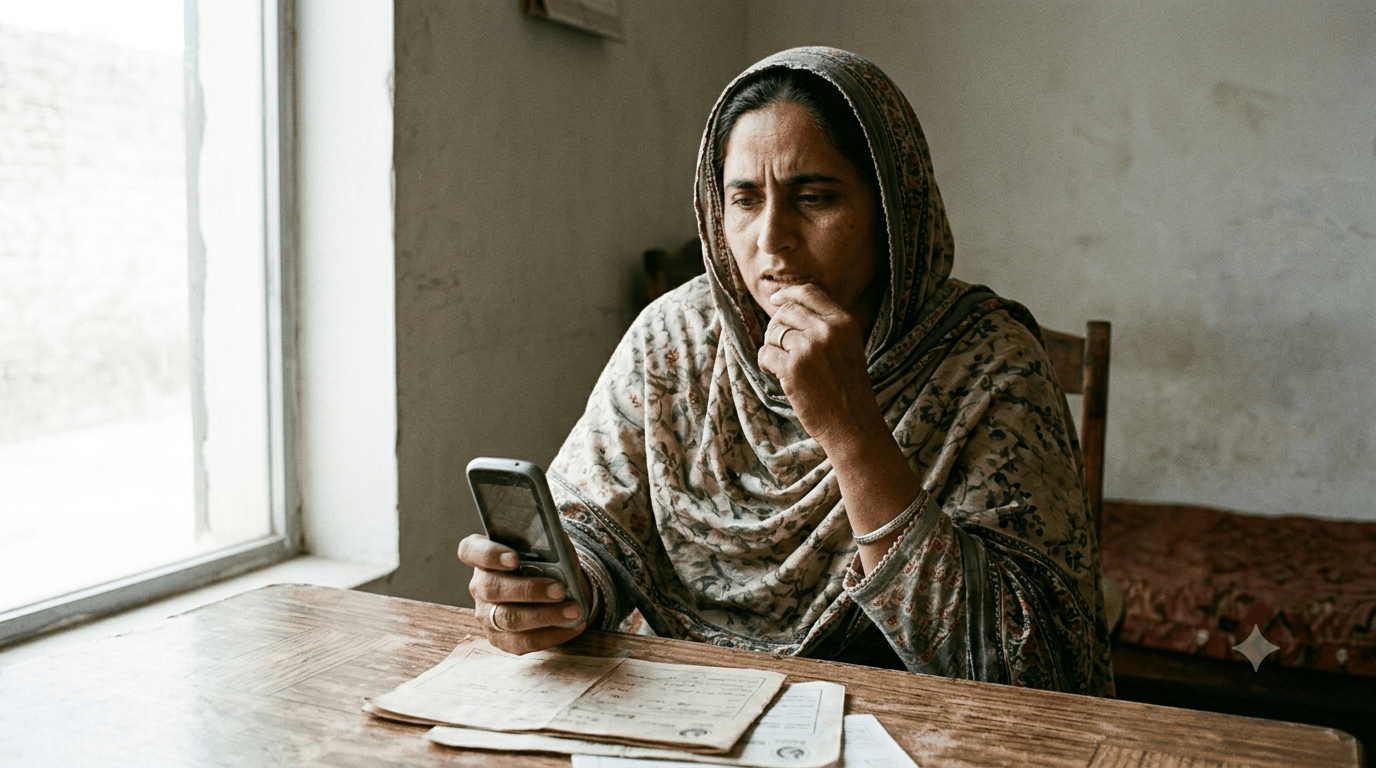
A check via 8171 returned a single word: “not eligible.” Her address hadn’t changed. Her income hadn’t changed. Her household looked exactly as it had when she first registered.
What had changed was upstream of her: a survey team had visited her neighborhood as part of what BISP now calls the Dynamic Survey, and something in the updated data pushed her PMT score above the eligibility threshold — without her ever being told the survey was happening, or asked to verify what was being recorded.
By the time she found out her status had changed, the data was already locked into the system.
That gap — a process running quietly in the background, with real consequences for households who never see it coming — is exactly why understanding the BISP Dynamic Survey matters, whether the concern is losing existing payments or figuring out why a new registration never went through.
What Is the BISP Dynamic Survey?
For years, BISP relied on what’s called a static survey — the NSER (National Socio-Economic Registry) survey that was conducted in large waves, usually every few years, and the data from those surveys determined who got payments until the next big survey cycle came around.
The problem with static surveys is obvious: people’s situations change. A family that was genuinely poor in 2019 might be doing better by 2023. A family that wasn’t surveyed in the last wave might have become eligible since then. And a family where the data was entered incorrectly might be waiting years for the next survey to fix a mistake.
The Dynamic Survey is BISP’s answer to this. Instead of waiting for massive nationwide survey cycles, BISP now conducts ongoing, targeted surveys throughout the year — updating household data more frequently, allowing new households to be registered, and in some cases, removing households whose updated data shows they no longer meet the eligibility criteria.
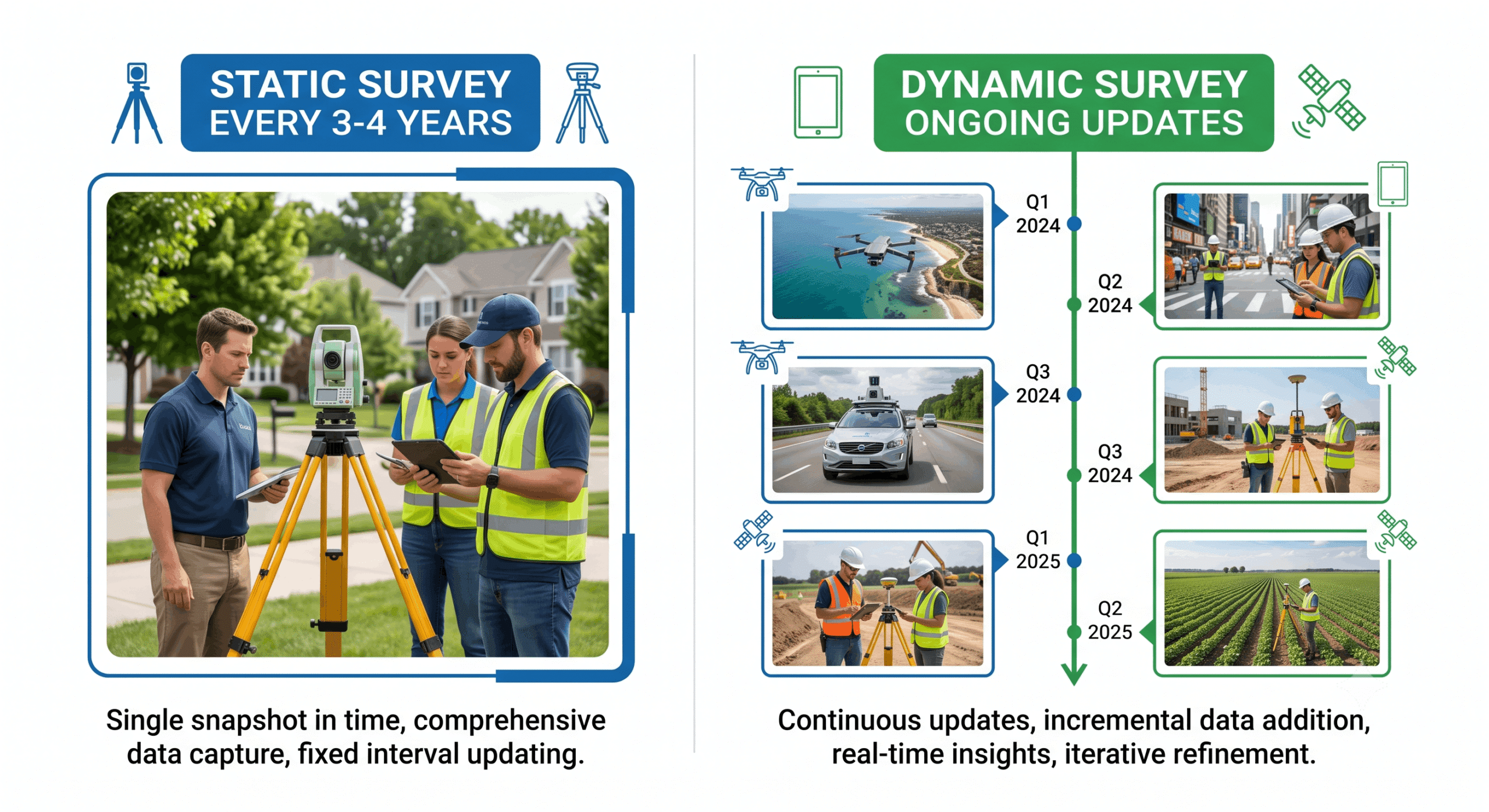
Think of it as BISP shifting from taking one big photograph every few years to continuously updating a living record.
In practice, this means:
- New households can be added to the NSER at any time, not just during scheduled survey waves
- Existing beneficiaries can have their data updated — for better or worse
- People who were previously rejected can request a re-survey if their circumstances have changed
- The system is theoretically more accurate and more responsive to real-world conditions
Theoretically. The implementation, as always, is more complicated.
Who Does the Dynamic Survey Apply To?
The Dynamic Survey is relevant to three main groups of people:
Current BISP beneficiaries whose household data may be updated during ongoing survey visits. If a team comes to your area and collects new data, your PMT score could change — and your eligibility status with it.
People who were previously deemed ineligible after a survey but believe their circumstances have changed or that the original data was inaccurate. The Dynamic Survey process gives them a path to request re-evaluation.
People who have never been surveyed — households that were missed during previous NSER waves, new households, or people who recently acquired a valid CNIC and want to enter the system for the first time.
If you fall into any of these categories, this guide is directly relevant to you.
How the Dynamic Survey Actually Works — Step by Step
Step 1: Find Out Your Current Survey Status
Before anything else, check where you stand right now.
Send your 13-digit CNIC number to 8171 via SMS (free on most networks). The reply will tell you one of several things:
- Eligible / Mustahiq — you’re in the system and currently registered
- Not Eligible / Mustahiq Nahin — you were surveyed but your PMT score is above the threshold
- Survey Incomplete — your household has not been fully surveyed or the data wasn’t entered correctly
- CNIC Not Found — your CNIC isn’t in the NSER system at all
Your next steps depend entirely on which of these you get back.
Step 2: If You’re Already Eligible — Protect Your Status
If you’re currently receiving payments, the Dynamic Survey means your data can be updated at any time when a team visits your area. Here’s what that means practically:
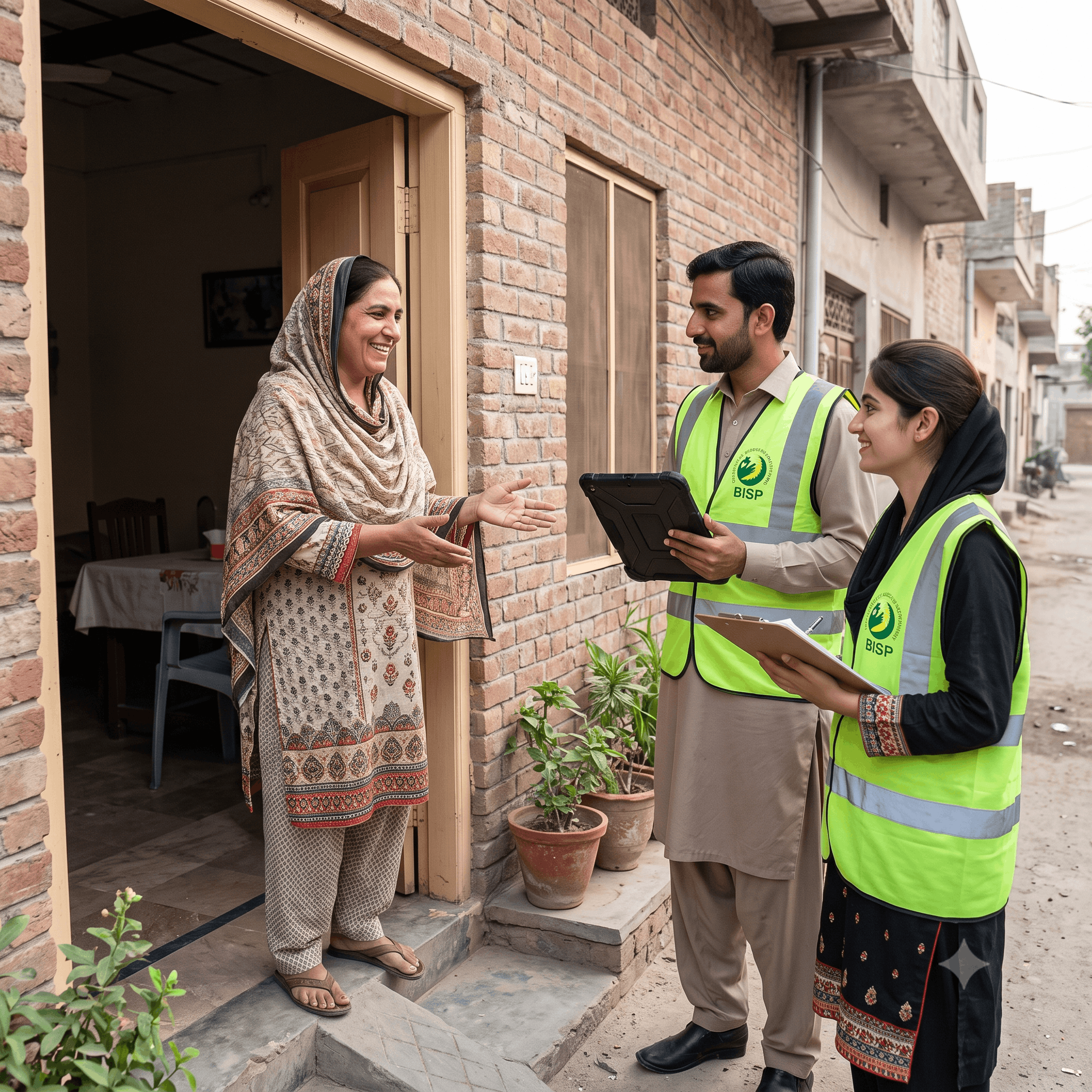
Be home when survey teams come. If a team visits and nobody is there, they may collect information from neighbors or visible observations — which might not accurately reflect your household. If you see a survey team in your area, make yourself available.
Make sure your household information on file is accurate. If your house has been renovated, if household members have changed, if you’ve acquired or sold assets since your last survey — these things could affect your score. Accurate data that reflects your actual situation is your best protection.
Keep your CNIC current. An expired CNIC can trigger payment holds even if your eligibility status hasn’t changed.
Don’t ignore 8171 check-ins. Check your status every quarter, not just when you expect a payment. If something changes in the system, you want to know early — not when you show up at the payment agent and come home empty-handed.
Step 3: If You’re Not Eligible — Request a Dynamic Survey Re-evaluation
This is the path for people who were surveyed and rejected, or who were surveyed a while ago and believe their score should be re-evaluated.
Go to your nearest BISP Tehsil Office. Not the district office — the Tehsil level is where individual case requests are handled.
When you get there, tell them you want to request a Dynamic Survey re-evaluation. Specifically, you’re asking for your household’s NSER data to be reviewed or updated.
Bring with you:
- Original CNIC of the female beneficiary
- Original CNICs of all adult household members if possible
- Proof of residence — electricity bill, gas bill, or any official document showing your address
- B-Forms for children under 18
- Any documentation that shows a change in your household’s circumstances (if relevant)
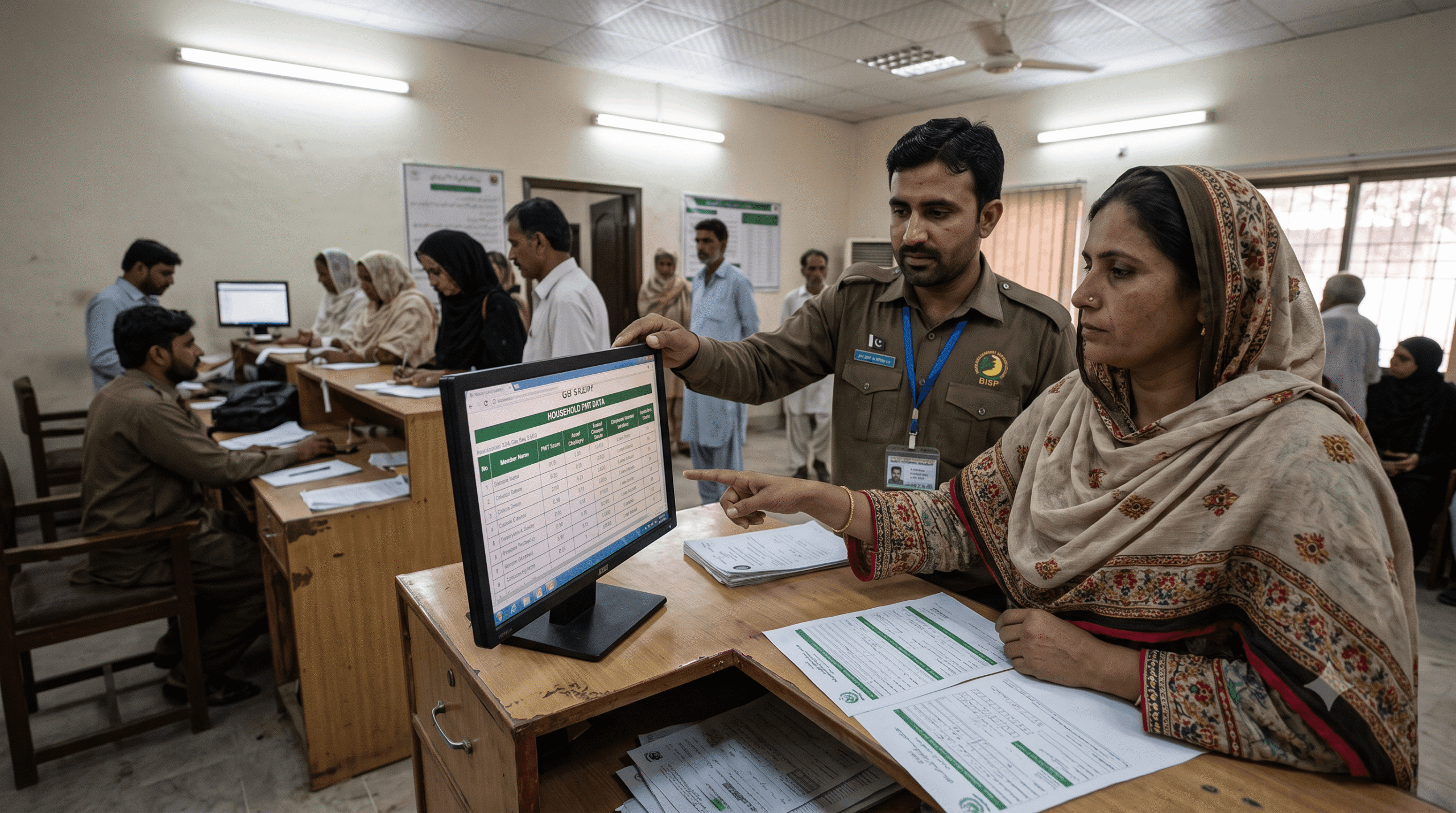
The officer will pull up your household’s existing data. You can ask them to show you what PMT factors are recorded against your household. This is important — because sometimes the score is high due to a data error, not because of your actual situation.
If you spot an error (for example, the survey recorded your house as “pucca” when it’s mud construction, or listed assets you don’t own), point it out and ask for it to be corrected. Bring whatever evidence you can to support the correction.
Step 4: New Household Registration Through Dynamic Survey
If your household has never been surveyed at all, the Dynamic Survey process is how you get into the system now — you don’t have to wait for the next big NSER wave.
At the BISP Tehsil Office, request to be registered for a Dynamic Survey visit. They’ll record your information and schedule a survey team to visit your home.
When the team comes:
Make sure the right person is present. The BISP payment is issued to a woman, so the female head of household or the female beneficiary should ideally be available during the survey. Her CNIC will be the one linked to any future payments.
Have your documents ready. Original CNICs, B-Forms, utility bills. The team may photograph documents, so having them clean and legible helps.
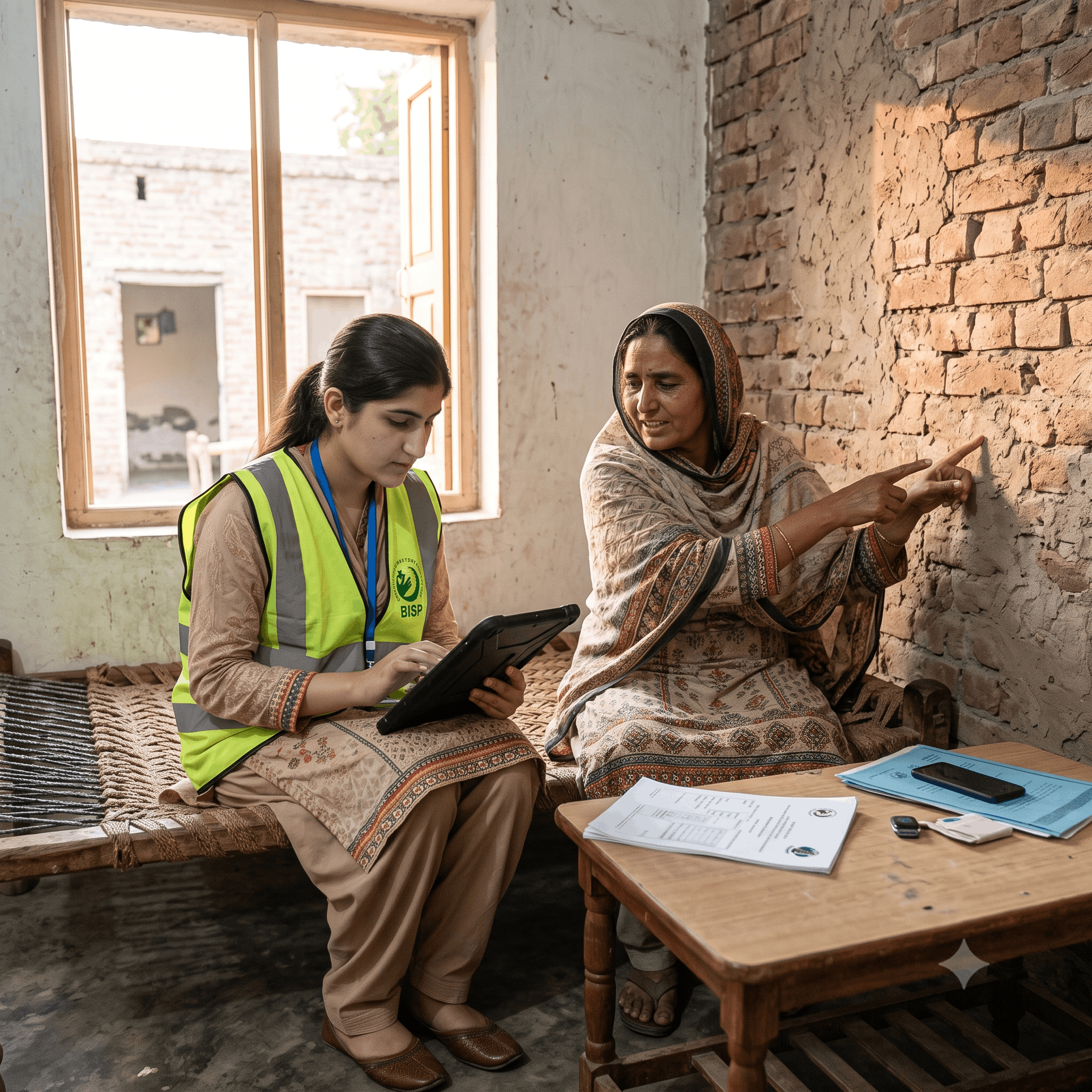
Answer every question accurately. The survey asks about your house’s construction, number of rooms, assets (motorcycle, car, fridge, TV, mobile phones), land ownership, income sources, and children’s schooling. Answer based on your actual current situation — not what you think will help your score.
There’s a practical reason for honesty beyond the ethical one: BISP has verification mechanisms. If the data entered by the survey team is flagged as inconsistent with other records (NADRA data, utility records, NADRA’s database), it can trigger a re-inspection — and discrepancies can result in penalties, not just disqualification.
Step 5: After the Survey — Waiting and Follow-Up
After a Dynamic Survey visit, it typically takes 4 to 12 weeks for the data to be processed and your status to be updated in the system.
During that time:
- Check via 8171 every two to three weeks
- If your status hasn’t updated after three months, visit the Tehsil Office again and ask for a follow-up on your case reference number (ask for this when you submit your initial request)
- Keep the name of the officer you spoke with, the date of your visit, and any written acknowledgment they give you
Bureaucratic follow-through matters here. Cases that have a clear paper trail and where the applicant proactively follows up tend to move faster than cases sitting quietly in a queue.
What Changes After a Dynamic Survey Visit?
A few outcomes are possible:
Score improves, you become eligible. Your updated household data results in a lower PMT score, and you’re added to the beneficiary list. Payments typically begin in the next scheduled quarter.
Score stays the same, no change in status. Your data was updated but the score didn’t move enough. You remain ineligible. At this point, you can either accept the outcome or file a formal grievance through the BISP complaint mechanism.
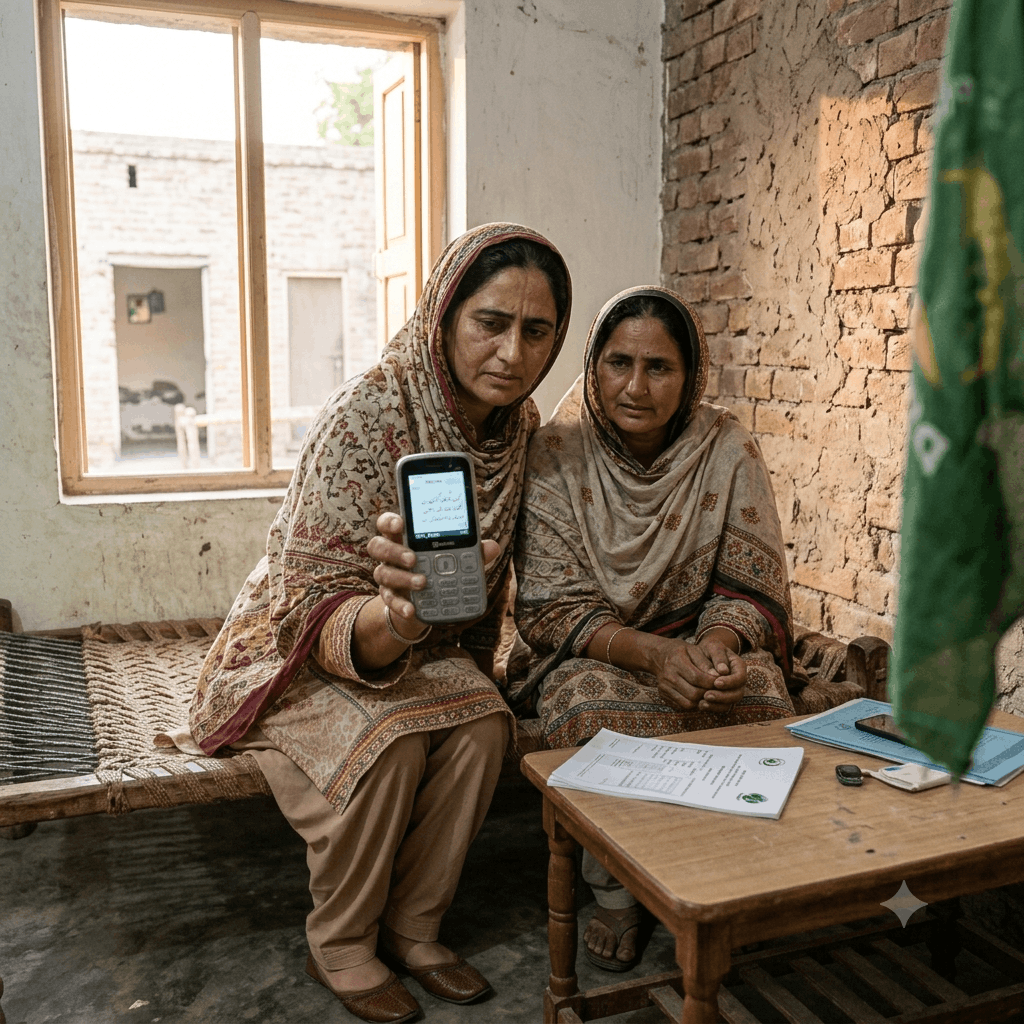
Score worsens, you lose eligibility. This is what happened to the relative in our opening. Updated data — possibly a household improvement, an additional asset recorded, or a change in household composition — pushed the score higher. Payments stop.
Error is found and corrected. The most satisfying outcome. A wrong data point gets fixed, the score recalculates accurately, and the situation resolves itself.
The Mistakes That Hurt People Most
Not knowing a survey happened. Survey teams don’t always announce themselves in advance. If you’re a current beneficiary, pay attention to 8171 status checks regularly — a status change after a period of normalcy often signals a survey has occurred.
Disputing the score without knowing what the data says. Before you argue that you should be eligible, find out what the system actually has recorded against your household. The issue might not be your actual situation — it might be a data error that’s easy to fix with documentation.
Missing the survey team visit entirely. If a team came and went without speaking to anyone in your household, the data they collected may be based on observation alone (house type, visible assets) rather than your full household composition. Request a re-survey if you believe this happened.
Waiting too long to follow up. After requesting a Dynamic Survey re-evaluation, following up matters. Cases without advocates can sit unprocessed for extended periods.
Trusting middlemen. Near BISP offices in many cities, there are people offering to “fast-track” your survey or registration for money. This is not how the process works. Dynamic Surveys are free. Anyone charging a fee to arrange your survey cannot actually do that — and may be putting your application at risk.
The Complaint Process — If Nothing Else Works
If you’ve gone through the Dynamic Survey process, your data appears accurate, but you’re still being shown as ineligible and you genuinely believe you meet the criteria — there is a formal complaint mechanism.
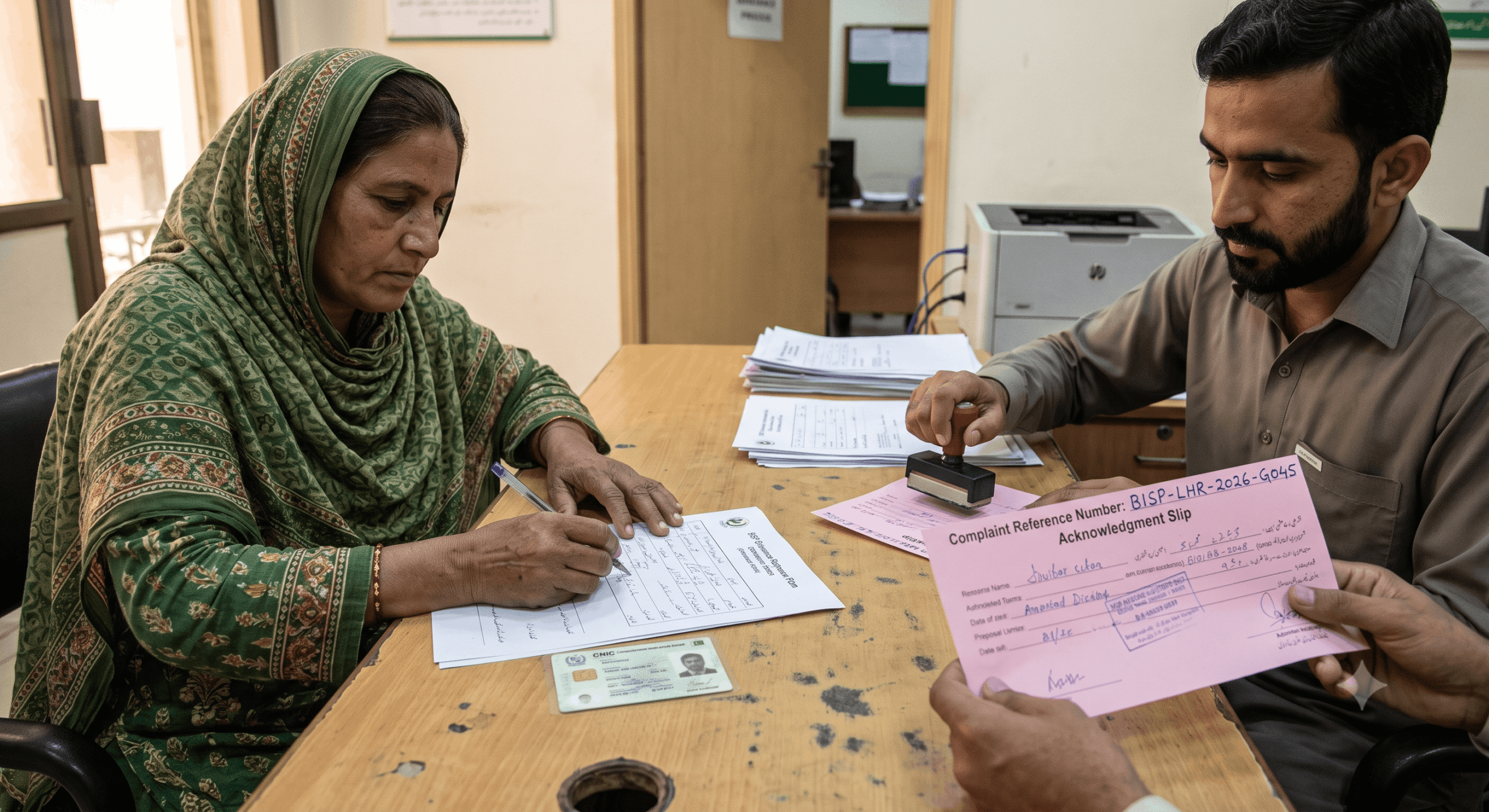
At the Tehsil Office: Request a formal complaint registration. Ask for a written acknowledgment with a complaint reference number.
BISP Helpline: 0800-26477 (toll-free). Explain your situation and ask to register a formal complaint. Note the agent’s name and the reference number.
BISP District Office: If Tehsil-level complaints go nowhere, escalate to the district office.
Complaints through the formal mechanism do get reviewed. It takes time — sometimes months — but it does result in score recalculations when the data supports it. Going through proper channels with documentation is more effective than repeated informal visits.
A Quick Reference Summary
| Your Situation | First Step |
|---|---|
| Currently eligible, want to protect status | Check 8171 regularly, be home for survey teams |
| Previously ineligible, circumstances changed | Visit BISP Tehsil Office, request re-evaluation |
| Never been surveyed | Visit BISP Tehsil Office, request Dynamic Survey registration |
| Lost eligibility after a survey | Check what data changed, dispute errors at Tehsil Office |
| Survey happened but data seems wrong | Request data review and correction with documentation |
The Dynamic Survey system is genuinely a step forward for BISP — more frequent updates, more opportunities to enter the system, more chances to correct errors. But it also means that eligibility is no longer a set-and-forget situation. It requires attention.

Check your status. Know your data. Show up when the survey team comes. And if something goes wrong, you now know exactly what to do and where to go.
Need to update your household information or complete the BISP Dynamic Survey? Visit the official 8171 portal below to check your survey status, verify your eligibility, and follow the latest instructions from the Benazir Income Support Programme.
Check BISP Dynamic Survey Status OfficialGot a specific question about a Dynamic Survey status or a re-evaluation request that isn’t going through? Leave a comment below — we’ll do our best to help you figure out the next step.