
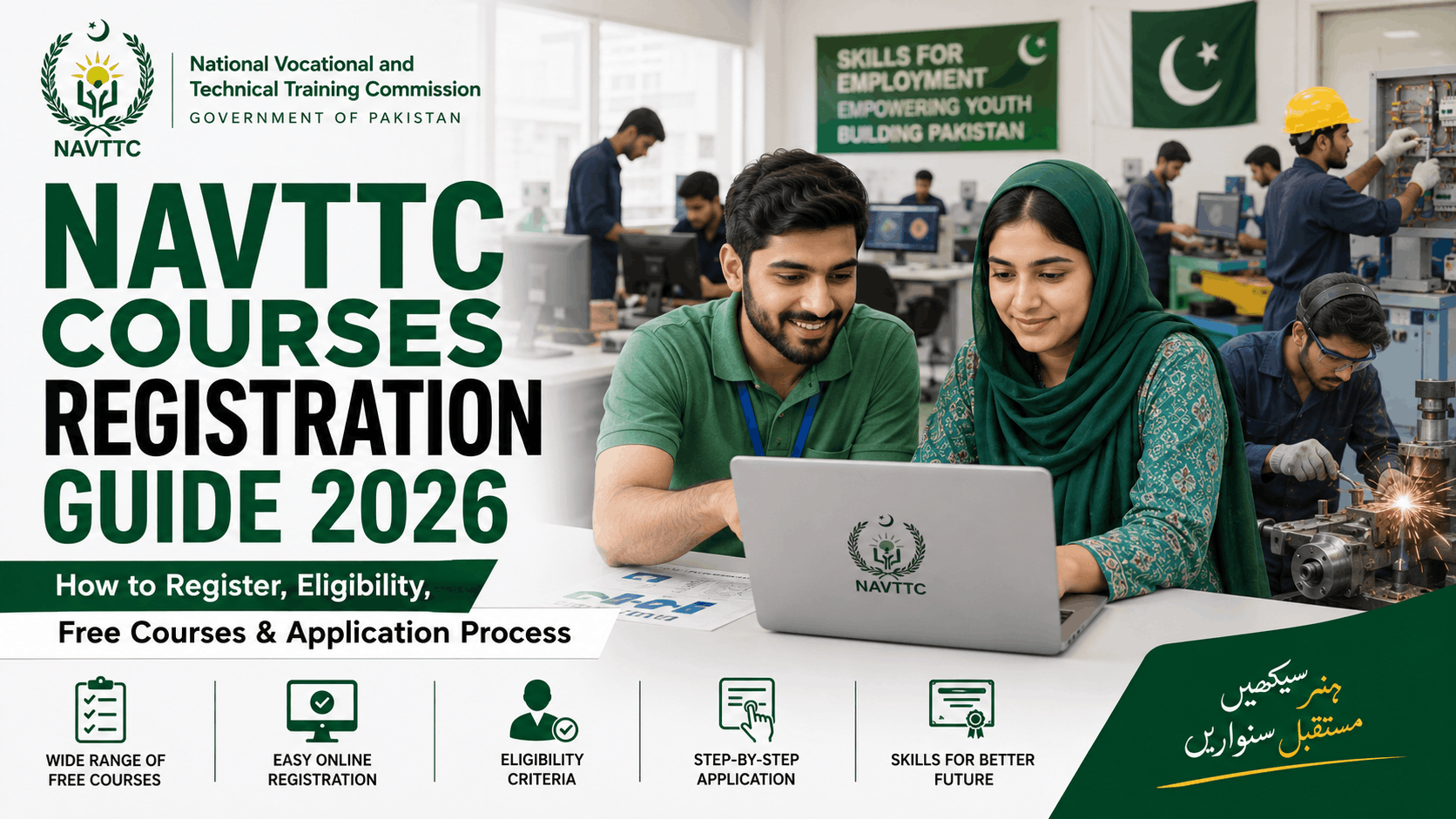
Dera Ghazi Khan shows up in policy documents under “underserved regions” far more often than it shows up in anything written about career options for young people actually living there.
One story from the city: a failed first attempt at FA exams, followed by a year that wasn’t a gap year in any planned sense — helping in the fields, odd jobs around the city, and a slow acceptance that a four-year degree wasn’t realistic on the family’s budget.

NAVTTC came up through a cousin who’d completed a short course in Multan and was now doing electrical work on construction sites, earning Rs. 800-1,000 a day — a better outcome than anything that seemed available after the exam result.
Registering wasn’t difficult in principle, but it took the better part of a day to actually navigate — not because the process is complicated, but because the information is scattered, some of the online tools are inconsistent, and the process has both an online step and an in-person step that most guides don’t clearly separate.
By the end of that day: a course identified, a nearby training institute located, an application submitted. The Electrical Technology course started three weeks later.
This guide covers everything that took a full day to figure out, laid out in the order it should have been explained from the start.
What NAVTTC Is and Why It Matters
NAVTTC (National Vocational and Technical Training Commission) is a federal government body under the Ministry of Federal Education and Professional Training. Its mandate is to regulate, standardize, and expand vocational and technical training across Pakistan.
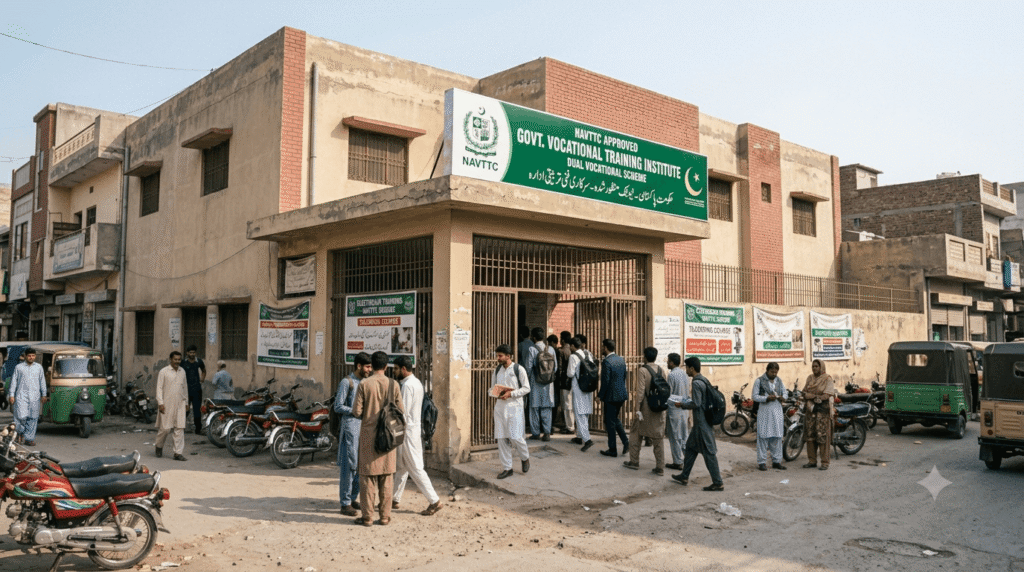
What that means in practice: NAVTTC funds and accredits free or heavily subsidized training programs delivered through a network of registered training institutes across the country — including in provinces and districts where PSDF (Punjab-specific) and similar programs don’t reach.
If you’re in Balochistan, KPK, Sindh, AJK, Gilgit-Baltistan, or the tribal districts — NAVTTC is often your primary access point to government-funded skills training.
The key distinction: NAVTTC doesn’t usually run the training itself. It accredits and funds training institutes that run the courses. When you “apply for a NAVTTC course,” you’re typically applying to a NAVTTC-registered training institute in your area, with NAVTTC covering the cost.
Understanding this distinction matters when you’re navigating the registration process — because you’ll be dealing with both the NAVTTC portal AND the specific training institute.
What Courses NAVTTC Covers

NAVTTC programs span a wide range of trades and technical skills. The available courses vary by region and by which institutes are registered in your area, but the broad categories include:
IT and Technology:
- Computer Applications and Office Automation
- Web Development (HTML, CSS, basic programming)
- Graphic Design
- Computer Hardware Repair and Maintenance
- Network Administration Basics
- Data Entry and Typing
Electrical and Electronics:
- Electrical Technology (installation, wiring, maintenance)
- Solar Panel Installation and Maintenance
- Electronics Repair (mobile phones, appliances)
- Air Conditioning and Refrigeration
Construction and Civil:
- Plumbing
- Masonry and Tile Work
- Auto CAD (technical drawing)
- Carpentry and Wood Work
Healthcare:
- Community Midwifery
- Community Health Worker
- Paramedic Technician
Textiles and Fashion:
- Stitching and Tailoring
- Embroidery and Handcraft
- Fashion Design Basics
Agriculture and Food:
- Farm Management
- Food Processing
- Livestock Management
Course duration ranges from 3 to 12 months depending on the trade and the level of the course. Most entry-level trade courses run 3–6 months.
Who Can Apply
Age: Generally 15 to 45 years. Some specialized courses (particularly healthcare) have tighter age requirements.
Education: Varies significantly by course.
- Basic trade courses (electrician, plumber, tailor): minimum Class 8 or basic literacy
- IT courses: minimum Matric (Class 10) in most cases
- Healthcare courses: minimum FA/FSc for paramedic; others vary
- Some courses have no formal education requirement — just literacy
Residency: Pakistani national. NAVTTC programs are available to citizens from all provinces and territories.
Income: NAVTTC programs prioritize applicants from lower-income backgrounds. Some programs specifically target youth from BISP or Ehsaas registered households. Higher income doesn’t automatically disqualify you, but lower income improves your selection priority.
Gender: Both male and female applicants. Some courses have gender-specific batches or dedicated female training centers depending on the institute.
How NAVTTC Registration Actually Works — Step by Step
This is the part that confused Rizwan and me for most of that day, so I’m being deliberately detailed here.
Step 1: Go to the NAVTTC Website
The official portal is navttc.gov.pk.
Before doing anything else, explore the site to understand:
- What programs are currently active in your region
- Which training institutes are registered near you
Look for the “Training Programs” or “Courses” section, and the “Institute Locator” or “Registered Institutes” section. Both are important.
Important note on the portal: NAVTTC’s website has historically had sections that don’t always load smoothly, particularly during high-traffic periods when a new batch is announced. If a page isn’t loading, try at off-peak hours (early morning) or try a different browser.
Step 2: Find Training Institutes in Your Area
This is the step most people skip and then wonder why they can’t find relevant courses.

NAVTTC maintains a list of accredited training institutes by district. Some of these institutes are government-run (polytechnic institutes, vocational training institutes); others are private institutes that have been registered with NAVTTC to deliver subsidized training.
On the NAVTTC website, use the Institute Locator function to search by:
- Province
- District
- Course category (if available)
Write down the names, addresses, and contact numbers of 2–3 institutes in your area that offer your preferred course type.
If the online locator isn’t functioning reliably (it sometimes isn’t), call the NAVTTC helpline or visit your nearest District Employment and Manpower Information Centre (DEMIC). DEMICs are district-level government offices that maintain current information about NAVTTC-registered institutes in their area and are often more up-to-date than the website.
Step 3: Confirm Available Batches at the Institute
Before applying online, call the training institute directly. Ask:
- Are you currently enrolling for [course name]?
- When does the next batch start?
- How many seats are available?
- What documents do I need to bring for registration?
- Is there any in-person process at the institute?
This phone call takes 5 minutes and can save you a wasted trip or a missed online application deadline. Training institute coordinators are generally helpful — they want to fill their seats.
Rizwan found that the first institute near DG Khan he called had no available IT seats for the upcoming batch. The second institute he called had 8 remaining seats for Electrical Technology starting in three weeks. He applied the same day.
Step 4: Online Registration Through NAVTTC Portal
Go back to navttc.gov.pk and look for the online registration or applicant portal section. Create an account using:
- CNIC number
- Active mobile number
- Email address (if you have one — some registration flows accept mobile number only)
Fill in the application form with:
- Personal details (as on your CNIC)
- Educational background
- Desired course and trade
- Preferred training institute (from your Step 2 research)
- District and province
- Income information
Submit and save the application reference number. Screenshot the confirmation page.
If the online portal isn’t working: This does happen. NAVTTC’s portal has gone through multiple redesigns and there are sometimes technical gaps between the website and what’s actually processing. If the online registration genuinely isn’t working after multiple attempts, go directly to the training institute with your documents. Many institutes have in-person registration processes that work independently of the central portal.
Step 5: In-Person Visit to the Training Institute
This is the step that catches people off guard — they think online registration is sufficient, but in most cases NAVTTC course enrollment requires an in-person visit to the training institute as well.
At the institute visit, bring:
- Original CNIC (and photocopy)
- Educational certificates (whatever you have — Class 8 result, Matric certificate, FA certificate)
- Photographs (usually 2–4 passport-sized)
- Domicile certificate or proof of residency in the area
- NAVTTC online application reference number (if you completed Step 4)

At some institutes, the in-person visit involves a brief interview or aptitude assessment — particularly for courses with more applicants than seats. Don’t be intimidated by this; it’s typically a short conversation about your interest in the course and your basic literacy/numeracy level.
Step 6: Selection and Batch Confirmation
After the in-person registration, the institute compiles its applicant list and submits it to NAVTTC for batch confirmation. This process can take 1 to 3 weeks.
You’ll be notified via SMS to your registered mobile number whether you’ve been selected for the batch.
If selected, you’ll receive:
- Batch start date and time
- Attendance requirements
- Any initial materials or tools you need to bring
If not selected (demand exceeded available seats), ask the institute whether you’ll be carried forward to the next batch automatically or whether you need to re-register.
Step 7: Attend and Complete the Course
This sounds obvious but deserves saying: attendance requirements are strict. NAVTTC-funded courses have minimum attendance thresholds (typically 75–80%). Fall below that threshold and you may be dropped from the program, losing your seat and your certificate eligibility.
The government is funding these courses — the expectation is that attendees show up and complete them.
Many courses also include a practical assessment at the end in addition to any written test. The certificate you receive is a NAVTTC-certified qualification, nationally recognized by employers in Pakistan and in some Gulf countries that accept Pakistani vocational qualifications.
What Rizwan’s Experience Looked Like — The Real Version
Rizwan called the NAVTTC helpline first, before trying the website. The helpline operator told him which institutes in DG Khan were currently registered and what courses were running. That one call saved us hours.
He called the institute that had Electrical Technology seats available. The coordinator told him to come in person with his CNIC, Class 8 certificate (he didn’t have his FA certificate because he’d failed — Class 8 was enough for this course), and two photographs.
He went the next morning. Spent about 45 minutes at the institute — filling a paper form, having a brief conversation with the coordinator about why he wanted to do electrician work, and getting his application slip.
He didn’t hear back for 11 days. Then an SMS: selected for the batch starting in two weeks.
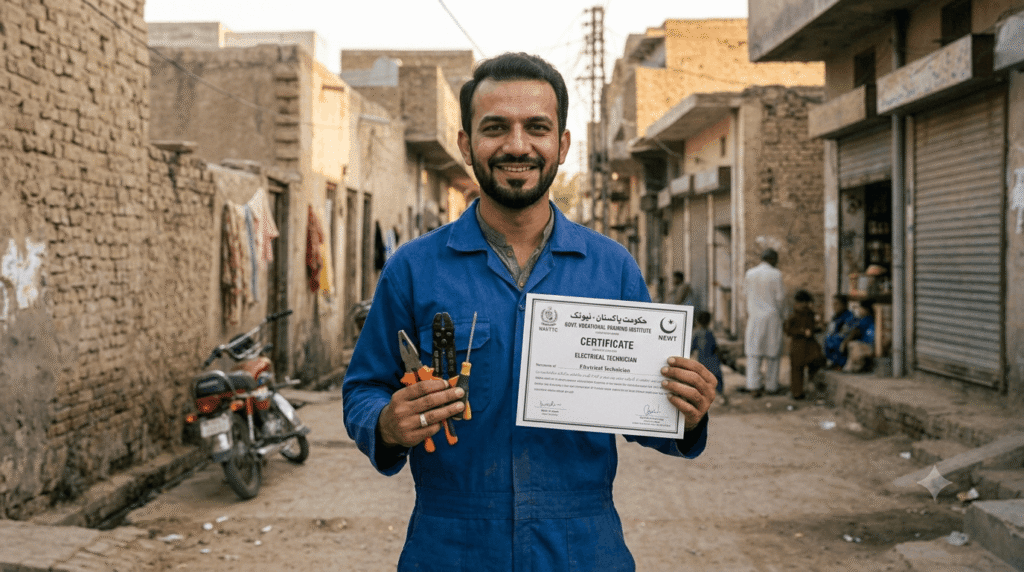
He completed the 4-month Electrical Technology course. NAVTTC-certified. He’s now working with a local contractor doing residential electrical installations. Rs. 700–900 per day depending on the job.
The course cost him nothing. The certificate cost him nothing. The trade it gave him is paying him every day.
Common Mistakes That Prevent Registration
Going to the website without first calling the institute. The website tells you what programs theoretically exist. The institute tells you what’s actually available right now with actual seats. Start with the phone call.
Assuming online registration alone is sufficient. It isn’t. The in-person institute visit is a required step in most NAVTTC registrations. Completing only the online form and waiting to be selected doesn’t move your application forward in most cases.
Not having a domicile certificate. This document proves your legal residency in a district and is required by many NAVTTC institutes. If you don’t have one, get it from your Union Council or local government office — it’s usually a quick process.
Picking a course based on what sounds impressive rather than local job market demand. A Network Administration certificate from a small city where there are no networking job openings is less useful than a Solar Panel Installation certificate in a region where solar systems are being installed in every other house. Research what employers and contractors in your area are actually hiring for.
Missing the in-person registration deadline. Once the institute has filled its seats, that batch is closed. The institute coordinator from Rizwan’s course told him they’d had 30+ applicants for 20 seats and had to turn people away. First-come, first-served after basic eligibility is confirmed.
Giving up when the portal doesn’t work. The NAVTTC website has technical issues sometimes. The backup is always: call the helpline, call the institute directly, or go in person.
Courses That Lead Most Directly to Employment
Based on what NAVTTC graduates are actually getting hired for, these trades have strong employment demand:
Electrician / Electrical Technology: Constant demand in construction, residential installation, and solar projects. Gulf employment is also available for certified electricians.

Solar Panel Installation: Pakistan’s rapid solar adoption has created real demand for trained installers. Growing field with government-backed certification particularly credible.
Computer Hardware Repair: Mobile phone and computer repair shops are in every city and town. A short course + practice leads to direct self-employment faster than most other tracks.
Plumbing: Chronic shortage of skilled plumbers across Pakistan. High daily rates once established (Rs. 1,000–2,000 in urban areas).
Tailoring / Stitching: Particularly for women — home-based tailoring is one of the most common routes to income that can be started with minimal capital after training.
Automotive Technician: Vehicle repair is in demand in every city. Certification from NAVTTC is increasingly valued over informal workshop learning.
Quick Reference
| Step | Action | Where |
|---|---|---|
| 1 | Find registered institutes in your area | navttc.gov.pk or NAVTTC helpline |
| 2 | Call institute to confirm seats | Institute contact number |
| 3 | Complete online registration | navttc.gov.pk applicant portal |
| 4 | Visit institute in person with documents | Training institute |
| 5 | Wait for SMS selection notification | Your registered mobile |
| 6 | Attend and complete course | Training institute |
Documents to bring to institute:
- Original CNIC + photocopy
- Educational certificate (highest completed)
- Domicile certificate
- 2–4 passport-sized photographs
- Online application reference number (if completed)
The skills gap in Pakistan’s labor market is real, and NAVTTC courses are one of the most direct government investments in closing it. The registration process is navigable if you approach it in the right order — call before you apply, apply before you visit, visit before you wait.

Rizwan figured it out. His cousin figured it out before him. Neither of them had a complicated plan. They just found the right starting point and followed through.
Take the first step toward a successful career by registering for a government-funded NAVTTC training program. Visit the official registration portal below to explore available courses, confirm your eligibility, and submit your application online.
Apply for NAVTTC Courses OfficialLooking for a specific course in your district or not sure which institute to approach? Drop a comment with your city and what you want to learn — we’ll try to help you find the right entry point.