

Every entry-level job listing seems to want the same impossible thing: one to two years of experience, aimed squarely at candidates who are 22 and have never had a job. It’s the catch-22 every fresh graduate runs into, and it doesn’t resolve itself just because a degree is good and the grades are decent.

One BS Public Administration graduate from a government university in Islamabad hit this wall directly — 40 applications in two months, six responses, two interviews, no offers. The Prime Minister’s Youth Internship Program came up almost as an aside, mentioned by a professor during a farewell lecture: not a perfect solution, but a way through that first door.
The application went in that evening. Four months later: a placement at a federal ministry, a monthly stipend, government experience on the CV, and a working understanding of how the field actually operates outside a textbook.
Nine months after the internship ended, a permanent offer came through — at the same ministry, from a supervisor who’d seen the work firsthand during the internship period.
The internship itself didn’t create the job. It created the room where the job became possible.
That’s the actual function of government internship programs — one of the few structured entry points into professional life for graduates without family connections in government or the private sector.
The Problem These Programs Are Designed to Solve
Pakistan has a specific employment problem that’s worth naming clearly: the labor market rewards experience, but experience requires getting hired first.

For graduates from elite universities in big cities with family networks in business and government — this cycle is easier to break. Informal introductions, family connections, alumni networks, and the general privilege of being “known” opens doors.
For a graduate from a government university in Faisalabad, Sukkur, or Abbottabad — those doors aren’t as available. The formal application process is the only route, and the formal application process keeps asking for experience you can’t have without getting hired.
Government internship programs inject a pathway into this situation. They’re open through a merit-based process, they pay a stipend, they provide real work exposure in actual government departments, and they result in a certificate that means something to future employers — particularly for those wanting to work in the public sector.
They’re not a perfect solution. Placement quality varies. Some departments give interns meaningful work; others make them file papers for six months. But they’re real, they’re accessible, and they work if you approach them with the right expectations and the right effort.
The Main Government Internship Programs in Pakistan 2026
1. Prime Minister’s Youth Internship Program
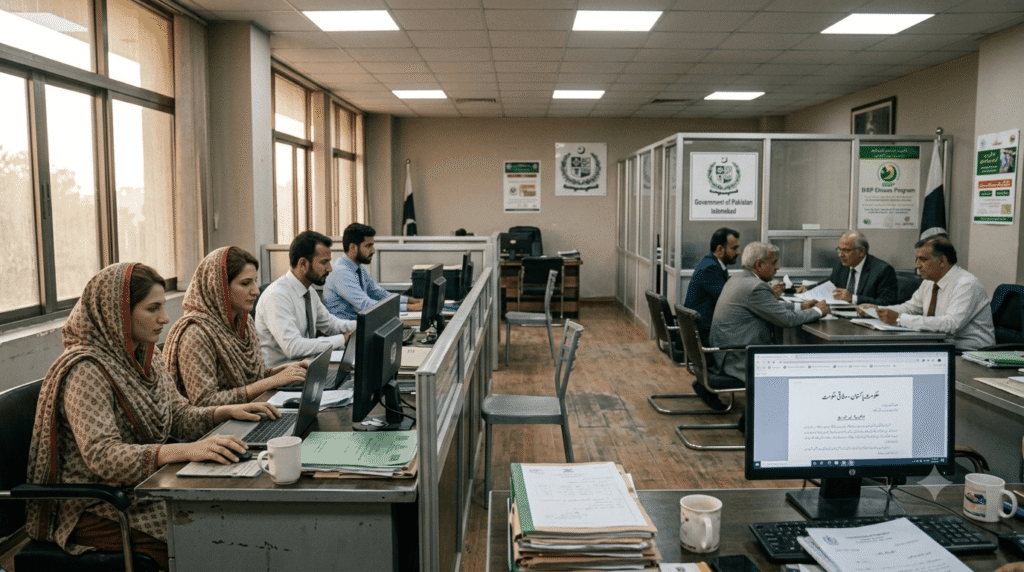
This is the most widely known and most broadly available federal internship program. Run under the PM’s Youth Program umbrella (pmkamyabjawan.gov.pk), it places graduates in federal ministries, attached departments, and federal government bodies across Pakistan.
What it offers:
- 6-month paid internship
- Monthly stipend of Rs. 25,000 (verify current amount — may have been revised)
- Placement in a federal government department relevant to your qualification
- Certificate of completion from the PM’s office
- Exposure to actual government operations
Eligibility:
- Pakistani national
- Age between 20 and 30 years
- Recent graduate (typically within the last 2 years of graduation)
- Minimum 16 years of education (Bachelor’s degree or equivalent) in most cases
- No previous government employment
- CNIC registered
Selection process: Applications are submitted through the official portal when the program window opens. Selection is merit-based — your academic record, written test results (some phases include a test), and interview performance determine placement.
Website: pmkamyabjawan.gov.pk → Youth Internship Program
What Ayesha experienced: She was placed in the Ministry of Planning, Development and Special Initiatives. Her work involved research support for policy briefs — reading through reports, summarizing data, helping prepare presentation materials. Not glamorous, but genuinely useful work that taught her how government actually functions, which no textbook had.
2. Pakistan Engineering Council (PEC) Internship
For engineering graduates specifically, PEC facilitates internship placements through registered engineering firms and government infrastructure bodies. This is a requirement for engineering graduates seeking PEC registration rather than a competitive program, but it functions similarly to an internship program — structured, supervised, and certificate-generating.
For engineering graduates: Check with your university’s engineering department and with PEC directly at pec.org.pk for the current requirements and how to find a registered placement site.
3. National Internship Program (NIP) — Various Iterations
Pakistan has run several versions of a national internship program at the federal level over different government periods. The National Internship Program has been one of the largest — placing thousands of graduates annually across federal and provincial departments.
The program structure has varied between governments:
- Stipend amounts differ per phase
- Some phases include a skills training component before placement
- Eligible disciplines have varied — sometimes prioritizing STEM graduates, sometimes open to all fields
How to find the current version: The most reliable approach is checking the Establishment Division’s website (establishment.gov.pk) and the PM’s Youth Program portal. The program is announced when a new phase launches, and application windows are typically open for 2–4 weeks.
4. Punjab Internship Program (PIP)
For graduates specifically in Punjab, the Punjab Internship Program places graduates in Punjab government departments, local government bodies, and provincial service organizations.
Key features:
- Placement in Punjab government departments
- Monthly stipend (amount varies by phase — typically Rs. 15,000 to Rs. 20,000)
- 6–12 month duration depending on phase
- Priority given to graduates from Punjab’s government universities
How to access: Punjab Jobs Portal (jobs.punjab.gov.pk) announces PIP openings. The Punjab IT Board (PITB) portal also announces tech-sector internship opportunities for IT and CS graduates specifically.
5. Sindh, KPK, and Balochistan Provincial Programs
Each province has run internship programs at various times, though with less consistent frequency than Punjab’s:
Sindh: The Sindh government has offered graduate internship programs through the Sindh Institute of Urology and Transplantation (medical), Sindh Public Service Commission-linked placements, and departmental internship drives announced through jobs.sindh.gov.pk.
KPK: The KPK government’s Merged District programs and KP government bodies periodically announce graduate internships, particularly for youth from merged tribal districts. Check kpjobs.gov.pk for current announcements.
Balochistan: Less frequent but available through the Balochistan Public Service Commission and departmental announcements. The Balochistan government has also linked some internship opportunities to NAVTTC and skills development bodies.
For provincial programs: regularly check your province’s official jobs portal and the provincial services commission website. These programs are announced with relatively little advance notice and windows close quickly.
6. State Bank of Pakistan (SBP) Internship Program
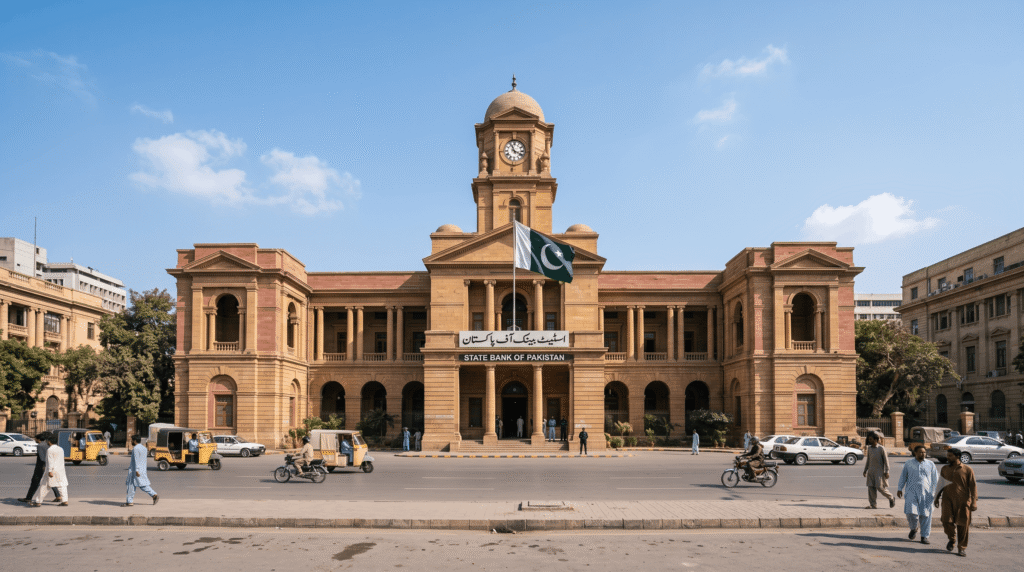
The SBP runs a structured internship program for graduates in economics, finance, commerce, and business administration. This is competitive, prestigious, and significantly different in nature from the broader government placement programs.
Key features:
- 6–8 week intensive internship at SBP head office or regional offices
- Higher stipend than most government programs
- Exposure to central banking operations, monetary policy research, and financial regulation
- Strong CV value — SBP internship is recognized by financial sector employers
Eligibility: Typically 3rd or 4th-year undergraduates or recent graduates in economics, finance, statistics, or business. Strong academic record required.
Apply through: sbp.org.pk when the annual window opens (typically announced in March–April for summer placement)
This is the internship to aim for if you’re in the finance/economics field — more selective, but the career signal it sends is considerably stronger than a general government placement.
7. Pakistan Administrative Service (PAS) / CSS-Linked Placement Programs
For graduates specifically interested in the civil service, some internship opportunities are facilitated through the Federal Public Service Commission (FPSC) and through CSS (Central Superior Services) preparation academies that have formal links to government departments.
These are less structured programs and more informal placements, but for someone serious about the civil service, spending time in a relevant ministry — even informally — is valuable. Contact the FPSC directly at fpsc.gov.pk for current guidance.
Step-by-Step: How to Apply for the PM Youth Internship Program
This is the most broadly applicable of the programs above, so let’s walk through it specifically.
Step 1: Monitor the portal for opening announcements.
Go to pmkamyabjawan.gov.pk and look for the Youth Internship Program section. Application windows open periodically — often once or twice a year — and close within 2–4 weeks.
Subscribe to the PM Youth Program’s social media accounts for notifications, or check the website every 1–2 weeks if you’re actively looking.
Step 2: Register an account.
When the window opens, register with your CNIC, email address, and phone number. The registration must use accurate CNIC information — it’s cross-checked.
Step 3: Complete your profile.
The application asks for:
- Personal details (matching CNIC)
- Educational qualifications (degree, institution, graduation year, CGPA/percentage)
- Preference of ministry or department
- City where you’d prefer placement
- Work experience (if any)
- A brief statement of why you want to intern at the government level
The ministry preference is important — list what genuinely matches your qualification and interests. Being placed in a ministry related to your degree is more valuable than a prestigious-sounding placement in a field you know nothing about.
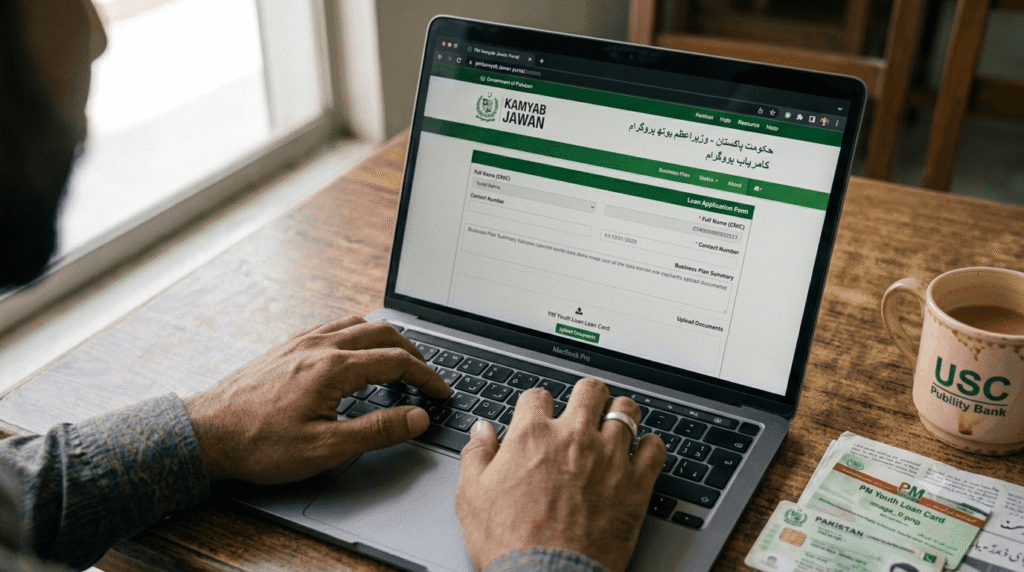
Step 4: Upload required documents.
Typically:
- CNIC copy
- Degree certificate or transcript (provisional certificate is usually accepted for recent graduates)
- Photograph
- Domicile certificate
Have these scanned and ready before the window opens. The portal sometimes closes earlier than the announced deadline when seats fill.
Step 5: Written test or interview (if applicable).
Some program phases include a written aptitude test or a structured interview. If notified, prepare by:
- Reviewing your field’s core concepts
- Reading recent government reports or policy documents in your area of interest
- Practicing basic English communication (most government work is documented in English)
Step 6: Placement notification and joining.
If selected, you receive a placement letter specifying your ministry/department, reporting date, and stipend details. Report on time. Bring your CNIC, degree certificate, and photographs.
How to Actually Make the Internship Worth Something
This is where most internship guides go silent — they tell you how to get in, not what to do once you’re there.
Show up like it’s a real job. Punctuality, professionalism, and reliability matter. Government offices notice attendance and work ethic more than certificates. This is what earned Ayesha a job offer from the same ministry.

Ask for real work, not just tasks. If you’re being given filing and photocopying for month two, respectfully ask if you can help with something related to your field. Not everyone will say yes, but some supervisors genuinely appreciate an intern who wants more to do.
Keep a work journal. Document what you worked on, what you learned, and what you observed. You’ll need this for your CV entries and for job interviews where they ask “what did you actually do at that internship?”
Build genuine professional relationships. Not networking in a calculating sense — just being the person who says good morning, who remembers people’s names, who offers to help when something is needed. Government is relationship-heavy. The people who remember you kindly are often the ones who mention your name when something opens up.
Get your completion certificate in writing before you leave. Some interns complete their full tenure and then have difficulty getting official documentation afterward. Before your last day, confirm the process for certificate issuance and get a copy of any reference letter your supervisor is willing to provide.
Common Mistakes That Cost Graduates Internship Opportunities
Not monitoring for announcements. The PM Youth Internship window opens with 2–4 weeks’ notice and closes when seats fill. Graduates who aren’t actively watching miss batches entirely and wait 6–12 months for the next one.

Applying without a complete profile. An incomplete application — missing documents, blank fields, a vague personal statement — is filtered out in the initial screening. Complete every field with care.
Choosing ministry preference randomly. Selecting Finance Ministry when you studied Urdu Literature just because it sounds impressive will likely result in a poor fit. Select based on genuine relevance to your qualification.
Treating the internship as a certificate-collection exercise. Internships are evaluated environments. Supervisors remember who worked seriously and who didn’t. The attitude you bring into a government office as an intern shapes how people see you if you apply to work there later.
Not applying to multiple programs simultaneously. PM Youth, Punjab Internship, SBP — these have different eligibility and different windows. If you qualify for more than one, apply for more than one. Don’t wait to see if one comes through before applying to another.
Missing the joining deadline after selection. Some graduates get selected and then delay or fail to report on time. The seat goes to the next person on the list. If you receive a placement notification, treat the joining date as fixed.
A Final Thought From Ayesha
She told me that when she was going through job rejections before the internship, she felt like the system was designed to keep outsiders out. That the only way in was knowing the right people.
The internship showed her something different. Yes, connections help. But a strong performance in a structured program creates its own connections. Her supervisor hadn’t known her before the internship either. She made herself known through the work.
“The program gave me a chance to be in the room,” she said. “What I did in that room was my own.”

That’s the honest version of what government internship programs offer. Not a guaranteed job — a genuine chance to demonstrate what you can do in a professional environment, funded by the public, open through a merit-based process.
For a 22-year-old from a government university without family connections in the right places, that chance is genuinely valuable.
Apply for it.
Quick Reference
| Program | Level | Stipend | Duration | Apply At |
|---|---|---|---|---|
| PM Youth Internship | Federal | ~Rs. 25,000/month | 6 months | pmkamyabjawan.gov.pk |
| Punjab Internship Program | Punjab | Rs. 15,000–20,000/month | 6–12 months | jobs.punjab.gov.pk |
| SBP Internship | Federal (Finance) | Higher stipend | 6–8 weeks | sbp.org.pk |
| NAVTTC / NIP | Federal | Varies | 3–6 months | navttc.gov.pk / establishment.gov.pk |
| Sindh Provincial | Sindh | Varies | Varies | jobs.sindh.gov.pk |
| KPK Provincial | KPK | Varies | Varies | kpjobs.gov.pk |
Ready to apply for a government internship? Visit the official PM Digital Youth Hub below to explore the latest paid internships, create your profile, and apply online through the official government platform.
Apply for Government Internships OfficialTrying to figure out which program fits your degree or province, or have a question about the application process? Leave a comment and we’ll try to help.