

Three years ago, a student I know named Omer got into one of Pakistan’s top engineering universities on merit. His family celebrated. His mother cried. His younger siblings thought he was going to change everything for the family.
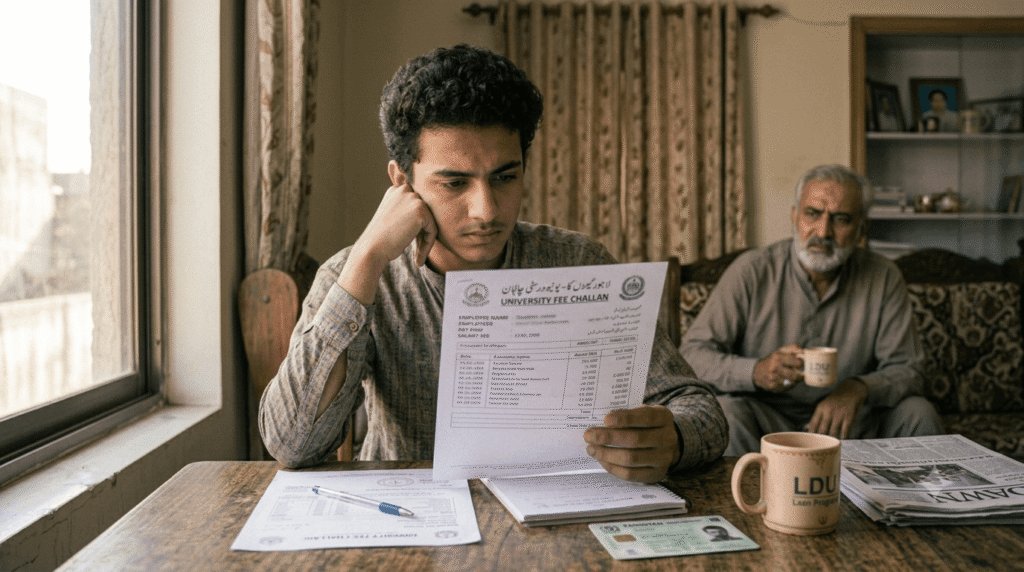
Then the fee challan arrived. Rs. 42,000 per semester. Times 8 semesters. That’s Rs. 336,000 in tuition alone — before hostel, transport, books, or food.
His father runs a small welding workshop. Good months bring Rs. 35,000. Bad months bring less.
Omer deferred his admission for a year and started working at a call center to save money. A family friend who worked at a university told him: “You’re sitting on at least three scholarship applications you haven’t filed. Why?”
He genuinely didn’t know they existed.
That year of deferral cost him time, stress, and the psychological weight of feeling like his family’s finances had beaten his merit. When he finally started his degree — funded substantially by HEC and Punjab government scholarships — he was furious at the information gap that had delayed everything.
“Nobody tells you this stuff,” he said. “You have to accidentally stumble onto someone who knows.”
This guide is the someone who knows.
The Scholarship Landscape in Pakistan — Why It’s Confusing

Part of the reason students miss scholarships is that there’s no single place to find all of them. They’re distributed across:
- Federal bodies — HEC manages multiple programs
- Provincial governments — Punjab, Sindh, KPK, Balochistan each run separate programs
- Sector-specific ministries — Ministry of Science & Technology, Ministry of IT, etc.
- Public sector universities — many universities run their own need-based and merit programs funded internally
- Military and civil service foundations — Army Welfare Trust scholarships, Civil Aviation Authority programs, etc.
A student searching online might find one or two of these but miss the rest. And each has different eligibility criteria, different application windows, and different application portals.
The other source of confusion: “scholarship” in Pakistan sometimes means a full fee waiver, sometimes means a partial stipend, sometimes means a monthly living allowance, and sometimes means a combination. Understanding what a specific scholarship covers before you apply matters.
Let’s go through the major ones.
Major Government Scholarship Programs in 2026
1. HEC Need-Based Scholarship (NBS)
This is the largest and most widely available scholarship program in Pakistan, administered by the Higher Education Commission (HEC) through public sector universities.
What it covers: Full or partial tuition fee waiver. Some universities include a monthly stipend for living expenses.
Who it’s for: Students enrolled in HEC-recognized universities whose family income falls below a defined threshold. Generally, monthly household income under Rs. 45,000–60,000 (threshold varies by year and program phase).
How it works: Unlike many schemes where you apply to a central government portal,

the NBS application happens through your own university’s financial aid office. HEC provides the funding framework; each university administers it for their students.
Key requirements:
- Enrolled in a full-time degree program at an HEC-recognized institution
- Pakistani national
- Demonstrated financial need (family income documentation)
- Minimum GPA — typically 2.0/4.0 for continuing students, passing grades for first-year students
- Income affidavit from a notary or magistrate
Application timing: Apply at the start of every academic year or semester, depending on your institution’s cycle. Do not wait until fees are due. Apply at registration.
Website: hec.gov.pk — search “Need-Based Scholarships”
2. HEC Undergraduate Scholarship for Students of Balochistan, FATA/FATA, and AJK
HEC runs dedicated scholarship programs for students from underserved provinces and regions — Balochistan, tribal districts (formerly FATA), Azad Jammu & Kashmir, and Gilgit-Baltistan.
These programs exist specifically because students from these regions face additional barriers to higher education — distance from major universities, fewer quality institutions locally, and historically lower enrollment rates.
What it covers: Tuition fees, living allowance, and sometimes accommodation support at universities in other provinces.
How it’s different from NBS: This is merit-cum-need based with regional priority. Being from an eligible region is itself a qualifying criterion.
Application: Through HEC’s portal (hec.gov.pk) when the specific program window is open. The provincial education departments in these regions also provide guidance and sometimes list announcements.
3. Punjab Educational Endowment Fund (PEEF)
For students specifically in Punjab, PEEF (peef.punjab.gov.pk) is a major scholarship body.
What it offers:
- Undergraduate scholarship: Full fee support for students from low-income families enrolled in Punjab’s public sector universities
- Post-Matric Scholarship: For students transitioning from intermediate to university
- Stipends for living expenses in some programs
Eligibility: Punjab domicile, enrolled in a public sector institution in Punjab, family income below defined threshold (typically Rs. 30,000–45,000 per month), strong academic record.
How to apply: Online applications through peef.punjab.gov.pk when the cycle opens. Applications require income documentation, academic transcripts, enrollment certificate, and CNIC/B-Form.
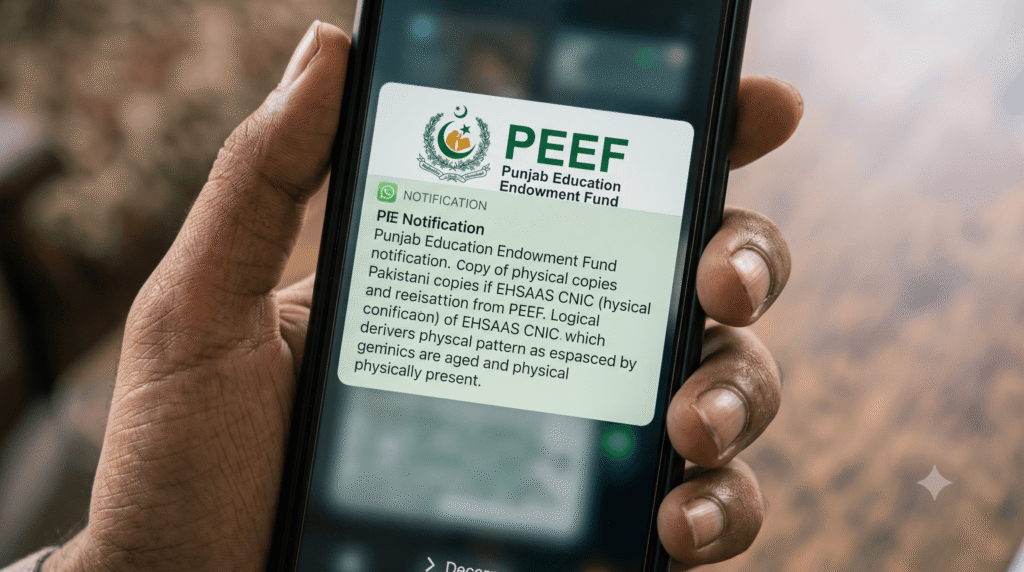
Important: PEEF runs on an annual cycle. Missing the application window means waiting a full year. The window opens in the early months of the academic year — apply immediately when it opens.
4. Ehsaas Undergraduate Scholarship Program
The Ehsaas Undergraduate Scholarship is a federal program targeting students from low-income families (specifically those below a poverty threshold) enrolled in public sector universities.
This program has been one of the most impactful in recent years — covering large numbers of students in each batch with both fee support and a monthly living stipend.
What it covers: Tuition fees + Rs. 4,000/month living stipend (amounts subject to revision — verify current figures through the official portal).
Eligibility: Family income below Rs. 45,000/month, enrolled in a public sector university, demonstrated need. BISP-registered families get priority consideration.
Application: Through your university’s financial aid office or the dedicated Ehsaas portal. HEC maintains a list of participating universities.
Critical point: This is not the same as the HEC Need-Based Scholarship, though they overlap in target population. You may be eligible for both — apply for both. They have separate application cycles and separate funding pools.
5. PM’s Fee Reimbursement Scheme
The Prime Minister’s Fee Reimbursement Scheme has operated in various forms under different governments. In 2026, it continues to provide tuition reimbursement for students from low-income families in public sector institutions.
Unlike some programs where money goes directly to the university, fee reimbursement programs sometimes work by students paying fees first and then receiving reimbursement — which creates a cash flow problem for families who can’t pay upfront. Understand how the specific disbursement model works before counting on it to cover your fee due date.
Application: Through the PM’s portal or the federal Ministry of Education’s scholarship portal. Announcements are made when application cycles open.
6. Merit Scholarships Through Public Universities
Every major public sector university in Pakistan — Punjab University, University of Karachi, Quaid-i-Azam University, NUST, LUMS (yes, LUMS has financial aid), and dozens of others — runs their own internal merit and need-based scholarship programs funded through their endowments and government grants.
These are separate from HEC and PEEF programs and have their own criteria.
Merit scholarships typically go to students who scored highest on admission tests or achieved the highest GPA in their semester. If you’re a top performer, your university’s academic affairs or financial aid office should be your first stop.
Need-based university scholarships supplement government programs. A student receiving partial HEC support may be able to get additional support from the university’s own fund.
The key: ask your university’s financial aid office directly what they offer. Not every program is well-advertised. Some of the best financial support is in a notice that went up on a physical board in the registrar’s office that half the students walked past without reading.
7. Ministry of IT Scholarship Programs
The Ministry of Information Technology and Telecommunication runs scholarship programs specifically for IT and computer science students — aligned with Pakistan’s push to develop a technology workforce.
These programs have in the past covered students at specific universities and for specific degree programs. In 2026, check:
- moitt.gov.pk for current programs
- IGNITE (National Technology Fund) scholarships
- PSDF (Punjab Skills Development Fund) IT track scholarships for shorter technology certifications
IT-focused scholarships often have slightly different eligibility — sometimes tied to specific programs, specific universities, or specific skill tracks.
Omer’s Scholarship Path — How He Ended Up With Three Running Simultaneously
After that family friend’s intervention, Omer applied for everything he qualified for in his first year:
PEEF Scholarship: Applied through peef.punjab.gov.pk in October. Received partial fee coverage — 60% of his semester tuition.
HEC Need-Based Scholarship: Applied through his university’s financial aid office in November. Approved for the remaining 40% of tuition — effectively making his tuition free.
Ehsaas Undergraduate Scholarship: Applied through his university’s Ehsaas portal simultaneously. Received the monthly Rs. 4,000 living stipend, which covered a significant portion of his hostel food expenses.
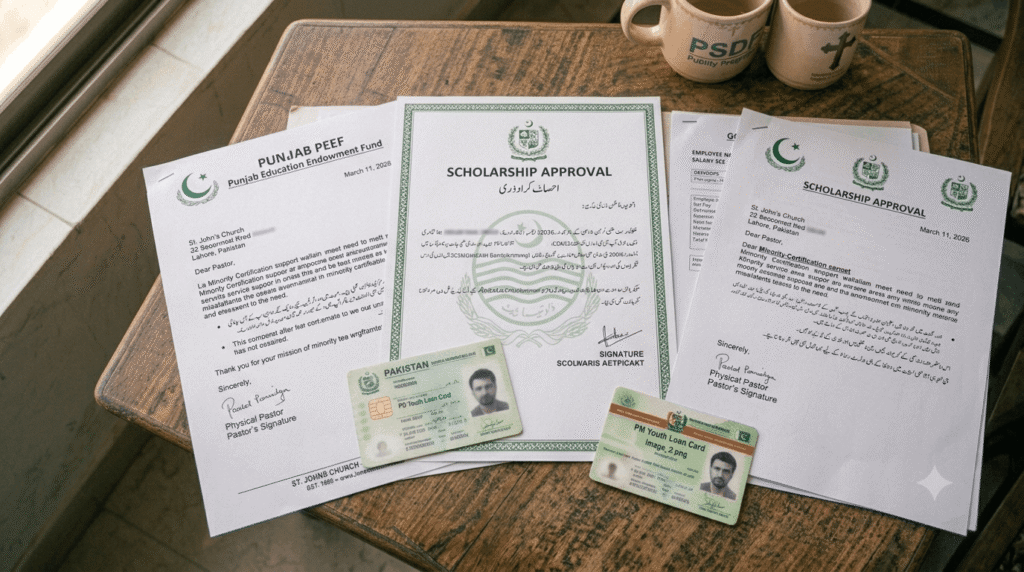
Three applications. Three approvals. Combined, they covered his full tuition and reduced his monthly living costs to something manageable.
None of these scholarships conflicted with each other — they had different funding sources and different coverage components (one covered fees, one was a stipend). He wasn’t “double-dipping” — he was accessing multiple separate programs he legitimately qualified for.
His total out-of-pocket cost for his engineering degree dropped from an impossible Rs. 336,000+ to something his family could manage with minimal additional support.
Step-by-Step: How to Find and Apply for Scholarships
Step 1: Check your university’s financial aid office first.

Before going to external portals, go to your university. Ask for a list of all scholarships currently available to students at your institution — both government-backed and university-funded. This one conversation can surface 5–10 programs you didn’t know about.
Step 2: Check HEC’s scholarship portal.
Go to hec.gov.pk → scholarships section. Filter by your level (undergraduate/postgraduate), your region, and your institution type. Note application deadlines — they’re often firm.
Step 3: Check PEEF if you’re in Punjab.
peef.punjab.gov.pk is specifically for Punjab students. Application windows are announced annually. Set a reminder to check in August–September every year.
Step 4: Check the Ehsaas program portal.
The Ehsaas undergraduate scholarship has its own application pathway through universities. Ask your financial aid office specifically whether your university is participating in the Ehsaas scholarship scheme for the current cycle.
Step 5: Check Ministry of IT programs if you’re in a technology field.
moitt.gov.pk and ignite.org.pk for IT scholarships. PSDF (psdf.org.pk) for skills and vocational programs in technology.
Step 6: Apply for everything you qualify for.
There’s no “you can only have one scholarship” rule in most cases. Different programs cover different things (tuition vs. stipend vs. housing). Apply for all programs you qualify for, then let the financial aid office help you coordinate coverage.
The Documents Every Scholarship Application Needs
Almost every scholarship will ask for some version of these:
- CNIC or B-Form (student, and sometimes parent)
- Enrollment certificate from your university (issued by Registrar’s office)
- Academic transcript or result card (most recent)
- Proof of family income:
- Salary slip (3 months) if parent is employed
- Bank statement (6 months) if self-employed
- Income affidavit (notarized) for informal income — this is mandatory for most programs
- Utility bills showing family’s residential address
- Passport-sized photographs (4–6)
- Death certificate if parent is deceased

The income affidavit is the one that trips people up most. It’s a sworn statement of household income signed before a notary or First Class Magistrate. It costs Rs. 300–500 to get done. Without it, most need-based applications are incomplete.
Get this done before application season, not during it.
Mistakes That Cost Students Scholarships
Applying too late. Most scholarship cycles open at the start of the academic year and close within 4–8 weeks. Students who are still “figuring things out” when the window opens often miss it entirely. Treat the scholarship application window like an exam with a fixed date.
Not applying for multiple scholarships. Omer’s breakthrough was applying for three simultaneously. Students who apply for one and wait to see if they get it — then apply for the next if they don’t — lose entire cycles. Apply for all eligible programs in parallel.
Incomplete income documentation. Missing the income affidavit, submitting an old salary slip instead of the current one, forgetting the utility bill — these create “incomplete application” status that often can’t be fixed after the deadline passes.
Assuming you don’t qualify because your marks aren’t perfect. Need-based scholarships have a minimum academic threshold (usually quite low — a passing GPA). They’re not for the top students exclusively. If your family income qualifies, apply regardless of class standing, as long as you meet the minimum academic requirement.
Not following up after submission. Submit and then check your application status actively. Financial aid offices receive hundreds of applications. An incomplete file can sit in a queue without anyone notifying you.
Assuming your university’s financial aid office has nothing for you without asking. Students in small universities often assume these programs are for elite institutions. Every HEC-recognized university participates in HEC programs. Every Punjab public university participates in PEEF. The programs are there — you have to go ask.
One More Thing About Omer
He’s in his third year now. His CGPA is strong enough that he picked up a merit scholarship from his university on top of the need-based support. He’s also started tutoring first-year students on the side, which covers his pocket money.

He recently helped his roommate — a student from Dera Ismail Khan — identify and apply for the HEC scholarship for students from underserved regions. The roommate was in the same position Omer had been in: eligible, unaware, and quietly struggling.
The information gap perpetuates itself when the people who figure it out don’t share it. Omer is sharing it. This article is sharing it.
If you’re a student reading this in the middle of the night wondering how you’re going to afford next semester — the programs exist. The money is there. Apply for all of it.
Quick Reference
| Scholarship | Who | Covers | Apply At |
|---|---|---|---|
| HEC Need-Based Scholarship | All Pakistan, public universities | Tuition (full/partial) | University financial aid office |
| PEEF Scholarship | Punjab students | Tuition + stipend | peef.punjab.gov.pk |
| Ehsaas Undergraduate Scholarship | Low-income, public universities | Tuition + Rs. 4,000/month | University Ehsaas portal |
| HEC Regional Scholarships | Balochistan, AJK, tribal areas | Tuition + living allowance | hec.gov.pk |
| PM Fee Reimbursement | Public university students | Tuition reimbursement | PM/Ministry portal |
| Ministry of IT Scholarships | IT/CS students | Varies | moitt.gov.pk / ignite.org.pk |
| University Internal Scholarships | Students at that university | Tuition/stipend | University financial aid |
Have a specific scholarship question — like whether your university is included in a specific program, or whether you can apply for both HEC NBS and PEEF simultaneously? Drop a comment and we’ll try to help you figure it out.
Whether you’re looking for merit-based, need-based, or fully funded scholarships, the official HEC Scholarship Portal is the best place to discover current opportunities and submit your application online.
Browse Government Scholarships Official