
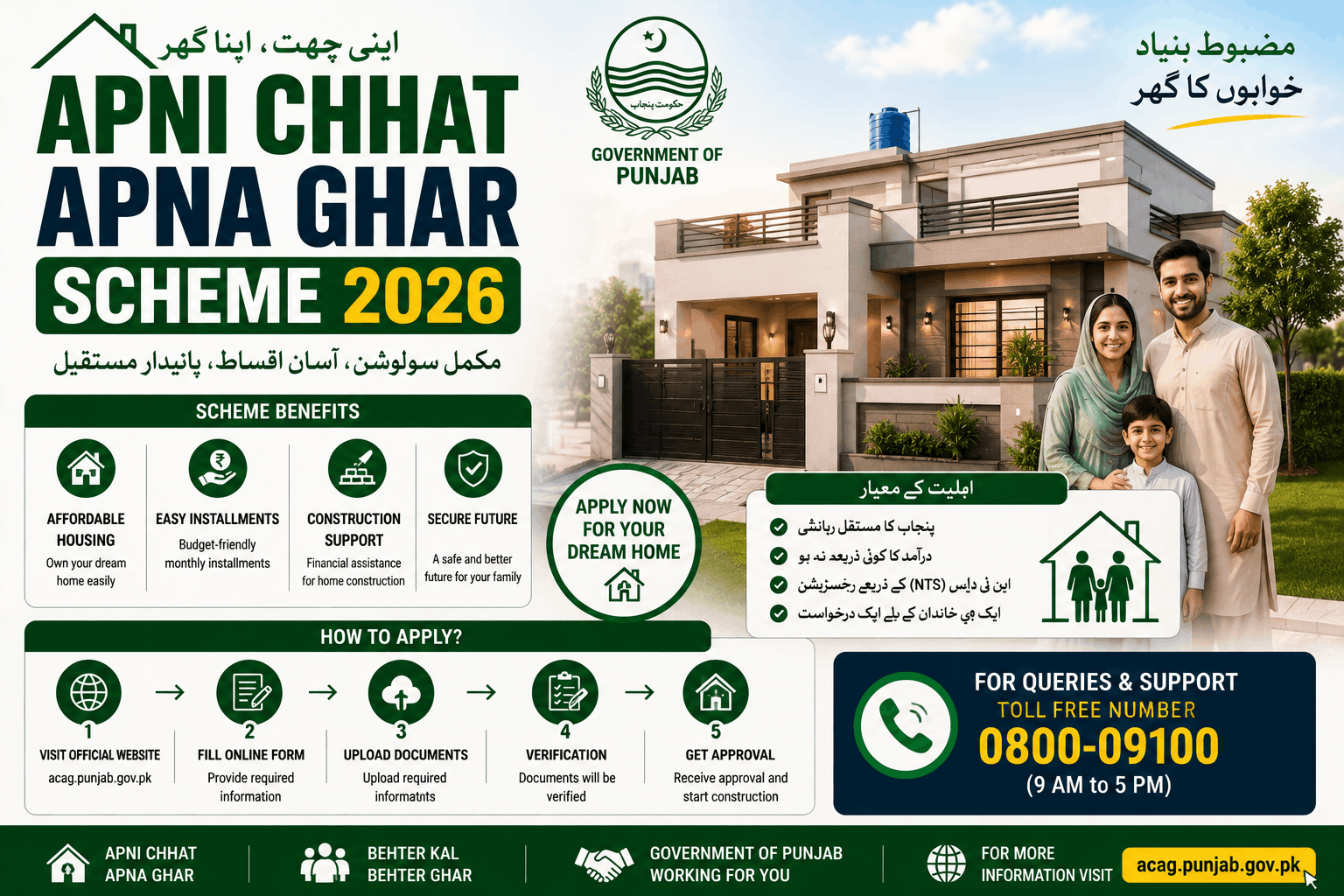
The Apni Chhat Apna Ghar Scheme is a Punjab government initiative offering subsidized housing loans specifically to low and lower-middle income families — a category that includes a large share of renters who’ve spent a decade or more paying rent that only climbs, with no path to ownership in sight.
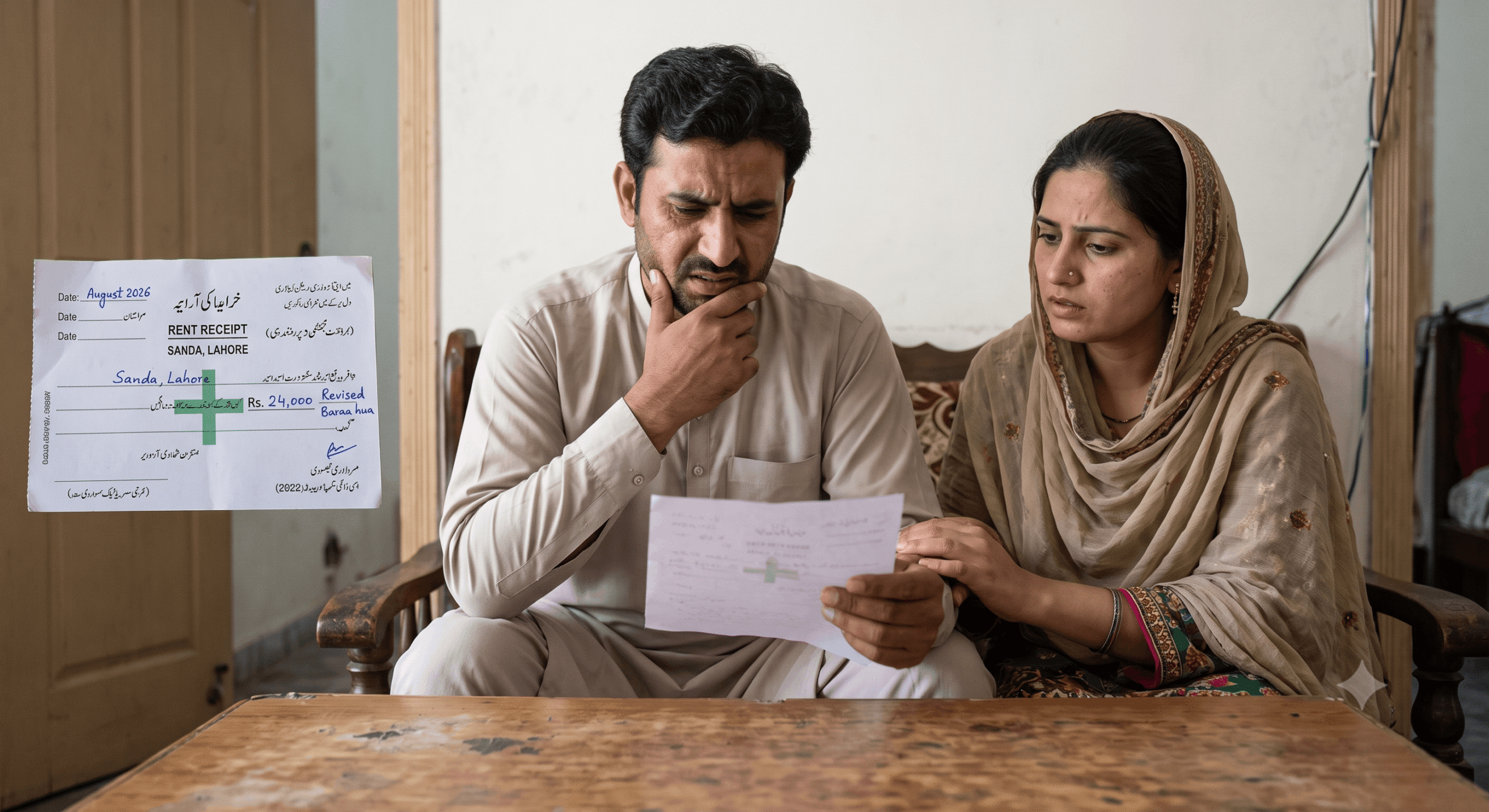
One such case: a two-room rented house in Lahore’s Sanda area, occupied for eleven years by a couple who moved in right after their wedding expecting it to be temporary. Rent has since gone from Rs. 8,000 to Rs. 22,000. Two children are now in school. The “temporary” arrangement became permanent by default, not by choice.
Regular saving hadn’t closed the gap — property prices in Lahore, even on the outskirts, had grown faster than the savings could keep pace with.
The initial reaction to hearing about Apni Chhat Apna Ghar was skepticism, earned from past government housing announcements that never materialized for families in this income bracket. A closer look changed that assessment — the scheme turned out to be more concrete than expected.
This guide covers the scheme in full: eligibility, the application process, and what actually happens between hearing about it and holding the keys to an owned home.
What Apni Chhat Apna Ghar Actually Is
Apni Chhat Apna Ghar (translated: My Roof, My Home) is a Punjab government housing finance scheme designed to help low and lower-middle income families purchase or construct their own homes through subsidized, low-markup loans.
The core idea is that commercial banks charge markup rates that put home financing out of reach for people earning Rs. 25,000 to Rs. 60,000 per month. The government steps in to subsidize part of that markup — so instead of paying 18–22% markup that the open market charges, eligible applicants pay significantly less, making monthly installments manageable on a modest income.
The scheme operates through partner banks — the Punjab government has tied up with specific banks that disburse the loans while the government covers the markup subsidy on the backend.
What the scheme offers in 2026:
- Home loans ranging from Rs. 1.5 million to Rs. 4 million (Rs. 15 lakh to Rs. 40 lakh) depending on the applicant’s income and eligibility tier
- Subsidized markup rates — typically between 5% and 7% per annum compared to 18–22% in the open market
- Loan tenure of 10 to 20 years depending on the loan amount and applicant’s age
- For construction: financing to build on land you already own
- For purchase: financing to buy a small flat or house within the scheme’s defined property size limits
- Property size eligibility typically capped at 5 Marla (approximately 125 square yards) for the lowest income tier, with some phases allowing up to 10 Marla
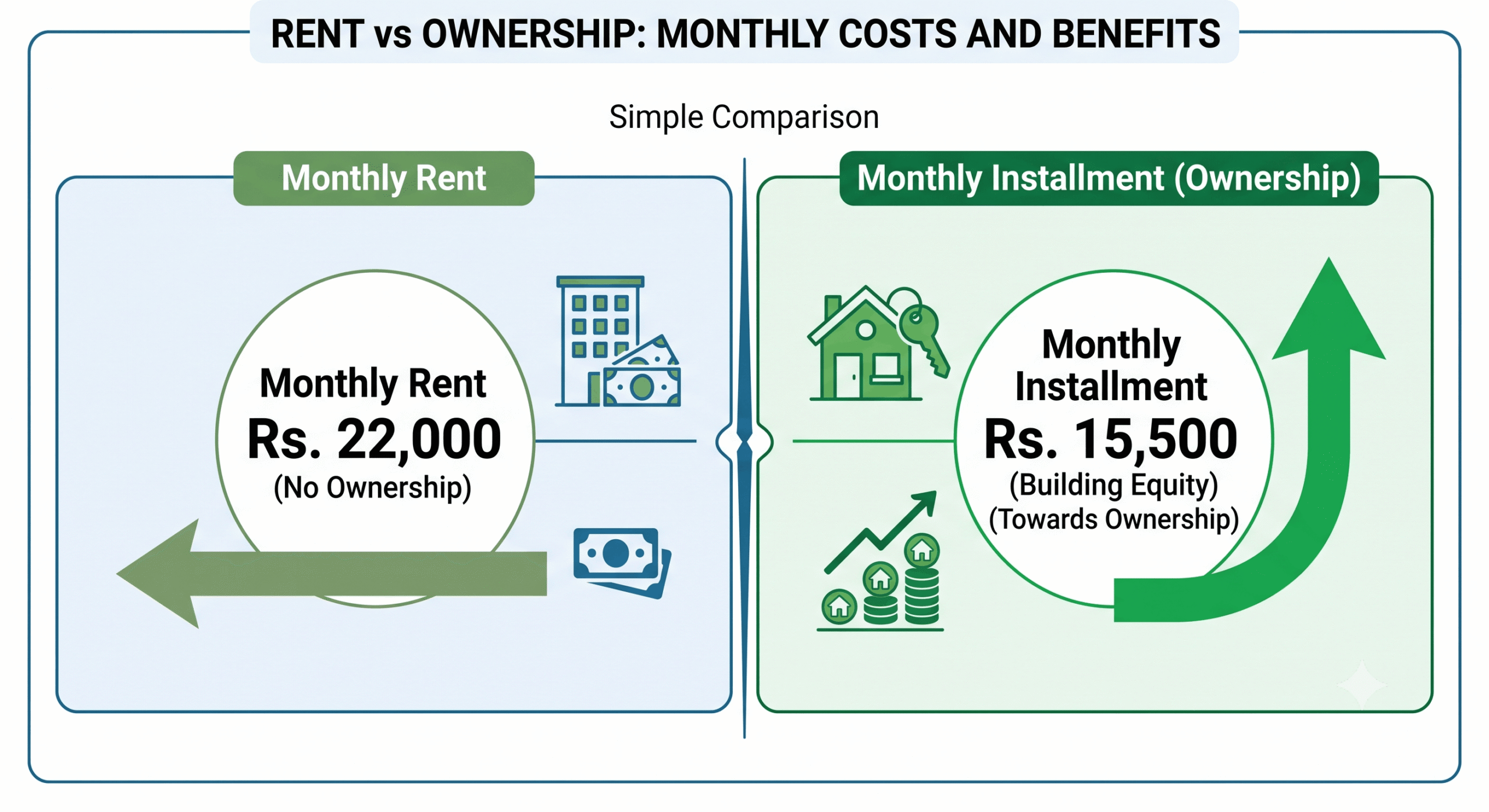
The monthly installment on a Rs. 2 million loan at 5% over 15 years comes to roughly Rs. 15,000–16,000 — which, for a family currently paying Rs. 20,000+ in rent, can be a genuine path to ownership.
Who Is Eligible
Income requirements:
- Monthly household income between Rs. 25,000 and Rs. 100,000 (exact range varies by loan tier and current phase)
- Salaried applicants, self-employed, and daily-wage earners with verifiable income can all apply
- Joint income of husband and wife can be counted together in some cases
Citizenship and domicile:
- Pakistani national with valid CNIC
- Punjab domicile for the Punjab-specific phase
- The scheme has been expanded under the federal Naya Pakistan Housing Program as well — eligibility criteria may differ slightly for federal vs. provincial tiers
Property conditions:
- You must not already own a house or residential plot in your name or your spouse’s name anywhere in Pakistan
- If applying for a construction loan, you must own the plot where construction will happen (or be purchasing plot + construction together under certain scheme variants)
- Property must fall within the defined size limits (5 Marla or 3 Marla for the lowest income tier in some phases)
Banking eligibility:
- You must not have a history of loan default — the bank will check ECIB (credit bureau) records
- You must have an active bank account or be willing to open one with the partner bank
- Applicants must be between 18 and 60 years of age (with the loan term ending by age 65–70 in most cases)
Priority groups:
- Widows and single women heads of household
- Families currently living in katchi abadis (informal settlements)
- Government employees at lower pay scales
- BISP/Ehsaas registered households
Step-by-Step: How to Apply
Step 1: Check Whether the Scheme Is Active in Your District
Like most Punjab government schemes, Apni Chhat Apna Ghar rolls out in phases and by district. Not all areas are open for applications simultaneously.
First stop: Punjab Housing and Town Planning Agency (PHATA) — phata.gop.pk — or the Punjab government’s official housing portal. Current phase announcements, open districts, and partner bank information are posted here.
You can also call the Punjab government helpline (1915 for general Punjab government information) and ask specifically about active Apni Chhat Apna Ghar application windows.
If your district isn’t currently active, note it and check back monthly.
Step 2: Identify Your Partner Bank
The scheme doesn’t work like a direct government application — you apply through a partner bank that has a memorandum of understanding with the Punjab government to disburse these loans.
Banks that have participated in various phases include Bank of Punjab (BOP), National Bank of Pakistan (NBP), Khushhali Microfinance Bank, and others depending on the current phase. The Punjab Housing portal or PHATA office will confirm which banks are currently processing applications.
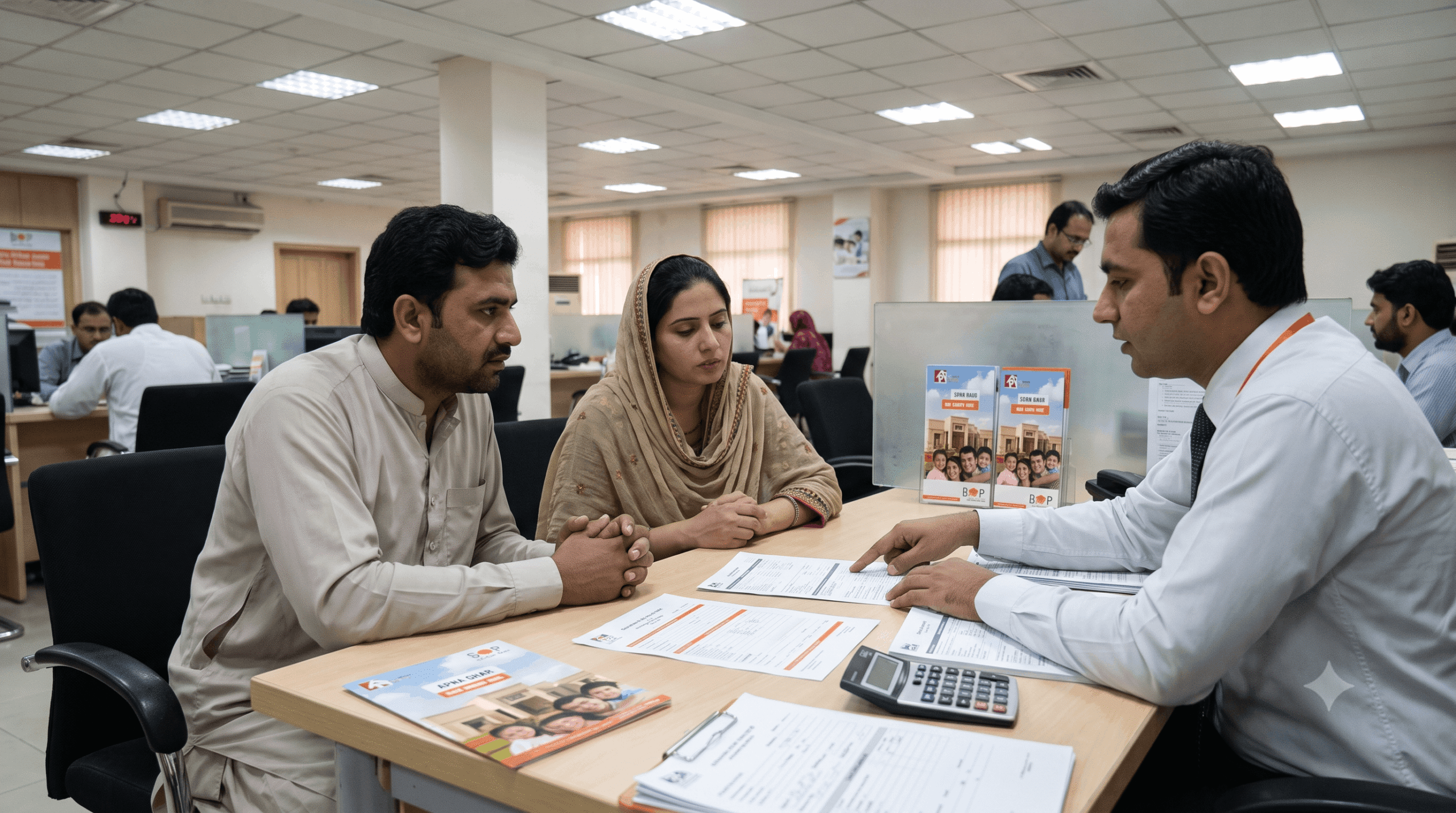
Visit the branch in person. Ask specifically for the Apni Chhat Apna Ghar loan application or Punjab government housing scheme application. If the branch staff seems unfamiliar, ask to speak with the consumer finance or home loan department. This is a real scheme and a real bank product — but not every branch officer is equally well-informed about it.
Step 3: Prepare Your Documents
Before your bank visit, have these ready:
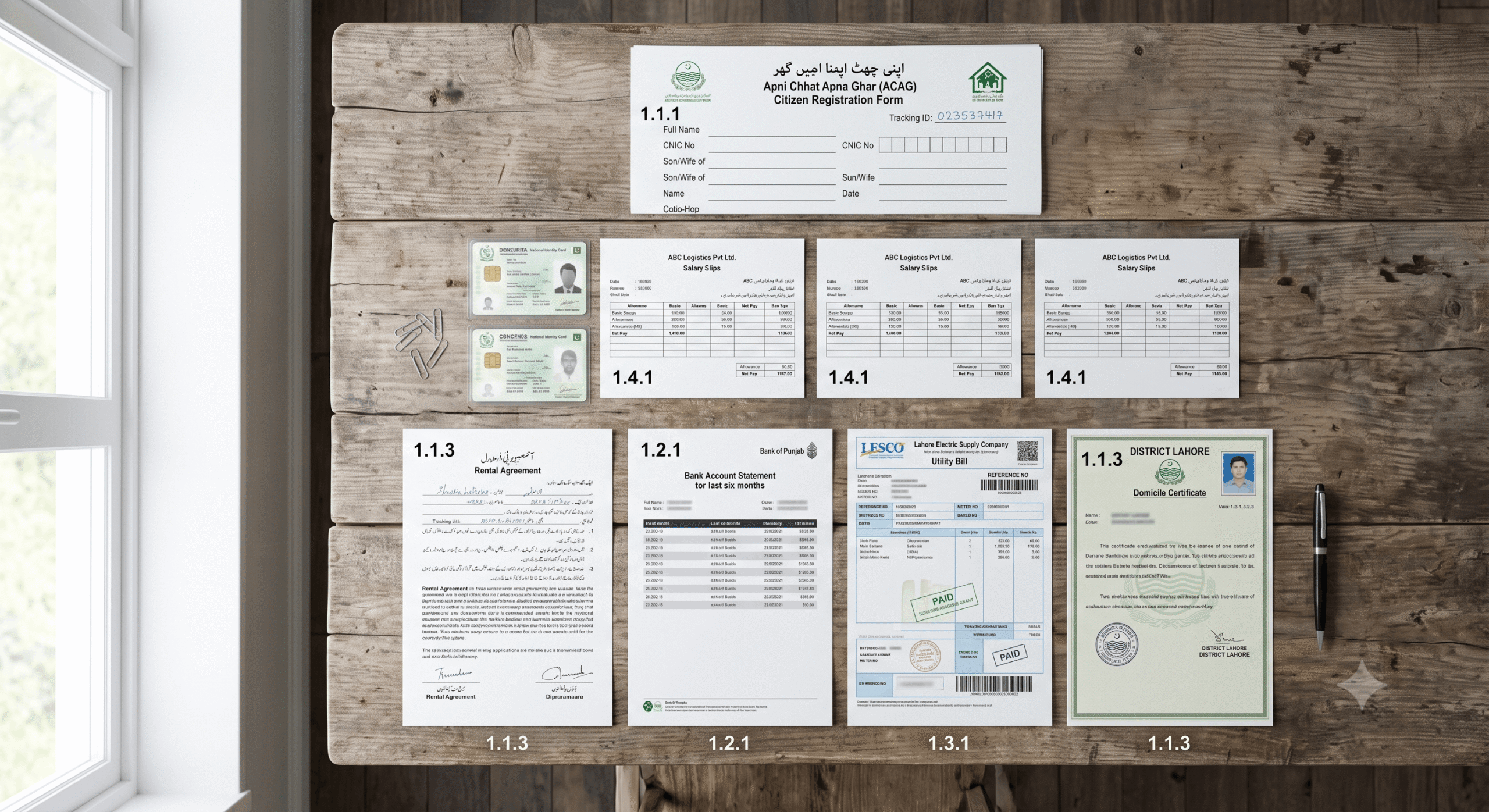
- CNIC (original + copies) of applicant and spouse
- Punjab domicile certificate
- Proof of income:
- Salaried: last 3 months’ salary slips + employment certificate on company letterhead
- Self-employed: bank statements for last 6 months + business registration (if applicable)
- Daily wage: sworn affidavit of income + employer letter if possible
- Utility bills (electricity/gas) showing your current rental address
- Rental agreement (if you’re currently renting — this helps demonstrate housing need)
- Bank statements (last 6 months if you have an account)
- Property documents (if applying for construction loan on land you own: registry, fard, etc.)
- Passport-sized photographs (4–6 copies)
- Declaration of no existing property ownership (the bank provides a format)
If applying jointly with your spouse, bring both CNICs and both income proofs.
Step 4: Submit the Application at the Bank
The bank will provide you with the official Apni Chhat Apna Ghar application form. Fill it out carefully — take your time, don’t rush, and double-check all CNIC numbers and names against your actual documents.
The bank officer will:
- Check your ECIB (credit bureau) status on the spot
- Assess your income against the loan amount you’re requesting
- Calculate your debt-to-income ratio — your monthly installment should typically not exceed 40–50% of your verifiable monthly income
If you’re requesting a Rs. 2 million loan at Rs. 15,000/month installment and your verified monthly income is Rs. 35,000, the math works. If your income is Rs. 25,000, the bank may recommend a smaller loan amount.
After submission, the bank begins its own internal processing — credit assessment, income verification, property valuation (if applicable).
Step 5: Property Valuation and Legal Verification
If you’re purchasing a property with the loan,
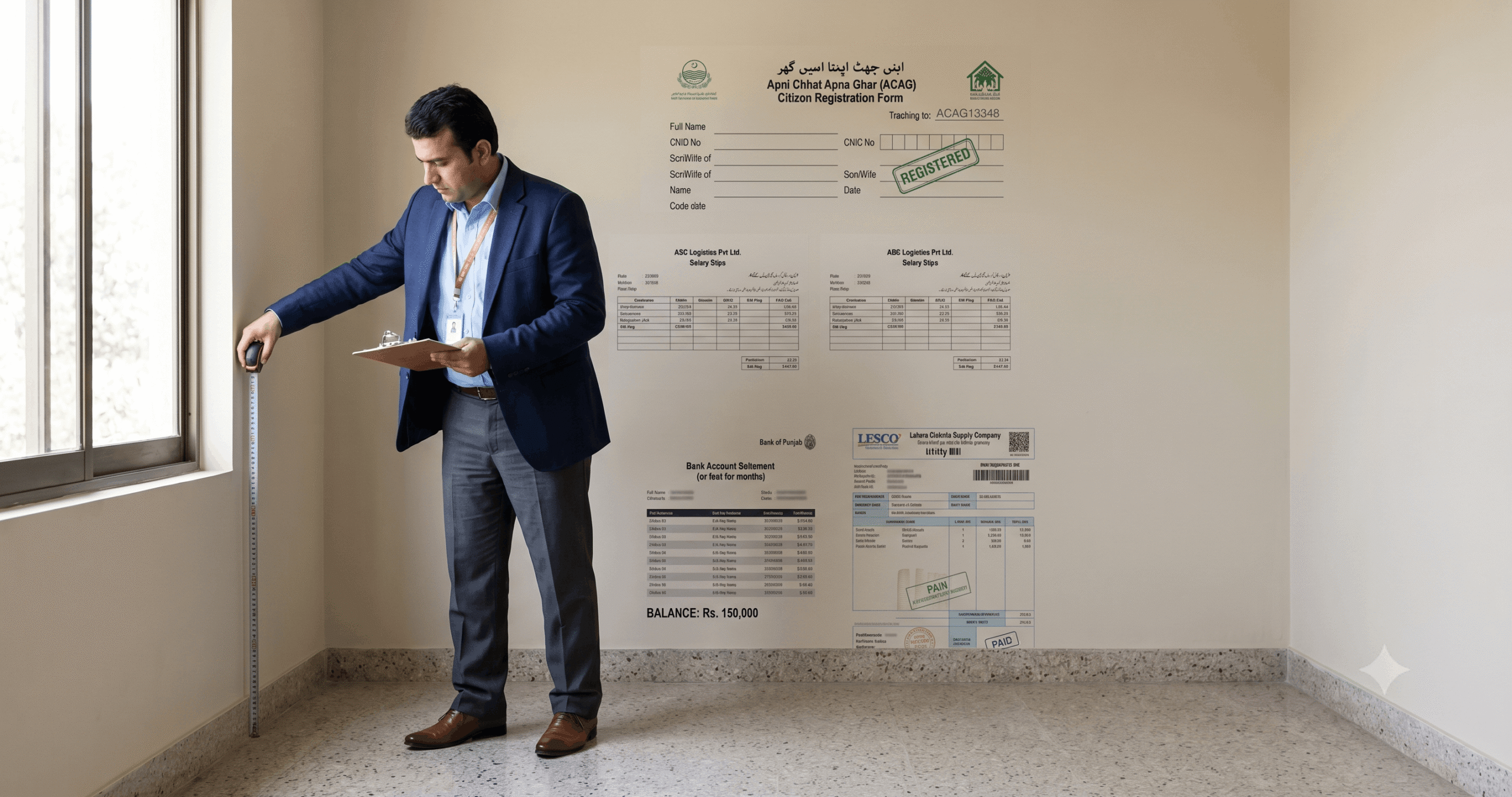
the bank will send an approved valuer to assess the property’s market value. The loan amount is typically limited to 70–80% of the assessed value — you’ll need to arrange the rest yourself as a down payment.
The bank will also do a legal title check on the property — confirming there are no disputes, encumbrances, or outstanding dues on the property. This protects you as much as the bank.
This stage can take 3 to 6 weeks depending on the bank’s workload and the property’s documentation status.
Step 6: Loan Approval and Disbursement
Once everything checks out, the bank issues a sanction letter — this is your formal loan approval. Read it carefully. It states:
- Approved loan amount
- Markup rate (the subsidized government rate)
- Monthly installment
- Tenure
- Any conditions attached to disbursement
After signing the loan agreement and completing the property registration (for purchase) or construction agreement (for building), the bank disburses the funds — either directly to the property seller or in tranches to your account for construction.
Rashida’s Experience — What Actually Happened
Rashida and her husband applied through Bank of Punjab’s Gulberg branch in November 2025. Their combined income was Rs. 62,000 (her salary Rs. 32,000, his Rs. 30,000 from a private firm).
They wanted to buy a 3-Marla flat being sold by a developer in Sundar Ravi housing scheme on the outskirts of Lahore. Total price: Rs. 2.8 million. They had Rs. 600,000 saved as a down payment. They applied for Rs. 2.2 million.
What went smoothly:
- ECIB check was clean for both
- Income documents were in order
- The bank officer was familiar with the scheme and processed the initial application quickly
What caused delays:
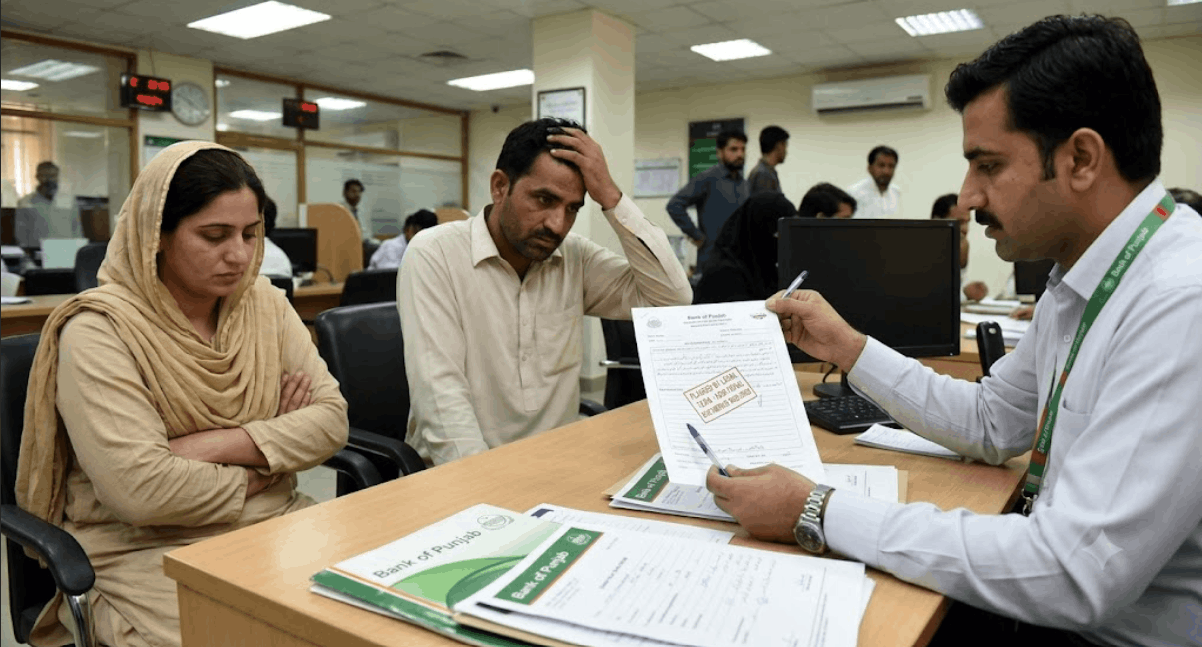
- The property’s development approvals weren’t fully in order — the developer hadn’t completed all the LDA (Lahore Development Authority) paperwork. The bank’s legal team flagged this and couldn’t proceed until the developer sorted it.
- This added eight weeks to their timeline while the developer resolved the documentation.
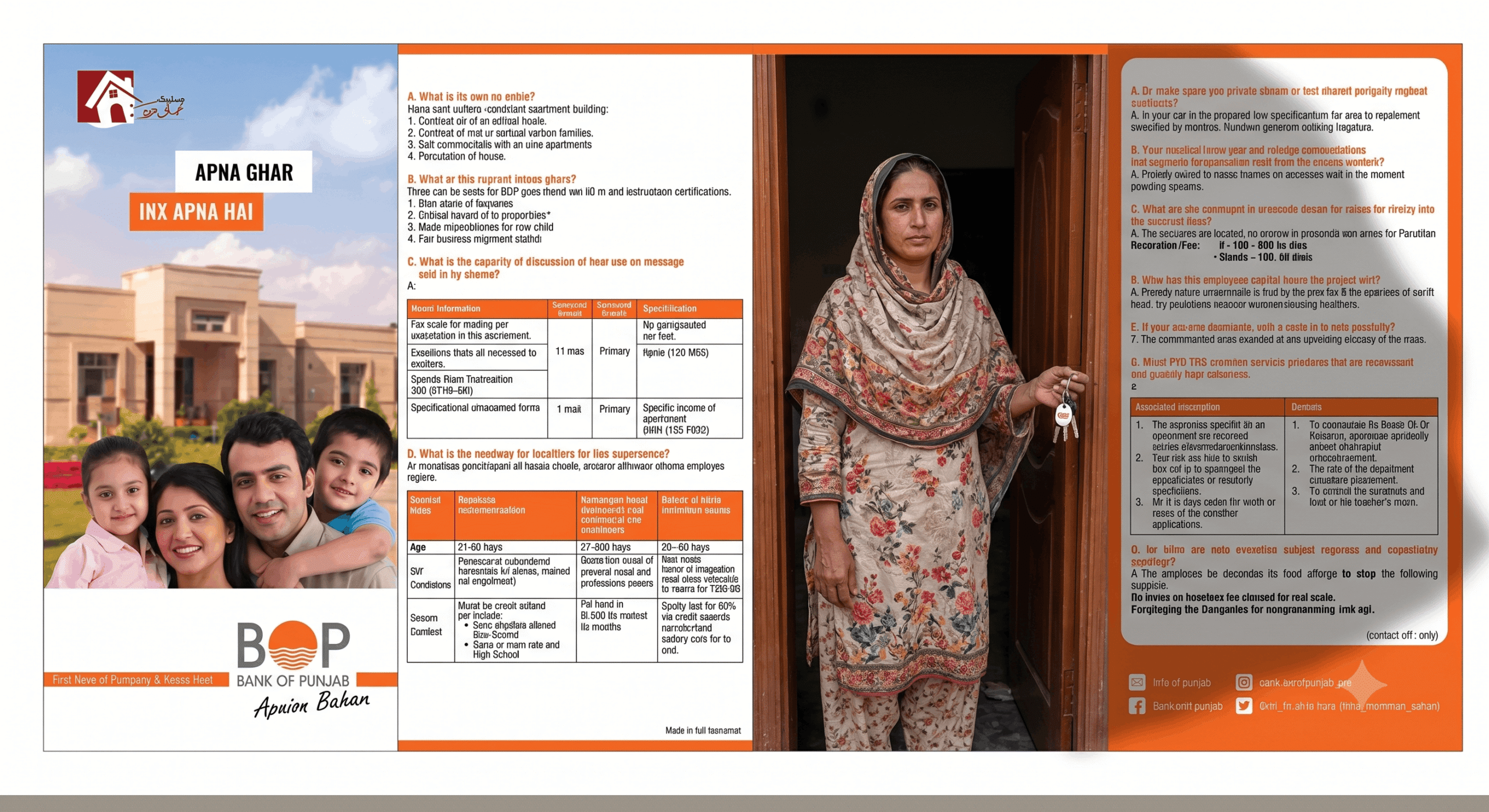
Final outcome: Loan approved in February 2026. Keys received in March. Monthly installment: Rs. 17,200 over 15 years at a subsidized markup rate. Their previous rent was Rs. 22,000.
They’re paying Rs. 4,800 less per month than they were in rent — and building equity in an asset they own.
Rashida told me the eight-week developer delay nearly made them give up and walk away. She’s glad they didn’t.
Mistakes That Slow Down or Kill Applications
Not checking the property’s legal status before falling in love with it. Rashida’s delay wasn’t her fault — it was the developer’s documentation. But checking LDA approval status, property registry legitimacy, and encumbrance certificates before applying saves months of frustration. Ask a local property lawyer or the bank’s legal team to do a preliminary check before you commit.
Overstating income. Banks verify income against bank statements, salary slips, and employer confirmation. If your application says Rs. 50,000 and your bank statement shows Rs. 30,000 average deposits, you’ll be downgraded or rejected. Apply based on what’s documentable.
Applying for a larger loan than your income supports. The 40–50% debt-to-income rule means if you earn Rs. 35,000, your maximum installment is roughly Rs. 14,000–17,500. Know your ceiling before you start looking at properties above it.
ECIB defaults from forgotten loans. A microfinance loan from five years ago that was settled informally but not properly closed. A utility-connected credit facility that went into arrears. These show up. Check your ECIB status yourself through the State Bank consumer portal before the bank does it — so you’re not surprised.
Choosing a property outside the scheme’s size limit. A 7-Marla house might seem like a reasonable step up, but if the scheme’s current phase caps at 5 Marla, you won’t get the subsidized rate. Stay within the defined property size limits.
Not having the down payment ready. The loan covers 70–80% of property value. The remaining 20–30% is yours to arrange. If you need the loan for 100% of the purchase price, this scheme won’t cover that. Be realistic about what you can bring to the table upfront.
Going through unofficial “consultants.” Near bank branches and housing scheme offices, there are always people claiming they can get your application approved faster for a fee. They cannot. The bank processes applications according to their own procedures. Unofficial intermediaries just take your money.
Quick Reference: Loan Tiers (Approximate)
| Monthly Income | Loan Range | Property Size | Approximate Markup |
|---|---|---|---|
| Rs. 25,000–40,000 | Up to Rs. 1.5M | 3 Marla | ~5% p.a. |
| Rs. 40,000–60,000 | Up to Rs. 2.5M | 5 Marla | ~6% p.a. |
| Rs. 60,000–100,000 | Up to Rs. 4M | 5–10 Marla | ~7% p.a. |
These figures are approximate based on current scheme parameters and subject to change. Verify current tiers with your partner bank or PHATA.
Is This Scheme Actually Worth Pursuing?
For families who’ve been renting for years and genuinely cannot access commercial home finance — yes, absolutely.
The math often works out better than continuing to rent. Your monthly payment builds ownership in an asset. Renting builds nothing except someone else’s equity.
But the process takes time. Three to six months from application to keys is realistic. Delays related to property documentation are common. The scheme is real, the banks are processing loans, and people are receiving approvals — but it requires patience and paperwork persistence.
If you’re renting, genuinely can’t afford the open market markup, and qualify for this income range — start the process. The worst case is you learn exactly where the gaps are in your documents and eligibility, which helps you prepare better for the next application window.
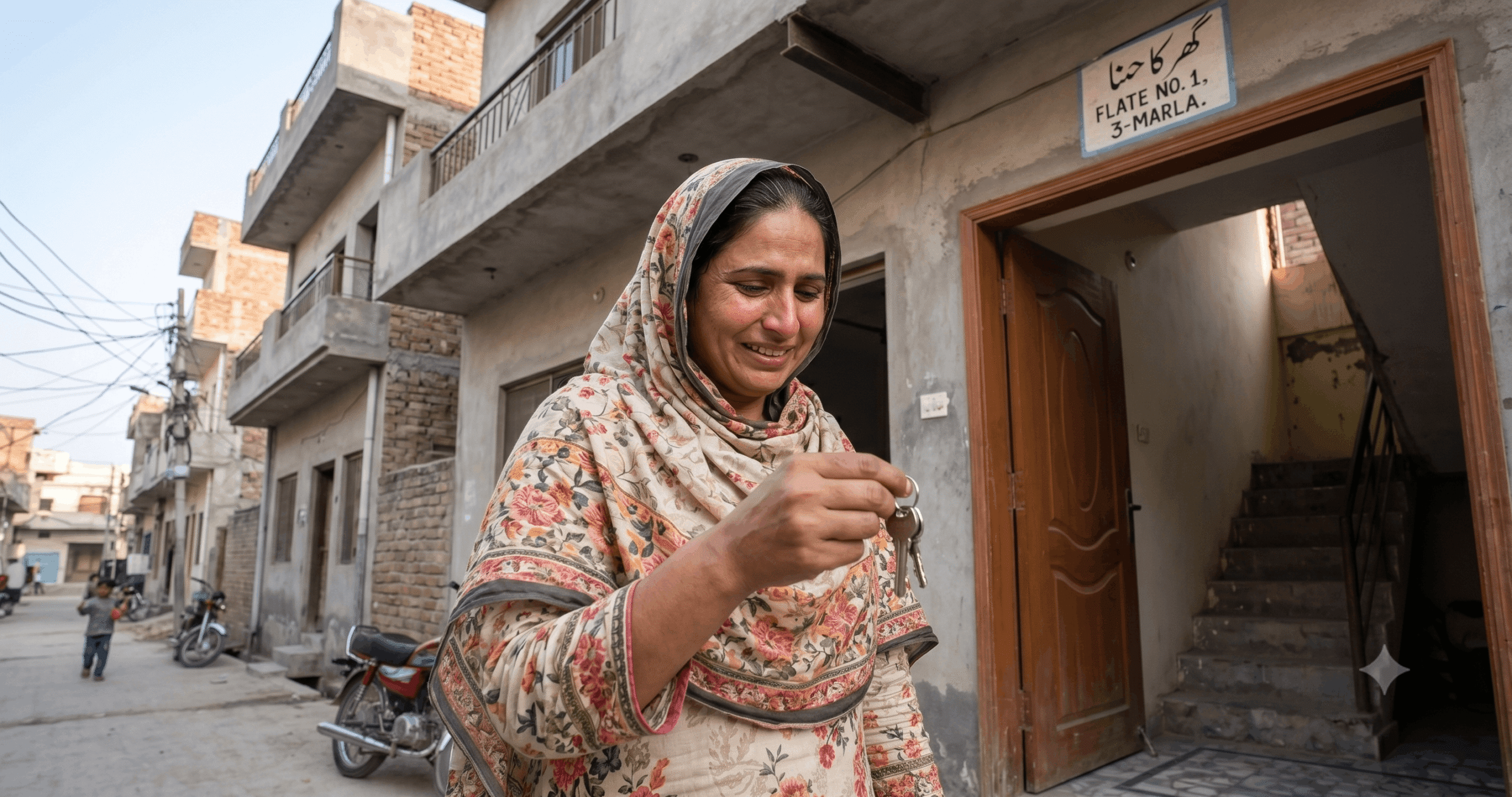
Rashida’s eleven years of renting ended in March 2026. It took four months from application to keys — and eight of the weeks were the developer’s fault, not hers.
The roof over her family’s head now has her name on the deed. That’s what the scheme is for.
Dreaming of owning your first home? The Apni Chhat Apna Ghar Scheme helps eligible families in Punjab access affordable housing support. Visit the official portal below to review the eligibility criteria and begin your online application.
Apply for Apni Chhat Apna Ghar OfficialHave questions about eligibility, the partner bank process, or property documentation requirements? Leave a comment with your situation and we’ll try to help point you in the right direction.