
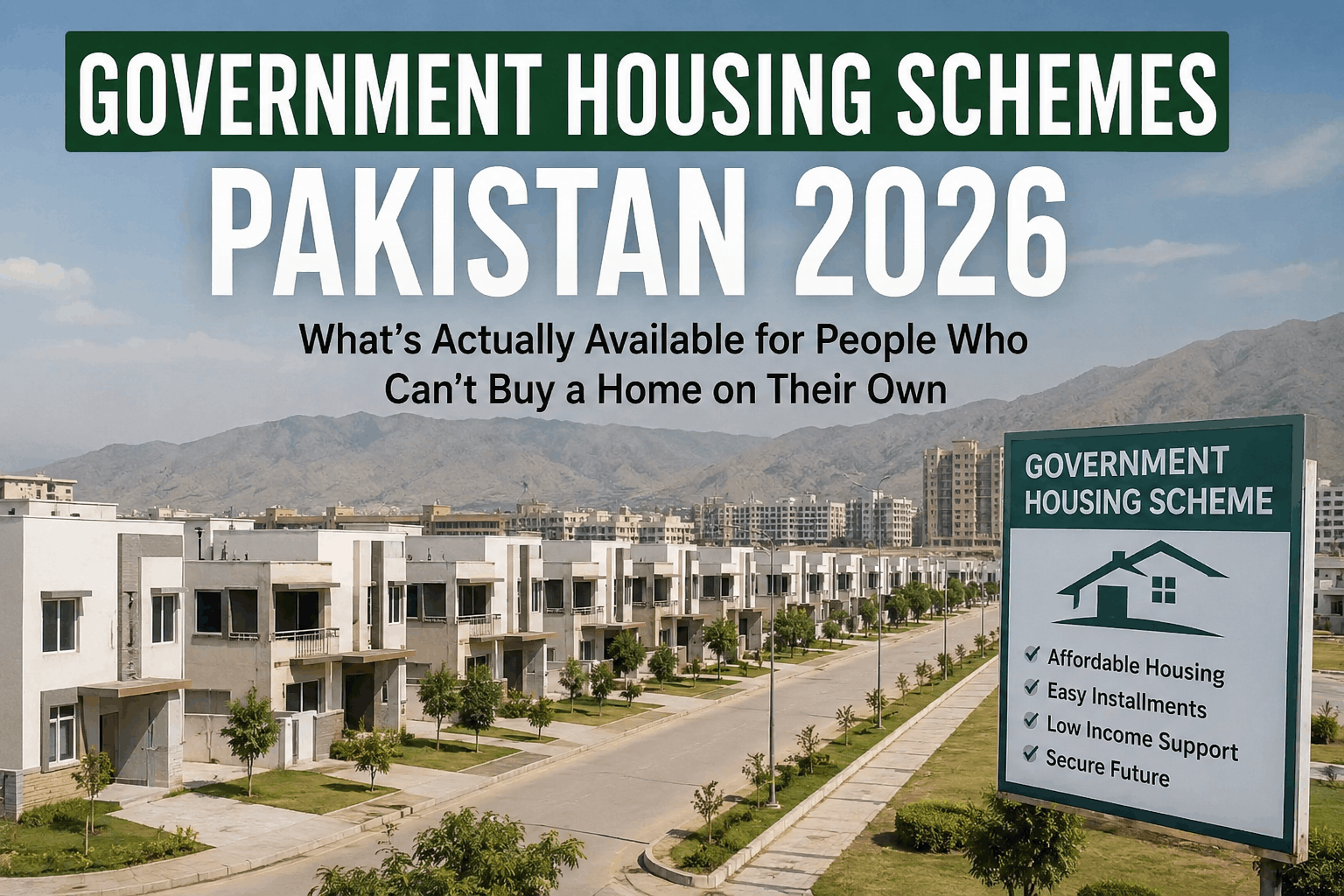
Renting for fourteen years isn’t unusual for a government employee on a modest salary — it’s close to the norm.
Take a typical case: a BPS-9 clerk, take-home around Rs. 38,000 a month, married with three children, living in the same two-room rented apartment since before his eldest was born. He saves what he can — Rs. 5,000 to Rs. 8,000 in a good month — but rent increases, school fees rise, someone gets sick, Eid arrives, and the savings rarely survive the year intact.
The honest math makes the problem clear: property anywhere near a city like Rawalpindi runs Rs. 4-7 million minimum on the open market. At that savings rate, with expenses compounding every year, reaching a down payment would take over 40 years.
The solution isn’t in the open market — it’s in a set of government housing programs built specifically for salaried employees in this income bracket, most of which go unused simply because people don’t know they qualify, or know vaguely and never pursue them properly.
This guide covers exactly which programs exist, what a Grade 9 government employee actually qualifies for, and how to apply — the doors that already exist but rarely get walked through.
Why Government Housing Programs Exist — and Why They’re Underused
The housing gap in Pakistan is well-documented. Estimates suggest a shortage of 10 to 12 million housing units, with the gap growing each year as urbanization increases and construction costs outpace incomes.
Government housing programs exist to address this — providing subsidized financing, affordable plots, and structured homeownership pathways for income groups that commercial real estate and commercial banks don’t serve effectively.
The paradox is that these programs are both real and underused. Real because the financing actually exists and people are actually getting homes through these schemes. Underused because the information about how to access them doesn’t reach the people who need it most.
Most of my brother-in-law’s colleagues in the same salary range don’t know what’s available. They assume housing support is “for BISP families” or “for the very poor” — not for them. That assumption costs them years.
The Main Government Housing Programs in 2026
1. Apni Chhat Apna Ghar (Punjab)
This is the program that fits my brother-in-law’s situation most directly.
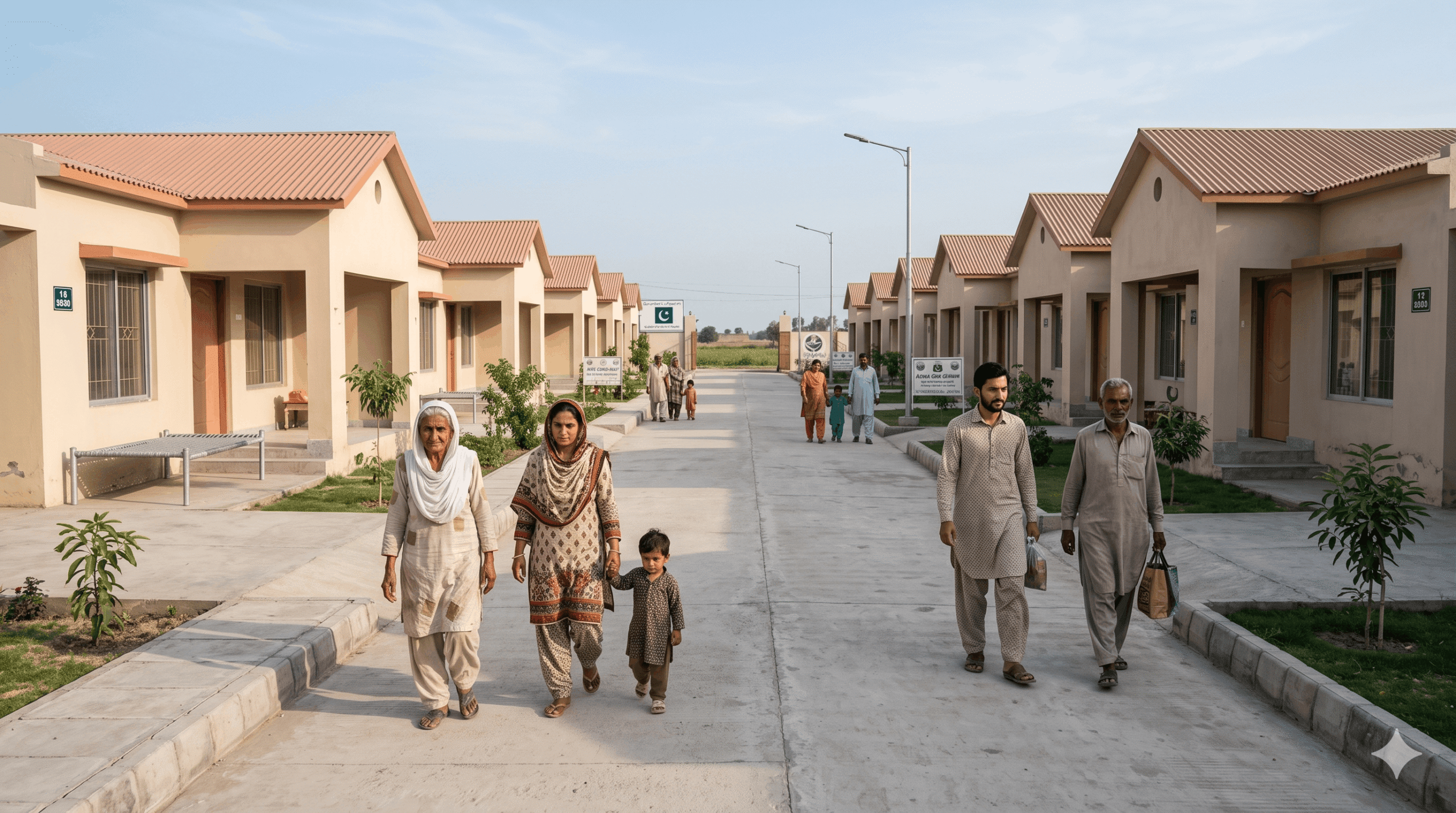
Apni Chhat Apna Ghar is a Punjab government housing loan scheme that provides subsidized home financing to low and lower-middle income families — specifically those who can’t access commercial bank mortgages at normal rates.
What it offers:
- Loans from Rs. 1.5 million to Rs. 4 million
- Subsidized markup rate: approximately 5–7% per annum (vs. 20%+ commercial rates)
- Loan tenure of 10 to 20 years
- Available for both home purchase (buying an existing unit) and home construction (building on land you own)
- Property size limits: typically 3 to 10 Marla depending on income tier
Eligible income range: Monthly household income between Rs. 25,000 and Rs. 100,000 — specifically the range that commercial banks ignore but that can service a subsidized monthly installment.
For someone earning Rs. 38,000/month, a Rs. 2 million loan at 6% over 15 years results in roughly Rs. 16,000–17,000/month in installments. That’s actually less than what many families in this income range pay in rent.

How to apply: Through partner banks — primarily Bank of Punjab (BOP) — with the government subsidizing the markup differential. Visit a BOP branch and ask for the Apni Chhat Apna Ghar application.
Key requirements:
- You must not own a house or residential plot anywhere in Pakistan
- Punjab domicile
- Bank statements showing income
- Property documents (for purchase: seller’s documentation; for construction: plot registry)
See our full Apni Chhat Apna Ghar guide for the detailed application walkthrough.
2. Naya Pakistan Housing Programme (NPHP) — Federal
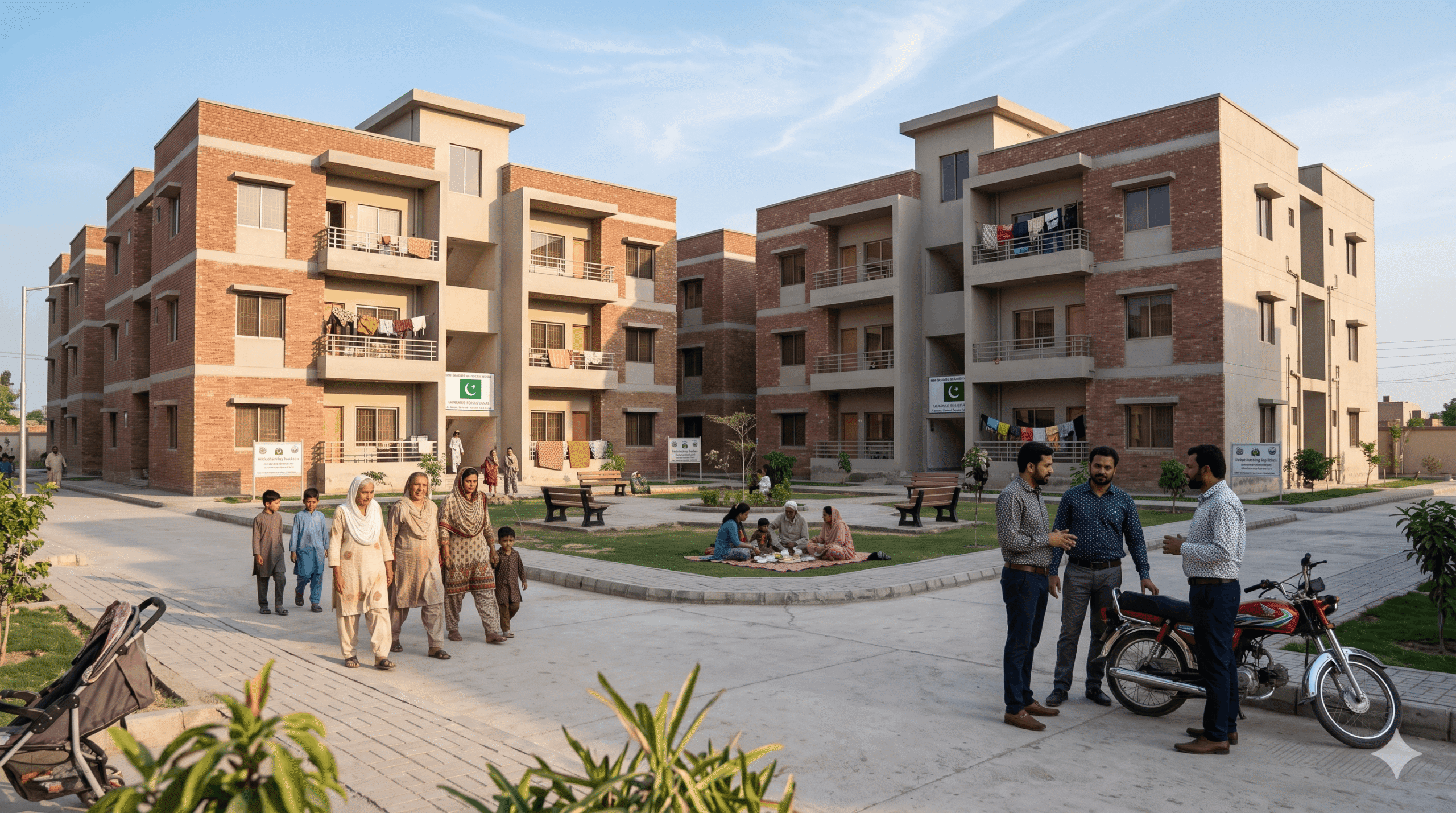
The Naya Pakistan Housing Programme was one of the more ambitious federal housing initiatives in recent years, aiming to build 5 million homes across Pakistan with subsidized financing for low-income buyers.
The program has evolved through changes in government — different administrations have continued, modified, or rebranded it. In its current form:
What it targets: Low-income buyers who want to purchase units in government-built housing projects
Financing structure: Interest-free loans (0% markup) for the lowest income tier, subsidized loans for slightly higher income levels, coordinated through the State Bank of Pakistan’s incentive framework for housing finance
Available inventory: Government-constructed or government-designated housing units in various cities
How to access in 2026:
- Check nayapakistanhousing.gov.pk for current program status, available units, and application process
- Application through designated partner banks
- Balloting system for high-demand units
The honest note: NPHP has had delivery challenges and project completion timelines have extended significantly from original announcements. If you’re considering this program, verify the status of specific projects in your city before making decisions based on availability.
3. House Building Finance Company (HBFC)

HBFC is a government-owned specialized financial institution that exists specifically to provide home loans — it’s been doing this since 1952.
Unlike commercial banks where home loans are one product among many, HBFC’s entire purpose is housing finance. This means they sometimes have more flexibility and more experience with lower-income borrowers than general commercial banks.
What HBFC offers:
- Home loans for construction, purchase, renovation, and extension
- Loan amounts from smaller amounts suitable for peri-urban and rural construction up to larger urban mortgages
- Markup rates competitive with government-backed schemes
- Longer tenures than many commercial banks offer
- Specific schemes for different income levels
Islamic financing option: HBFC offers Sharia-compliant (diminishing musharaka) financing for borrowers who prefer Islamic products.
Website: hbfc.com.pk Branches: Present in most cities and some smaller towns
For someone who isn’t eligible for Apni Chhat Apna Ghar (outside Punjab, or slightly above the income ceiling) but still can’t access commercial bank mortgages effectively, HBFC is the next best option to explore.
4. Government Employees Housing Authority — Province-Specific Programs

Several provincial governments run housing schemes specifically for government employees — providing affordable plots or constructed housing at below-market prices.
Punjab: The Punjab Government Employees Housing Authority (PGEH Authority) periodically launches housing schemes for government employees across all grades. These involve plot allocation through ballot in government-developed societies.
Federal: The Federal Government Employees Housing Authority (FGEHA) manages housing schemes in Islamabad and other federal territories for federal employees.
Sindh, KPK, Balochistan: Similar provincial bodies exist at different stages of development.
For my brother-in-law specifically — as a BPS-9 government employee — these schemes are directly relevant. The plots in government employee housing schemes are typically offered at significantly below-market rates to registered government employees, with financing through government-employee cooperative schemes or banks.
How to find out what’s available:
- Visit your department’s welfare cell or HR department and ask specifically about housing scheme ballots
- Check with the relevant provincial housing authority (PGEH in Punjab)
- Government employee unions and federations sometimes maintain lists of upcoming housing scheme registrations
The key action here is registering your interest before a scheme opens for ballot. These schemes announce registration windows, and missing the window means missing the ballot.
5. Ehsaas Housing — For BISP-Level Income Households
For households at the lowest income levels — BISP/Ehsaas registered families — there are components of the federal housing program that provide either:
- Interest-free loans (0% markup) for basic home construction
- Subsidized rental housing in government-developed complexes
- Plot allocation in government schemes with deeply subsidized pricing
These are not available to everyone — they’re targeted at the families the main government housing programs don’t even reach. BISP Tehsil Offices and the Ehsaas secretariat are the application points for these components.
6. Sindh Low-Cost Housing Authority (SLCHA) and Other Provincial Programs
For Sindh residents, the Sindh Low-Cost Housing Authority and related bodies run housing schemes targeting lower-income urban households, particularly in Karachi and other major Sindh cities.
KPK has the KPK Housing Authority with similar mandates. Balochistan’s housing programs tend to be less active but exist through the provincial Housing Department.
For provincial programs outside Punjab: contact your district’s planning or housing department, or the relevant provincial housing authority, for current program availability.
What My Brother-in-Law Did After Finding Out About Apni Chhat Apna Ghar
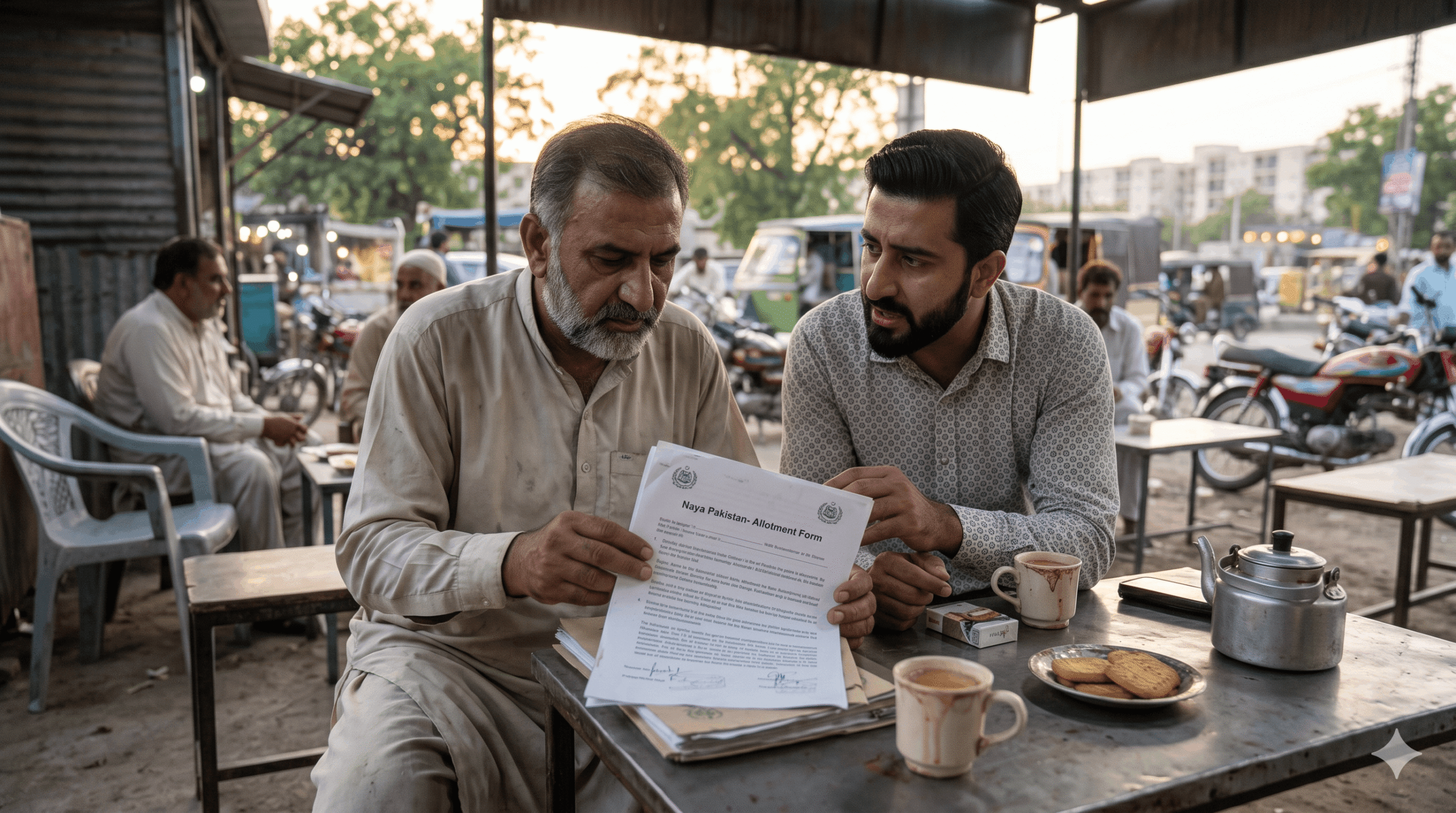
I explained the program to him over a chai in December last year. He’d heard of it vaguely but assumed it was “for poorer people” — not for a government clerk.
He checked his eligibility: family income Rs. 38,000/month — within the eligible range. No owned property anywhere — confirmed by checking with the local land records office. Punjab CNIC — yes.
He visited a Bank of Punjab branch in January. The home loan officer walked him through the program requirements and gave him a checklist.
Documents the bank asked for:
- Last 3 months’ salary slips
- Employment certificate from his department
- 6 months’ bank account statements
- CNIC (original and copy)
- Spouse’s CNIC
- Property documents for the unit he was considering (a small apartment in a developed area)
- Seller’s title documents (registry, sale deed history)
What he’s doing right now (April 2026): The property documentation from the seller is taking time — there’s a chain of ownership that needs to be verified by the bank’s legal team. This is normal but slower than he expected. Anticipated timeline to approval and disbursement: another 6 to 8 weeks.
He hasn’t moved in yet. But for the first time in fourteen years, the process that leads to his own home is actually running.
The monthly installment will be about Rs. 15,800. His current rent is Rs. 19,000.
He’ll be paying Rs. 3,200 less per month than he currently pays to live in someone else’s property — and building equity in his own.
Common Mistakes People Make When Pursuing Government Housing
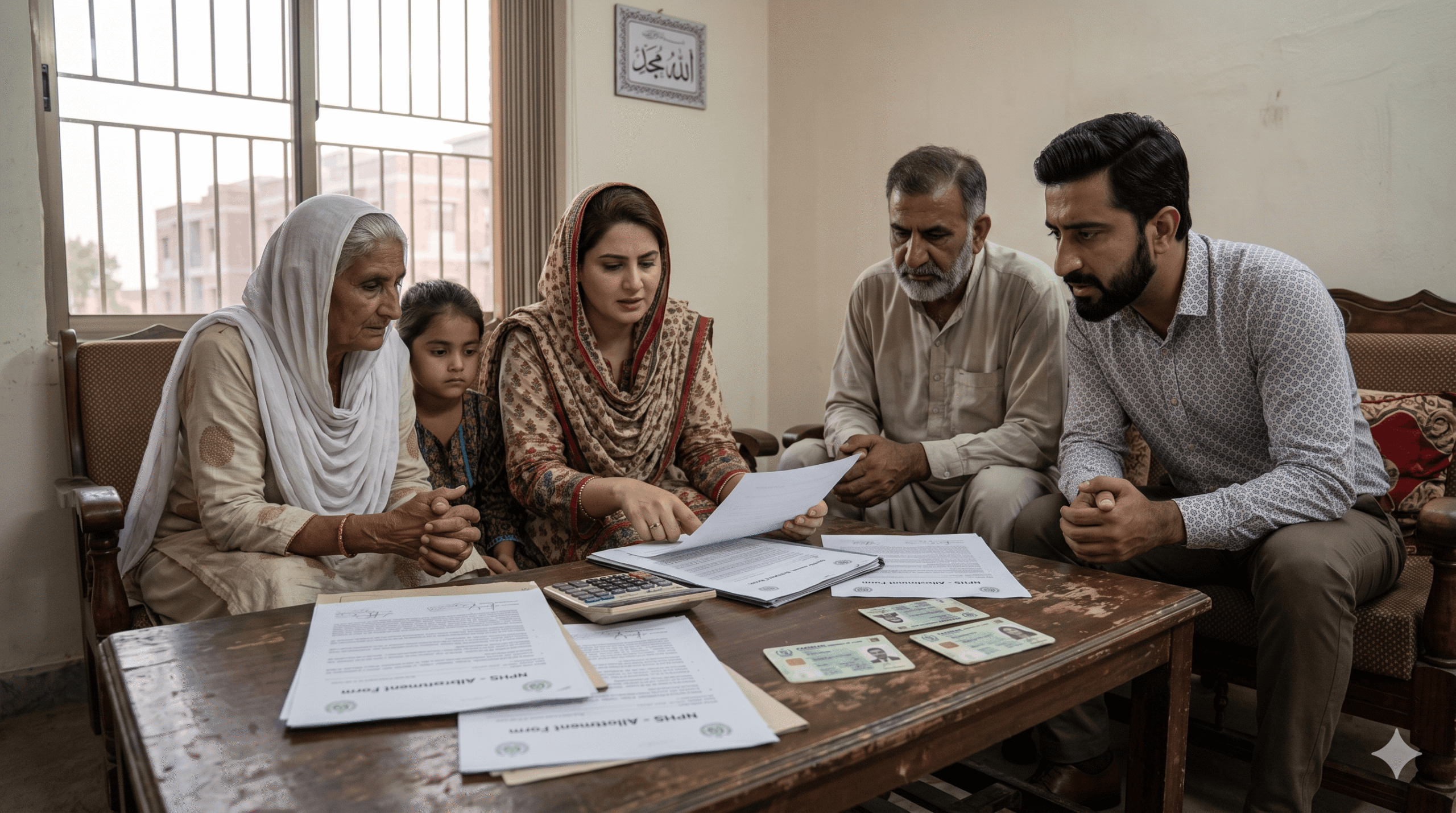
Assuming you don’t qualify without checking. “Government housing is for poor people” is a misconception that keeps lower-middle income families in renting situations they don’t need to be in. If your monthly income is between Rs. 25,000 and Rs. 100,000 and you don’t own property, you likely qualify for at least one program. Check before assuming.
Not verifying property documentation before applying. Banks won’t approve housing loans on properties with unclear title chains, encumbrances, or incomplete documentation. Before falling in love with a property and submitting a loan application, have a preliminary legal check done — either by the bank or a private lawyer. My brother-in-law’s current wait is partly because the seller’s paperwork needed cleanup.
Applying for too large a loan. The monthly installment should ideally not exceed 40–50% of documented monthly income. For Rs. 38,000/month income, maximum comfortable installment is Rs. 15,000–19,000. This limits how large a loan you can realistically service and should shape which properties you consider.
Missing government employee housing scheme registration windows. These schemes announce, open for registration, conduct ballot, and then close. Missing the registration window means starting over at the next announcement — which could be years away. If you’re a government employee and a housing scheme opens for registration: register immediately, even if you’re not sure you’ll go through with it.
Buying in a housing society without verifying LDA/CDA/development authority approval. Pakistan has hundreds of housing societies operating without proper development authority approval. Bank financing requires NOC from the relevant authority. If the society doesn’t have it, you can’t finance through government schemes (or any bank). Verify approval before committing to a purchase.
Not having a clean credit history. Housing loans require ECIB checks. Old defaulted loans — even small amounts from years ago — can block approval. Check your ECIB status at the State Bank’s consumer portal before applying. Resolve outstanding issues before they become obstacles in your application.
Quick Reference: Which Program for Which Situation
| Situation | Best Program |
|---|---|
| Punjab resident, Rs. 25K–Rs. 100K income, no property | Apni Chhat Apna Ghar |
| Federal government employee | FGEHA Housing Scheme |
| Punjab government employee | PGEH Authority Scheme |
| BISP/Ehsaas registered family | Ehsaas Housing component / NPHP lowest tier |
| Outside Punjab, not on BISP | HBFC, NPHP, provincial programs |
| Sindh resident | SLCHA, Sindh Housing Programs |
| Any income level (Islamic financing) | HBFC Diminishing Musharaka |
One More Thing Worth Saying

The fourteen years my brother-in-law has spent renting are not recoverable. That’s a real cost — financially, emotionally, in the sense of stability it provides a family.
But the years ahead don’t have to look the same. The programs in this guide are real financing vehicles that real families are using to move out of rent and into ownership. The information gap is what keeps most eligible families from pursuing them.
Check which program fits your situation. Visit the relevant bank or office. Gather your documents. Start the process even if it takes months.
The alternative is another year of rent paid into someone else’s equity while your own sits at zero.
Ready to apply for a government housing scheme? Click the official button below to check your eligibility, explore available housing programs, and submit your application through the official government portal.
Trying to figure out which program fits your specific income level, province, or employment situation? Leave a comment with the details and we’ll try to help you identify the right starting point.